





Rund um Calw - Monuments, personalities, history, and views
The marked path leads directly through nature, past historic sites with magnificent views of the Hermann Hesse city.
"Eye" views you won't forget!
The route leads with some inclines on the high paths around...
The marked path leads directly through nature, past historic sites with magnificent views of the Hermann Hesse city.
"Eye" views you won't forget!
The route leads with some inclines on the high paths around Calw and over forest paths. Good footwear is therefore necessary.
On 42 steles, you learn about its history.
The route is designed so that you can walk it completely from 1-42 or in segments 1-26 and 26-42.
Start and finish is always the city center of Calw.
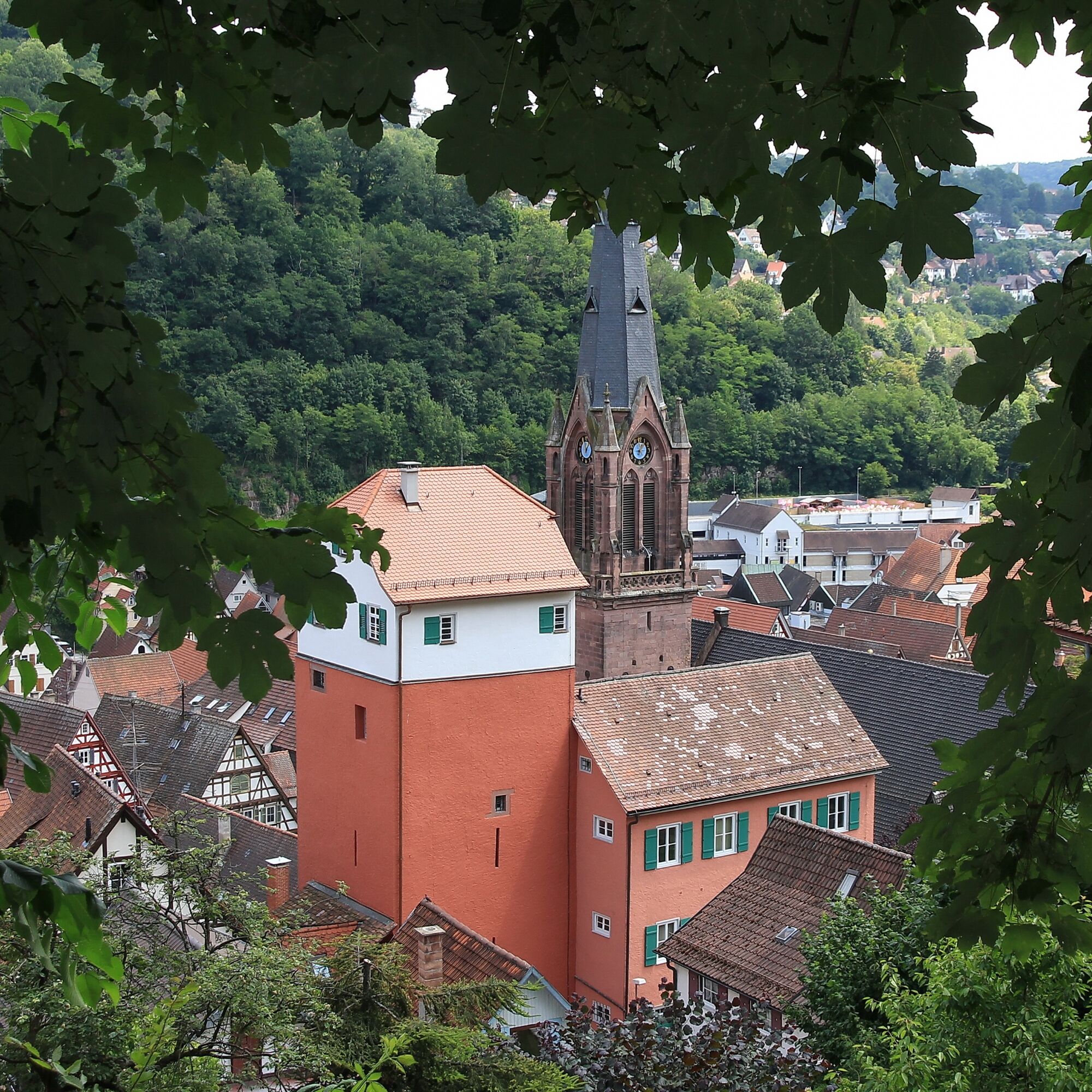
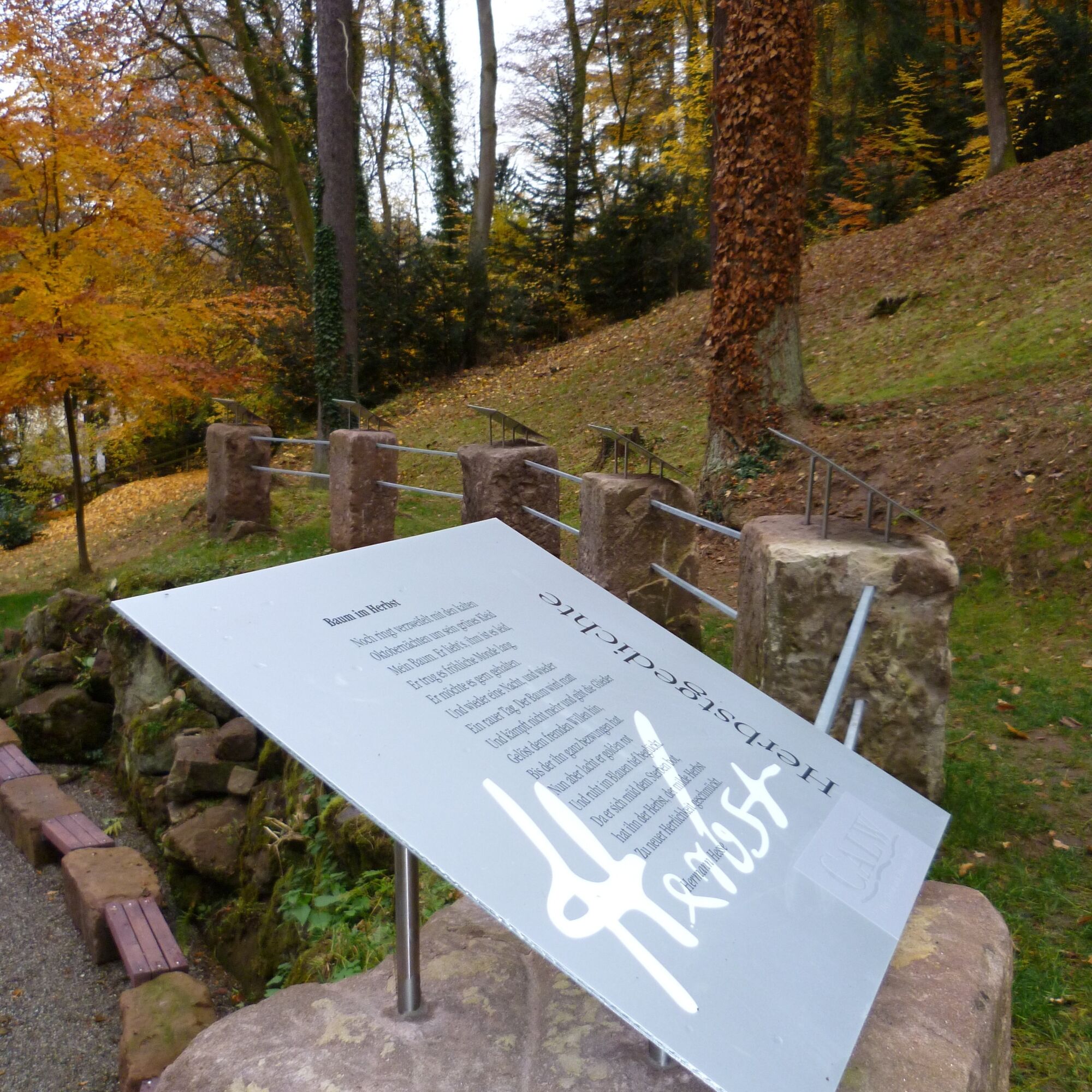
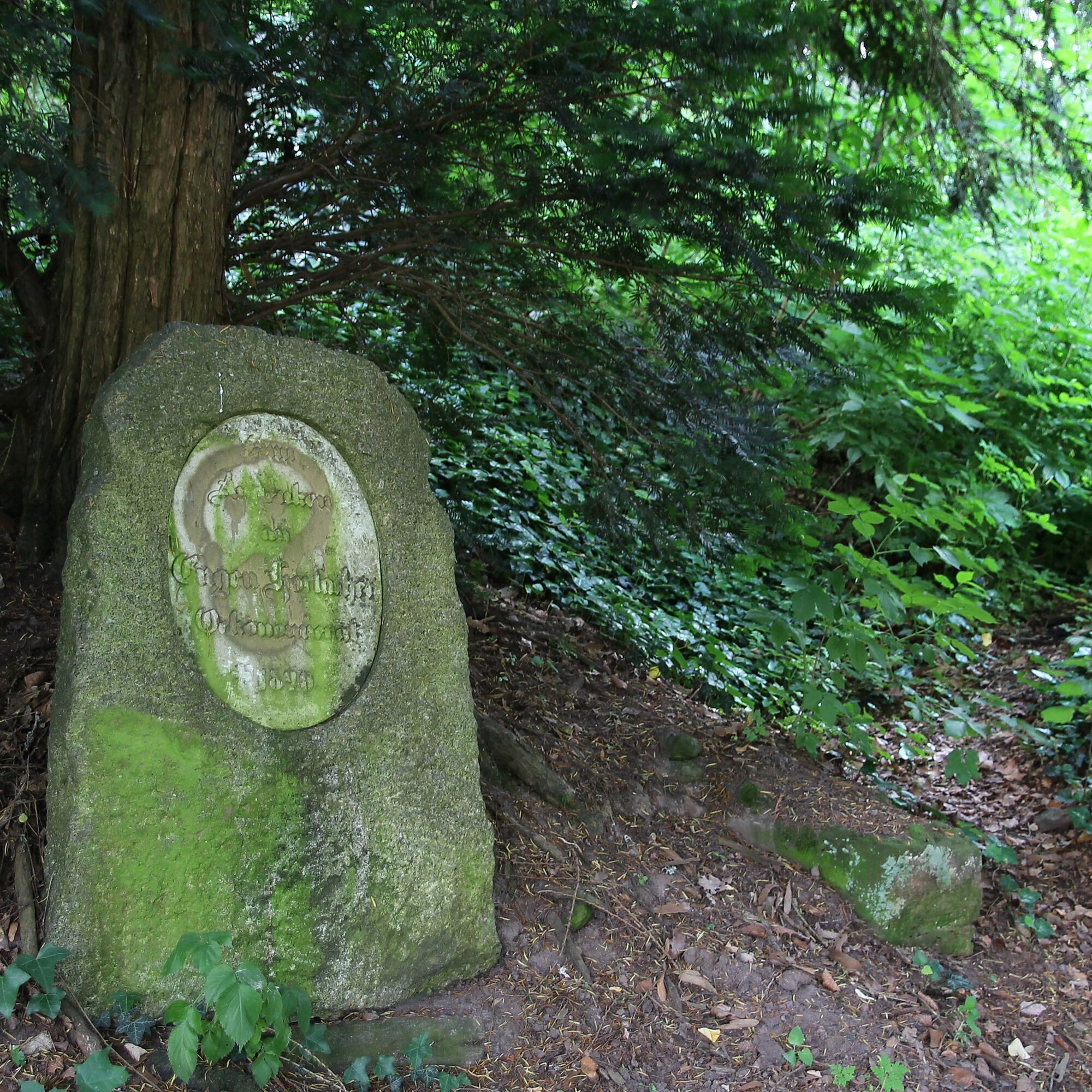
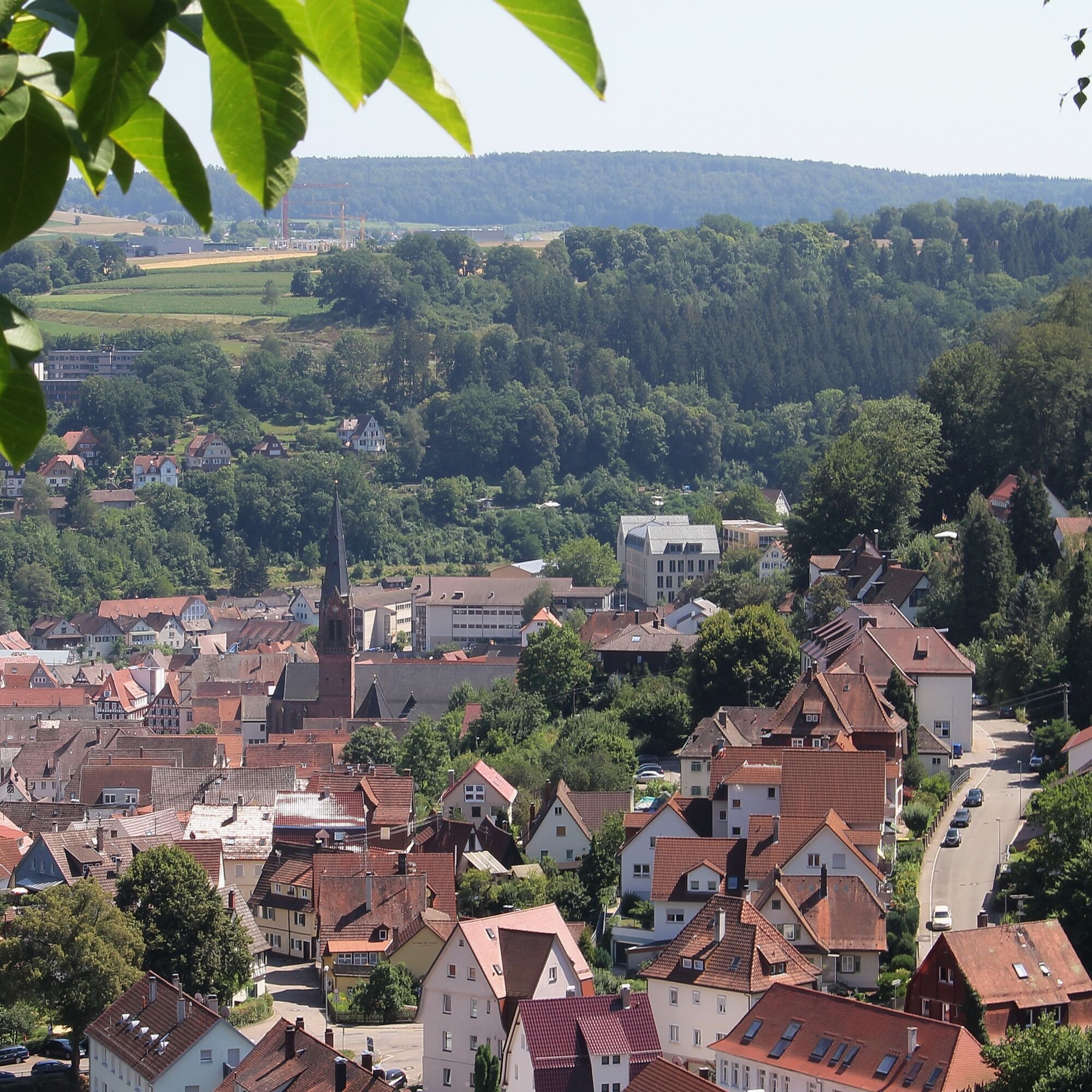
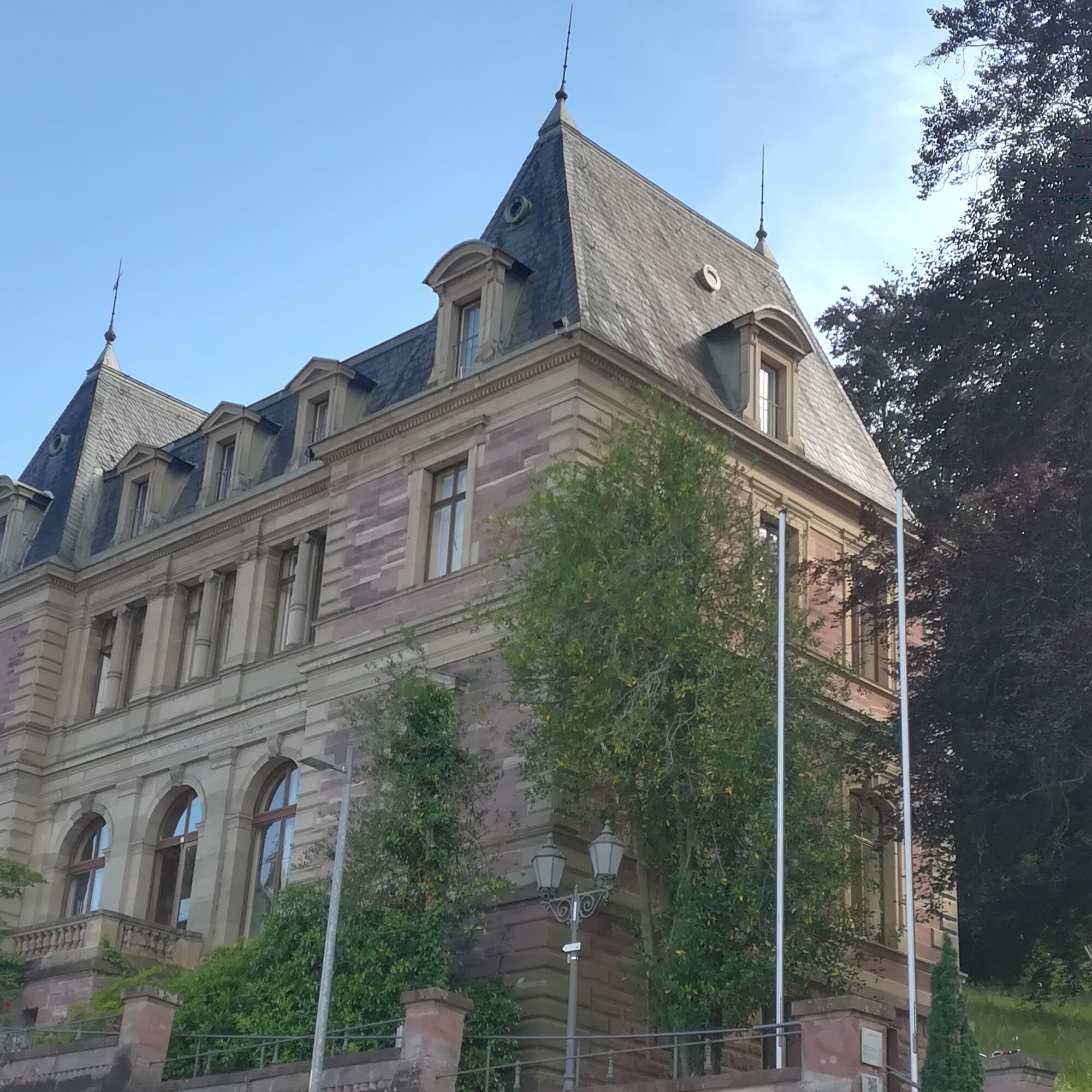

The path starts at the upper market fountain (1), below the historic city palace Haus Schütz, the Hermann Hesse Museum, and opposite the Old Pharmacy, the ancestral home of the famous botanist Joseph von Gärtner.
From here, we walk past the city church and follow the Hermann-Hesse-Weg to Georgenäum (2); there on the left above the main entrance is the memorial stone in honor of Emil Wilhelm von Georgii-Georgenau, the founder of the Georgenäum.
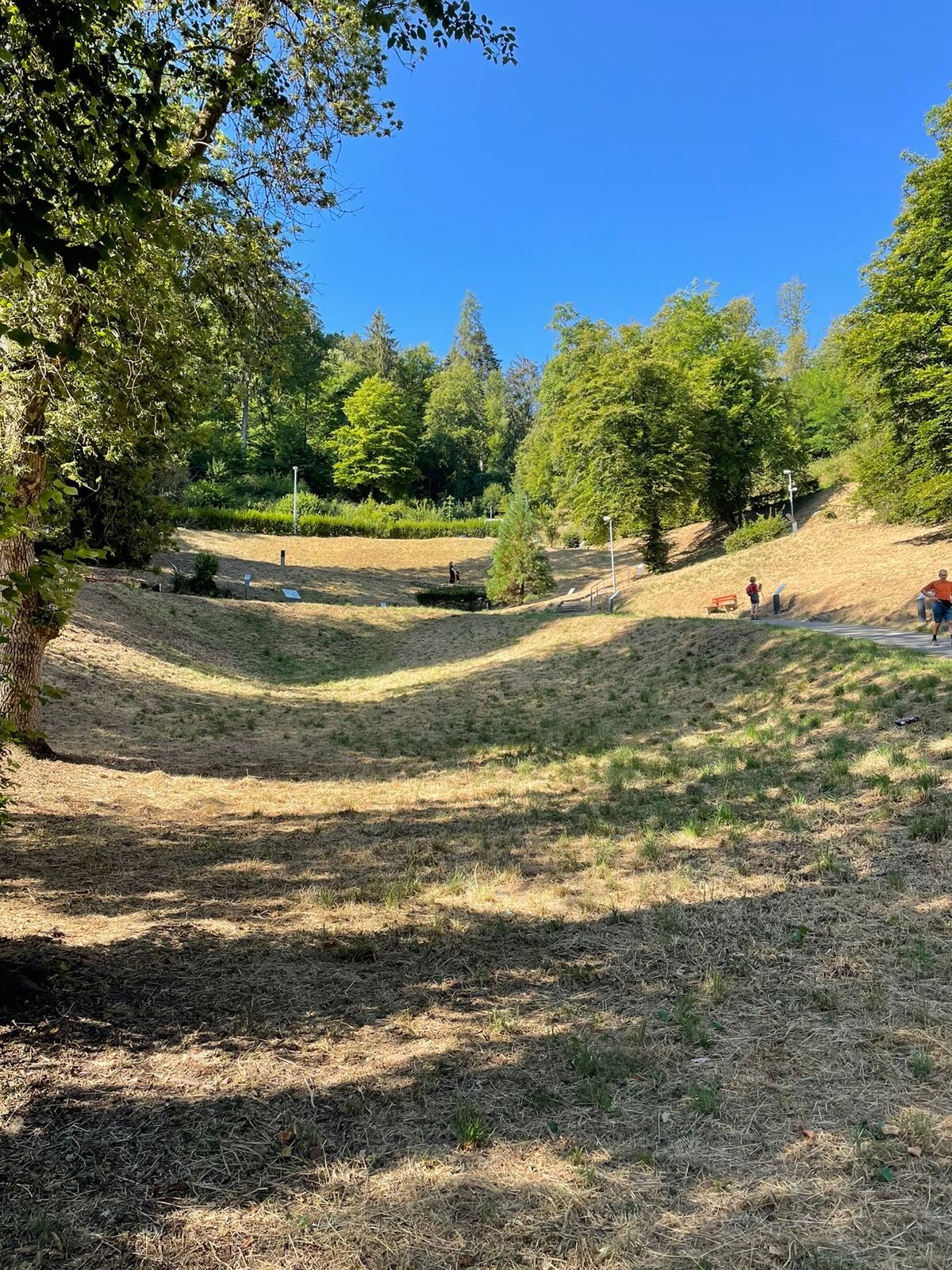
In the beautiful Calw Stadtgarten we now take the left path uphill to the former small Alpine garden (3). Here the creation of the Calw Stadtgarten and the former first nature trail of Calw is described.
Above Schillerstraße is the literature garden (4) (the former large Alpine garden). Just a few meters away stands the memorial stone for Dr. Emil Schüz, the doctor, botanist, natural scientist, and historian (5).
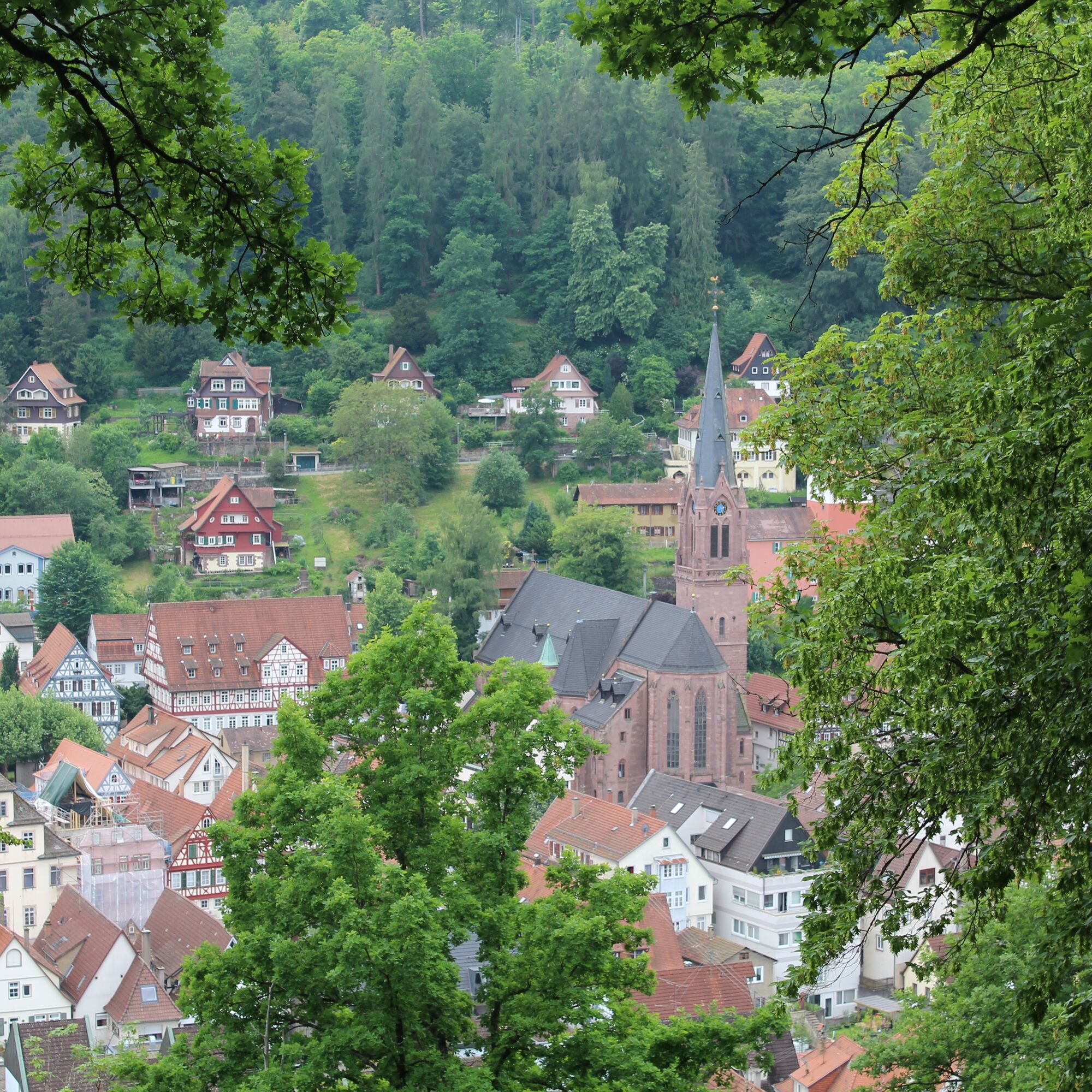
Uphill follows the larch path (panorama path) with a wonderful view of Calw. Here the great deeds of Johann Valentin Andreae, the theologian and social reformer, are shown (6). Shortly after is a special attraction, the three-rail view of the Württemberg Black Forest railway (7).
Further below is the memorial stone for Ökonomierat Eugen Horlacher (8). He received the title in 1889 from King Karl of Württemberg. (Another memorial stone for his mother, Sophie Horlacher, stands in Alzenberg.)
On Schillerstraße, data and facts of Calw city history can be found (9). From there we follow the road uphill to the former new higher commercial school of Karl Zügel (Academy) (10). 200 meters further we stand above the suburb, the actual origin of Calw (11). The suburb path now goes steeply uphill; we cross the street at the traffic lights and continue uphill to the memorial stone for Johann Gottfried Korn (12). In the 1880s, Hermann Hesse also met there with his schoolmates and recited his own fairy tales.
A few meters uphill, at Windhof, the Calw club ski championships started in the 1950s (13).
Then we keep right towards Alzenberg. If you like, you can take a small detour to the Alzenberger Stele and the memorial stone of Sophie Horlacher. Allow 15 minutes walking time there and 15 minutes back. The actual memorial stone circular hiking trail leads right to Meistersberg with a magnificent view of Calw and Schlossberg; here the history of the Calw counts with their castle (14) comes alive.
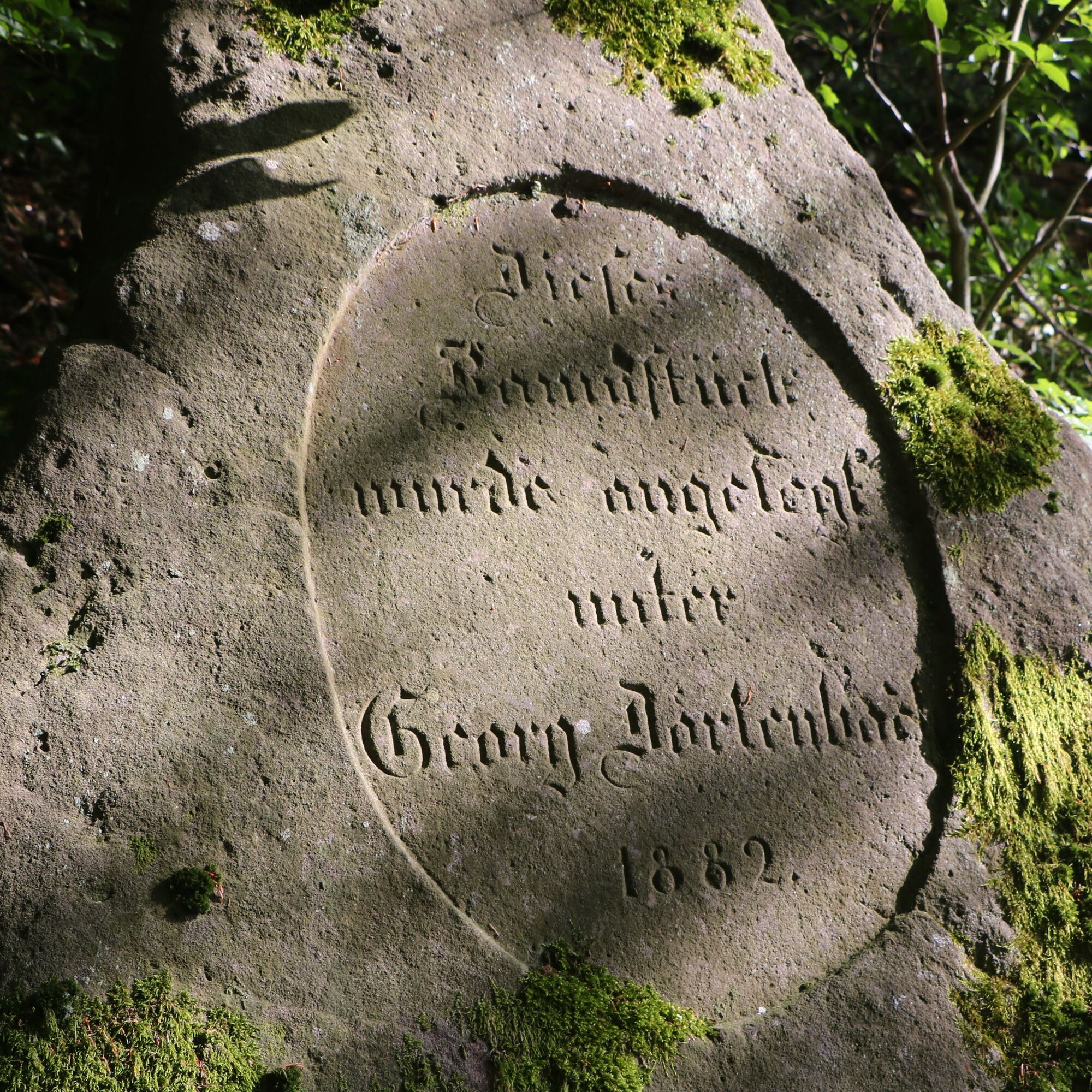
Down in Wurstbrunnental, it is about the former water supply (15). Following the path, we come across a special memorial stone set by Georg Dörtenbach (16). A few meters back and right up awaits us an alpine, romantically appearing landscape. There we come directly to the natural monument, the Cuckoo Rock, which impresses with fascinating rock towers, niche-shaped and overhanging parts (17).
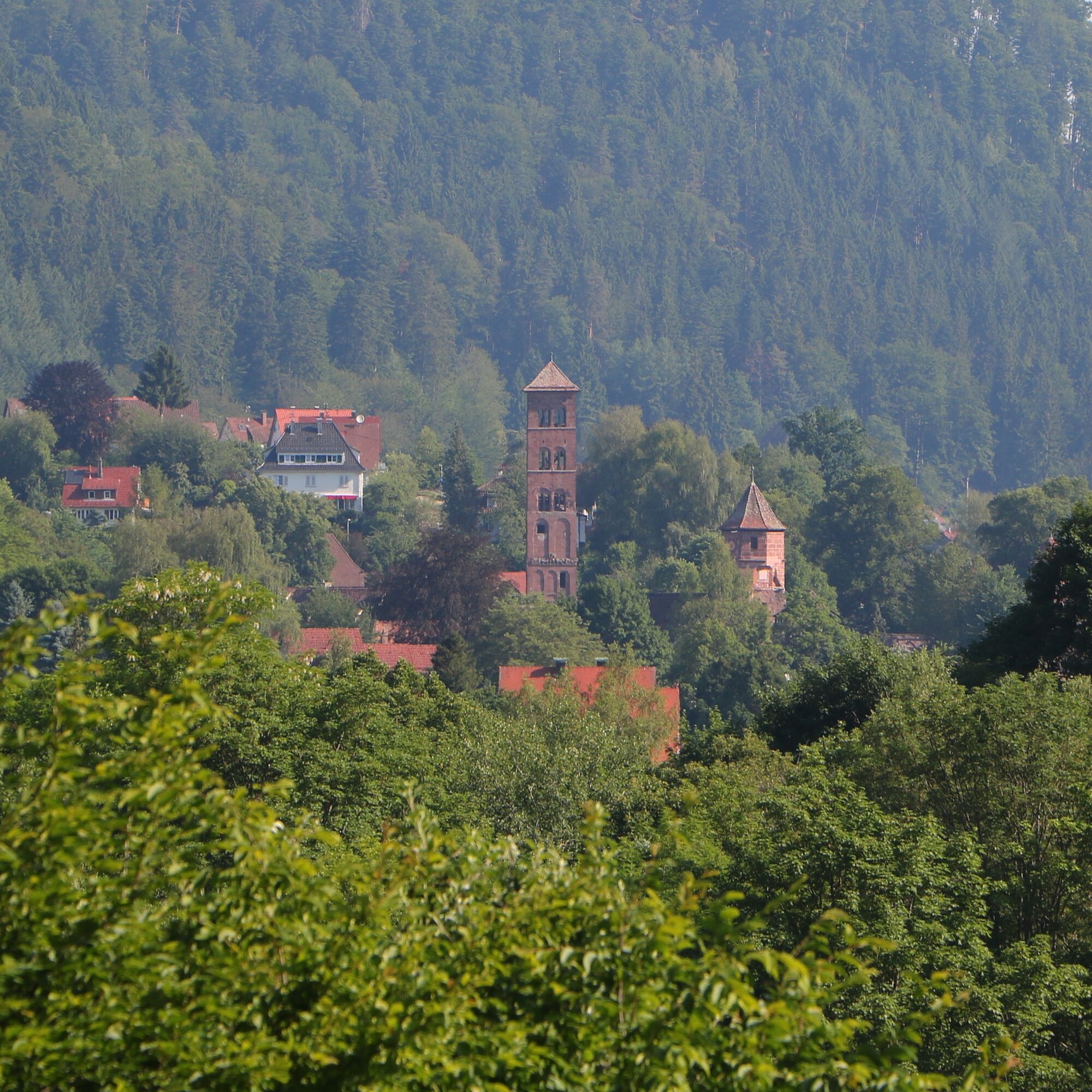
Further downhill, Hirsau Monastery can be seen in the distance (18). Now we go back a few meters downhill to the city, to the Hirsauer-Wiesenweg; there the building materials of the former Calw hospital from Schießberg have been incorporated into a rental house (19). Towards the city it goes past the first residential house with a car hall (20), where the production site of the Gutbrod company in Calw is also mentioned.
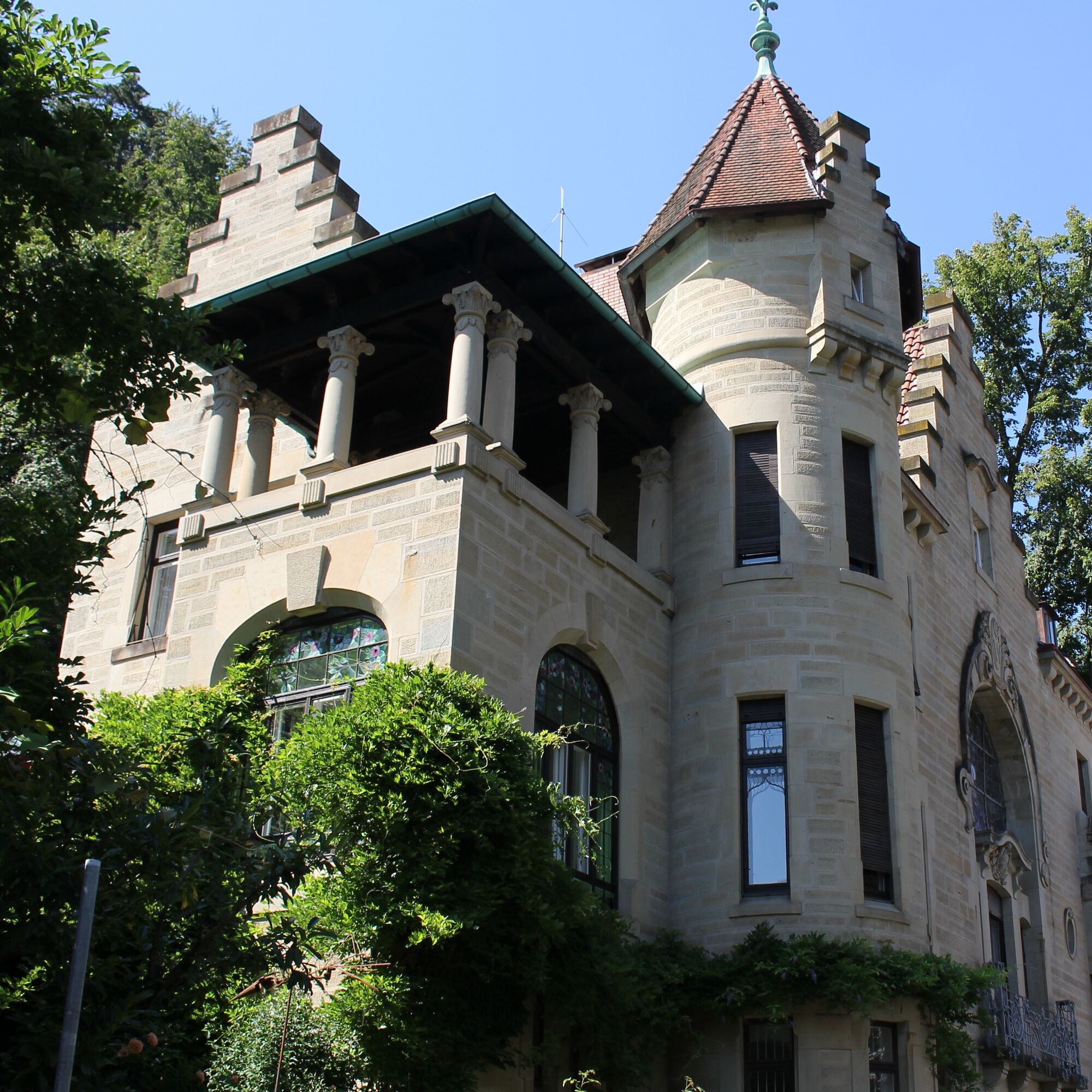
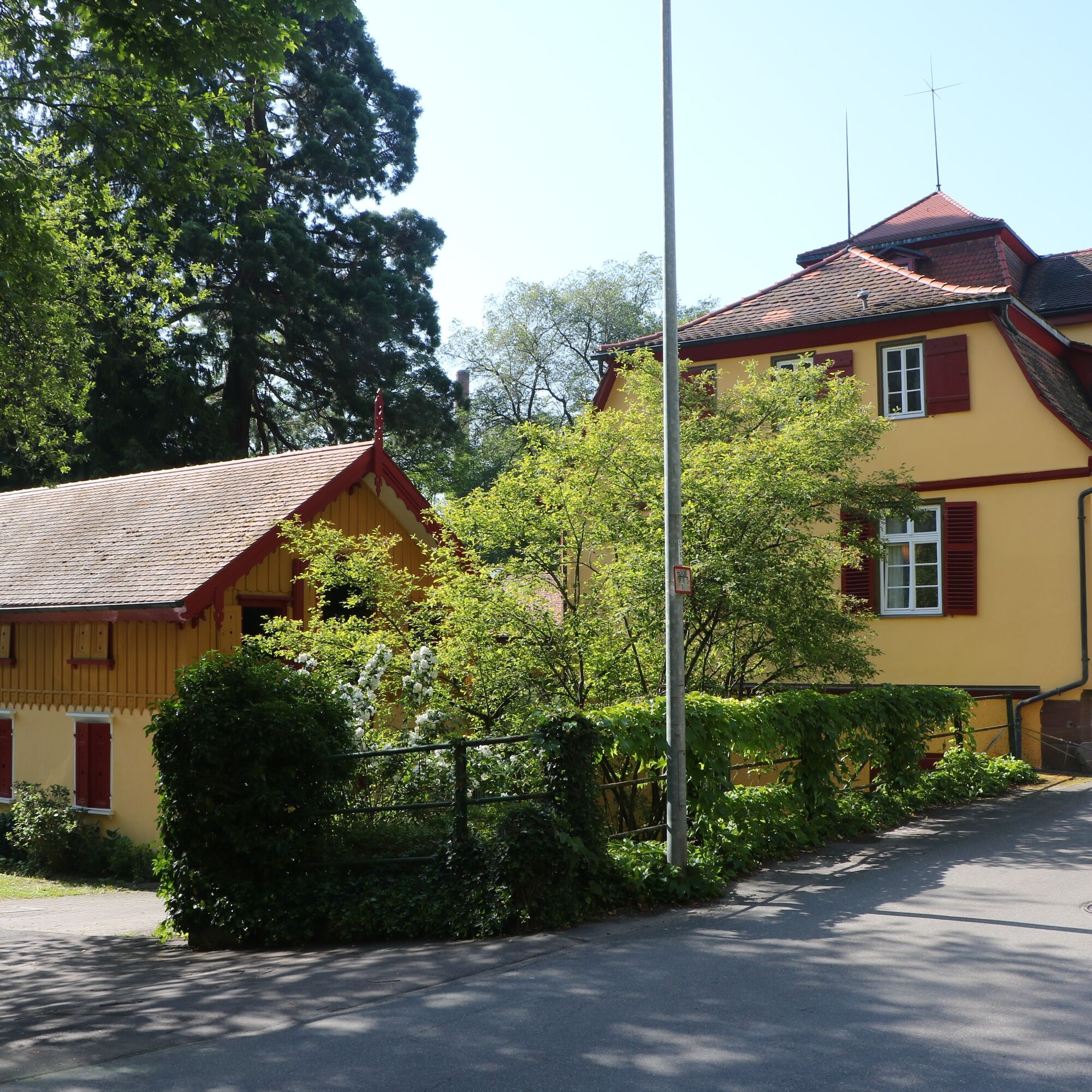
Along the street past magnificent buildings, the former manufacturer villa Villa Wagner (Schlössle) and the manor house of Johann Georg Doertenbach (21). Now we follow the path towards Nagoldufer and have the best view of the location of the Saint Wendelin Chapel (22), after which the street is also named.
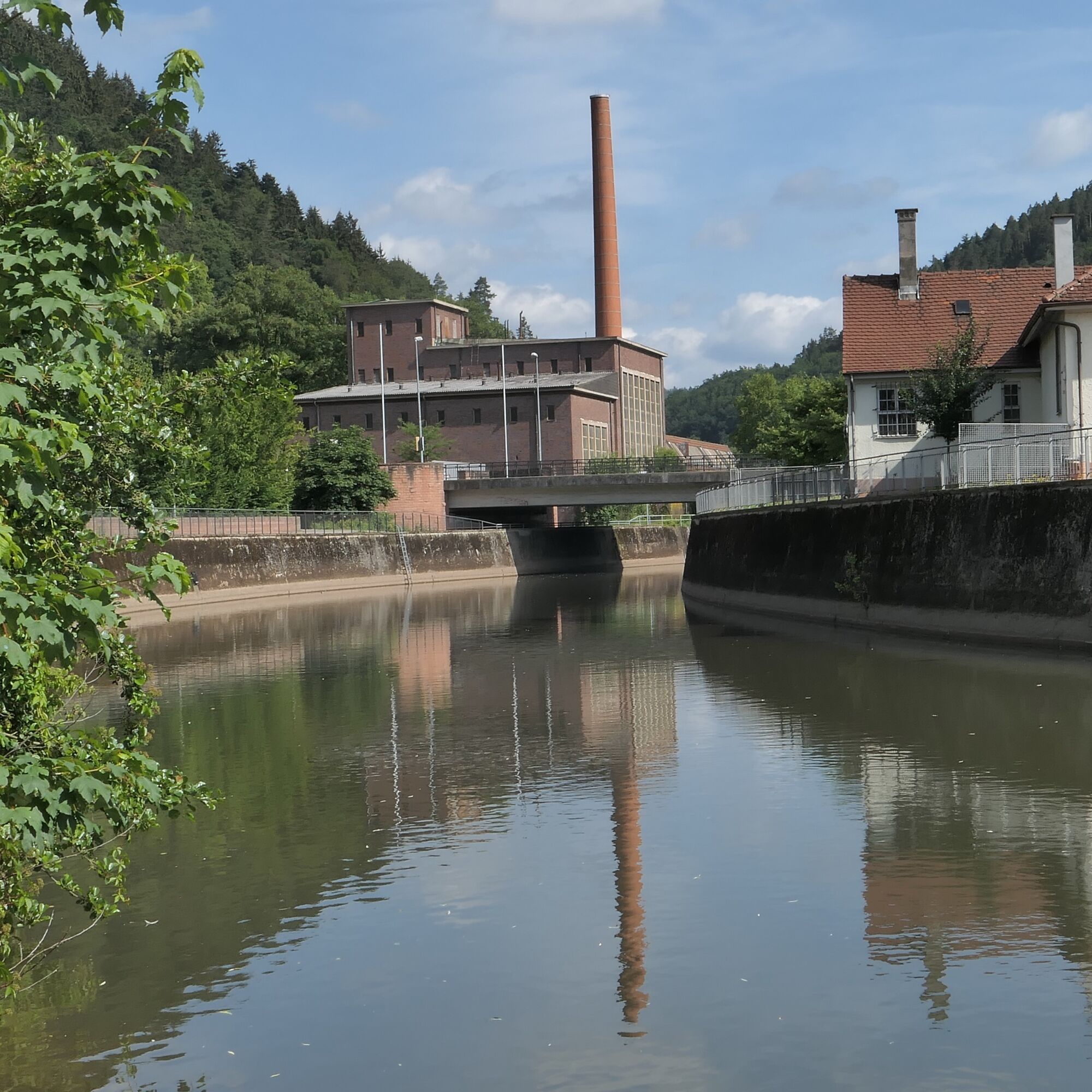
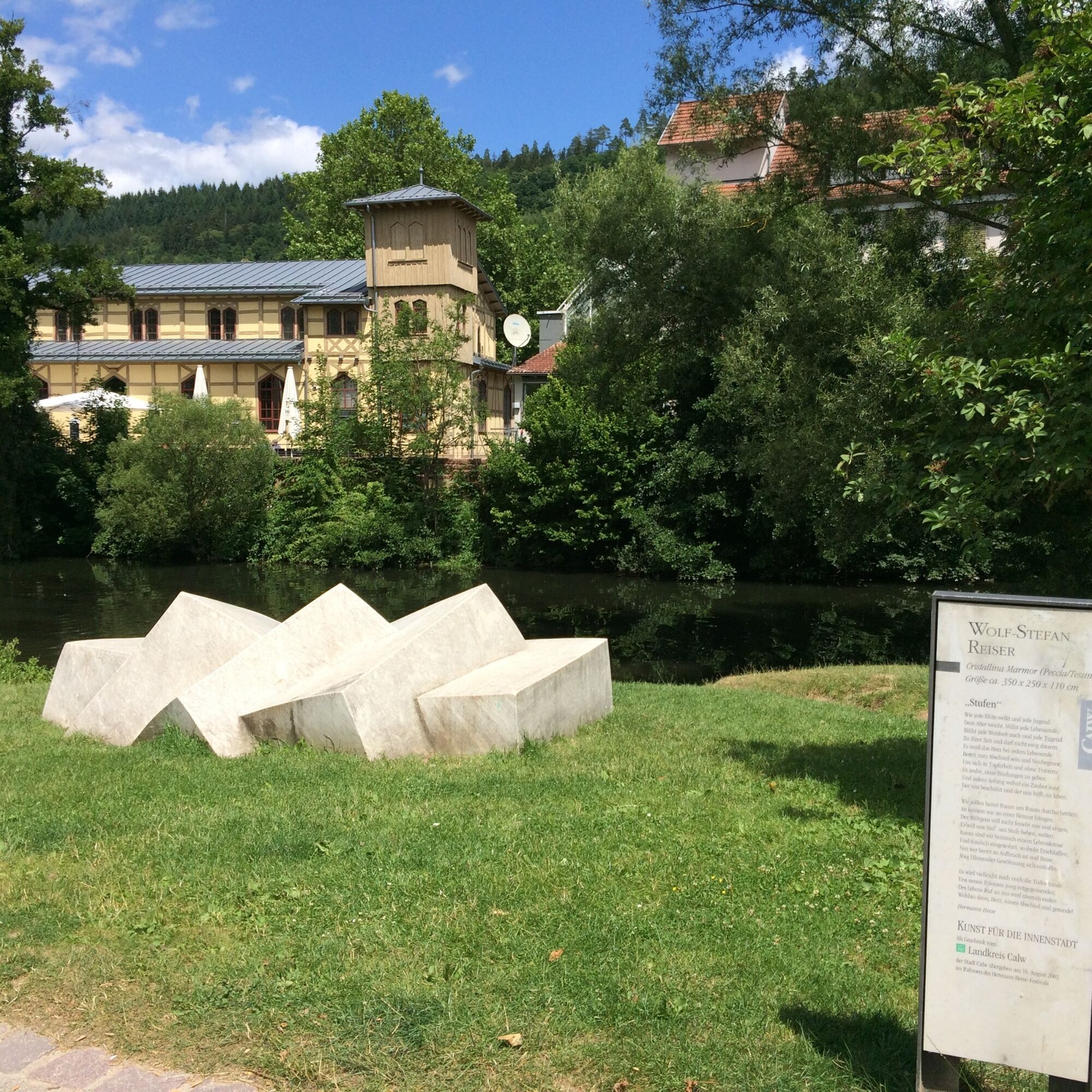
Down at the Nagold, at the boiler house of Calw Decken- und Tuchfabriken AG (23), we can read how the factory positively influenced the work and life of the city. Then, following the Nagold river path, the Calw rafting and its economic importance is explained (24). Then to Brühl to the steps by Wolf-Stefan Reiser (25) and to Villa Wagner, built by Dörtenbach; later it was inhabited by the important manufacturer dynasties Stälin and Wagner (26).
50 meters further ahead at the wine bridge, information about the Calw rafting and trading company is given (27). On the other side of the Nagold, on the right is Palais Vischer, today's local history museum of Calw, on the left the stone house, built in South Tyrolean style.
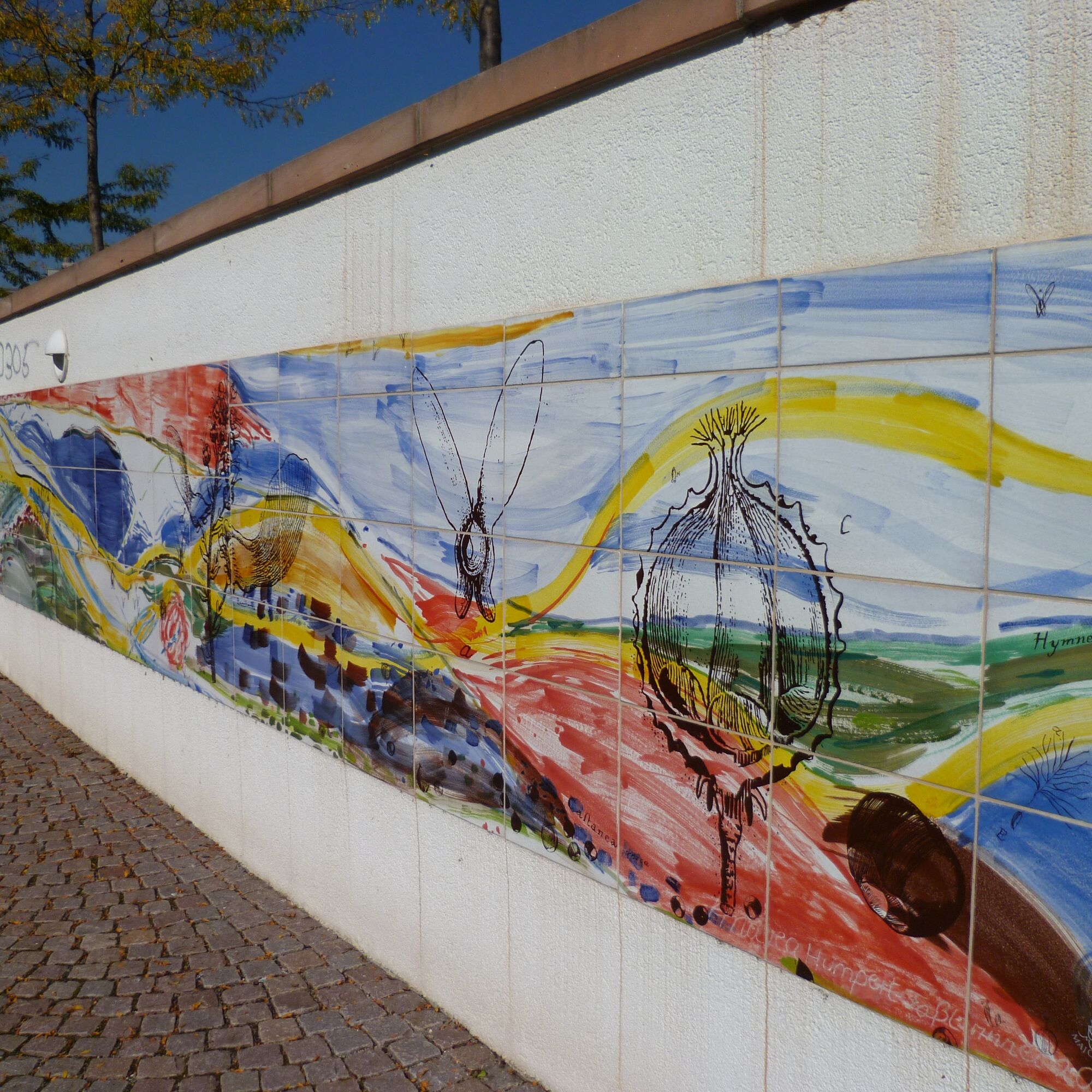
After crossing the bridge, it goes left out of town, along the Nagold, to the former old Brühl sports hall (28), past the noise protection wall to the murals by Andrea Humpert-Faßlrinner at Großer Brühl, which commemorate the globally significant Calw doctors and botanists, Joseph and Carl Friedrich von Gärtner.
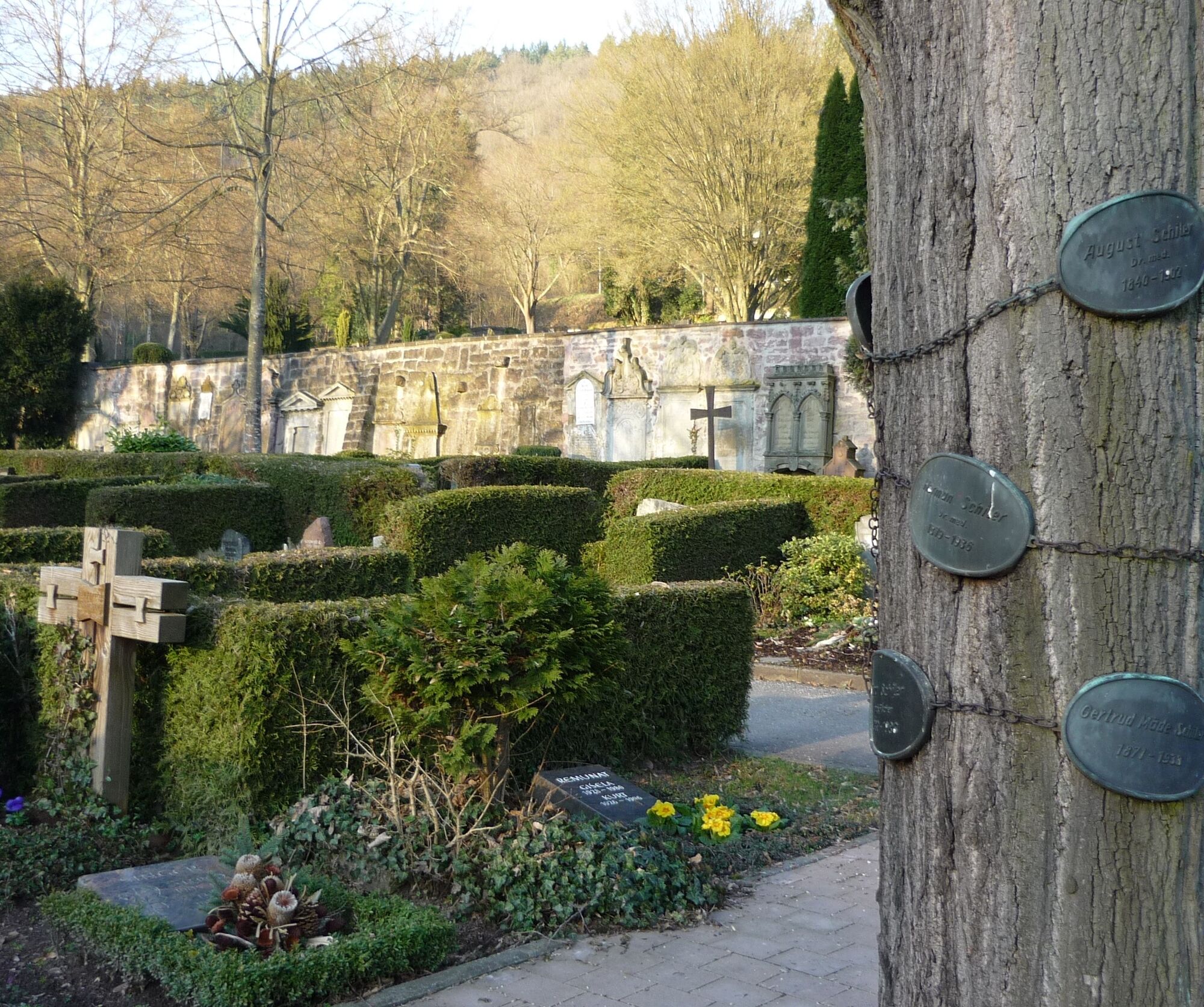
Here the doctor and botanist Joseph Kölreuter from Sulz am Neckar is also honored (29). On the opposite side of the street, at the cemetery (30), the stele points to the history of the cemetery and the historic grave plaques. Now we go uphill under the railway bridge, further up after the second bridge we take the stairs up to the railway line, where the special features of the cultural monument of the Württemberg Black Forest railway are listed (31).
We follow the footpath up to Hohen Fels; there opens a completely different perspective on Calw (32). The custom of "torches" was still practiced here until the end of the 19th to the beginning of the 20th century. In 1962, a memorial for all fallen soldiers was erected on Hohen Fels.
Down at the rock on Eduard-Conz-Straße is a very special garden of the former merchant "Carl Reichert an der Brück" (33). From there we move downhill, following the Hohfelsenstaffelweg, which surely inspired Calw's artists with its idyll and views of the city. There we experience the Calw artists and painters:
Rudolf Schlichter, native Calw painter (34) Richard Ziegler, who had a studio in the Calw stone house on Bischofstraße for a long time (35) Kurt Weinhold, whose former residential and garden house lies on the path (36)
There is also the memorial stone for Georg Jakob Zahn (37), member of the Calw Zeughandlungscompagnie
After the artists' corner, it goes again past the railway track of the Württemberg Black Forest railway; a poem from 1868 describes how the railway was imagined at that time (41). Down at Stuttgarter Straße stands the garden house from 1790, classified as a rare monument (42). Here, the Calw soapbox derbies also took place in the 1950s.
Further downhill on Stuttgarter Straße, we go under the railway viaduct, then about 40 m left to Nikolausbrücke with the Nikolaus chapel, the landmark of Calw. (The Tannery Museum on Badstraße is worth a detour.) Then we go right onto Marktstraße and head to the historic marketplace with its unique half-timbered houses, past the birthplace of Hermann Hesse to the starting point, the Hermann Hesse Museum.
Sturdy footwear is recommended.
Exit Pforzheim-West (approx. 30 km); continue via federal road 463 towards Calw Motorway A8 from Ulm/Stuttgart:
Exit Leonberg (approx. 25 km), continue via federal road 295 towards Weil der Stadt to Calw Motorway A81 from south/Lake Constance:
Exit Gärtringen-Stadtmitte (approx. 20 km), continue via K 1075; near Deckenpfronn take the first exit at the roundabout and drive on B 296 further towards Calw. Plan your arrival by car at www.map24.de
Arrival by train
Calw station is about 400m from the starting point, the Hermann Hesse Museum, located on the cultural railway line from Pforzheim to Horb. On this railway line, modern railcars run every half hour with connections to the InterRegio network in Pforzheim and the ICE and IC network in Karlsruhe.
You can find current travel information and schedules on the Deutsche Bahn homepage. Go to homepage
You can find bus and train connections combined with public local transport on the electronic timetable information Baden-Württemberg homepage. Go to homepage
Arrival by bus:
Greater Stuttgart area bus line 670 DB Regiobus / Volz; (Calw-Weil der Stadt) connection to S6 Böblingen / Sindelfingen area:Bus line 763 DB Regiobus; Calw-Böblingen (connection to S1)
Herrenberg area: Bus line 770 (connection to S1)
Bad Herrenalb/Bad Wildbad: Bus line X63
Plan your arrival at www.efa-bw.de
Calwer Markt car park
226 parking spaces, open continuously
ZOB car park
287 parking spaces, open continuously
Kaufland car park
535 parking spaces, open continuously
Haggasse car park
109 parking spaces, open continuously
Other car parks/parking spaces
Hospital (85), Cemetery, Bischofstraße (15), Stadtgarten (18), Gasthaus Linde, Stuttgarter Straße (35), Underground car park Turnhalle Badstraße (48), Heimgärtner (20), Bahnhofstraße (27), Alter Bahnhof (155)
The rest of the old town also has a lot to offer, with over 200 listed buildings. Just three kilometers away, in the spa town of Hirsau, is Hirsau Abbey. A walk through the ruins is worthwhile!

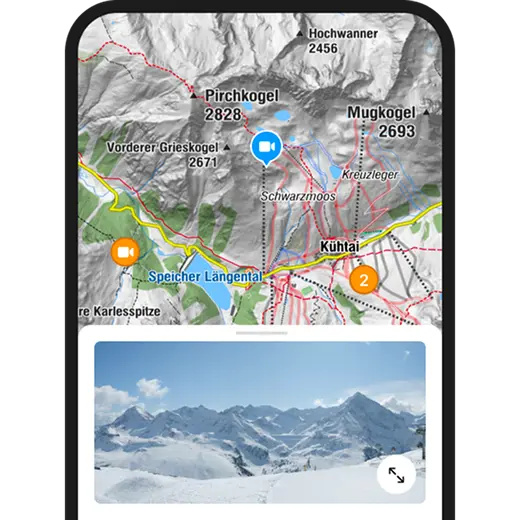
Kamery internetowe z trasy
Popularne wycieczki w okolicy
-
4,9
Der Teinacher (Premiumweg & Genießerpfad)
średniWędrówka 12,0 km -
4,0
Wolfsschlucht and Fox Gorge
średniWędrówka 9,74 km -
4,7
Through the wild romantic Schweinbachtal to the Bruderhöhle cave
średniWędrówka 13,8 km -
5,0
Water, Woods and Meadowtrail / Zavelstein > Calw (Premium trail & Genussweg)
ciężkiWędrówka 14,4 km -
5,0
From Bieselsberg into the wild Monbach valley - dream route on small paths
ciężkiWędrówka 18,0 km -
5,0
AugenBlick route Bad Teinach-Zavelstein Zettelberg
ciężkiWędrówka 15,5 km -
5,0
GeoTour Wildberg through the picturesque Lützenschlucht
ciężkiWędrówka 2,80 km -
4,0
Circular route Hirsau - Oberreichenbach - Schweinbachtal - Hirsau
średniWędrówka 10,2 km -
4,5
Waldeck ruins and the largest water wheel in Europe
średniWędrówka 15,4 km -
4,0
Through the Lengenbach valley to the historic Burg Liebenzell
średniWędrówka 10,9 km
Wędrówki i tropienie

Nie przegap ofert i inspiracji na następne wakacje
Twój adres e-mail została dodana do listy mailingowej.