





Historical city walk


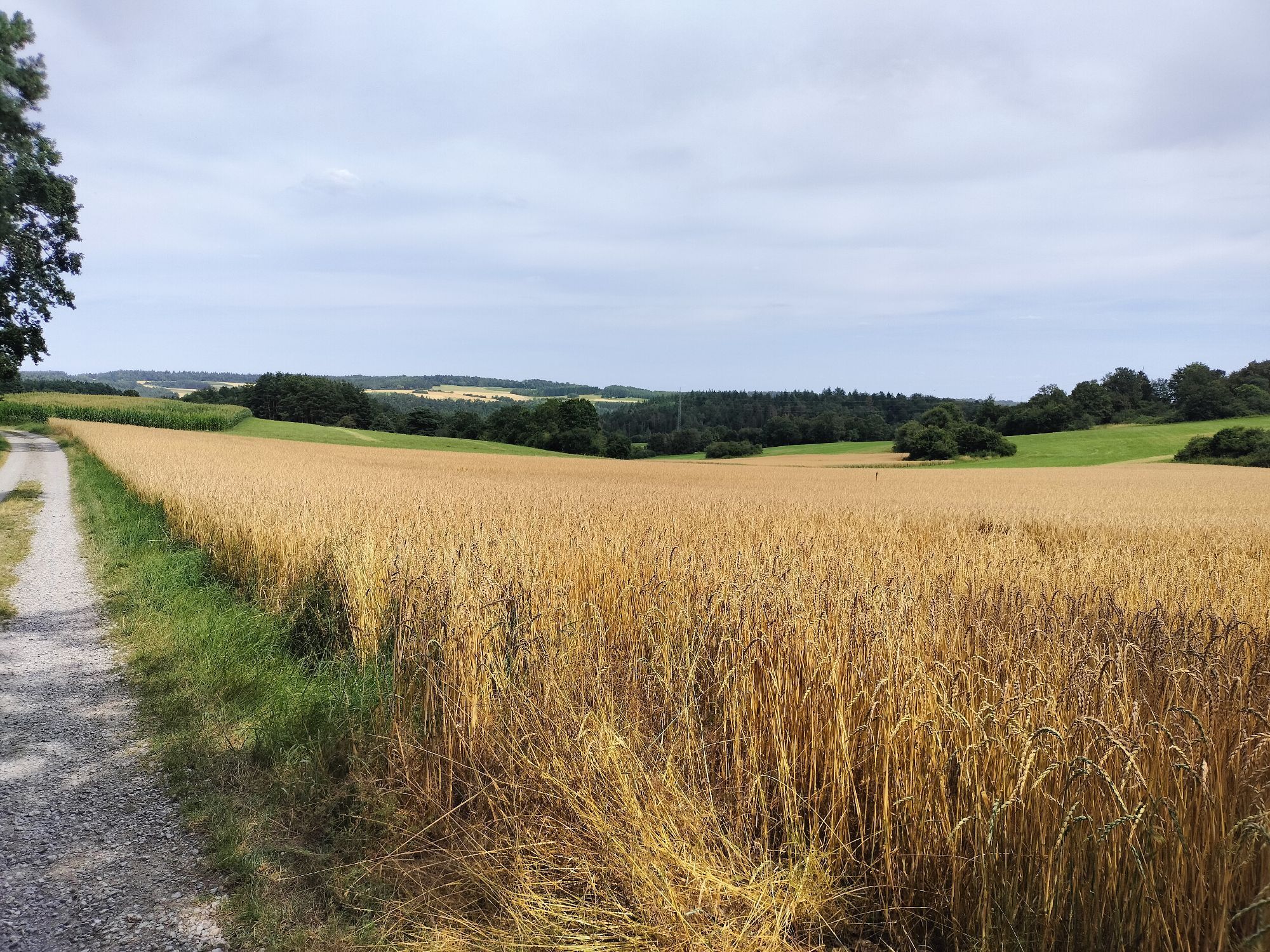
Historical city walk where you learn and see more about Wildberg and its historic buildings and monuments.
The monuments and buildings appear in the following order on the historical city walk:
Start...
Historical city walk where you learn and see more about Wildberg and its historic buildings and monuments.
The monuments and buildings appear in the following order on the historical city walk:
Start at the castle complex (1)
The market fountain (2)
The historic town hall (3)
In the old sheep barn (4)
The Welzgrabgen Bridge (5)
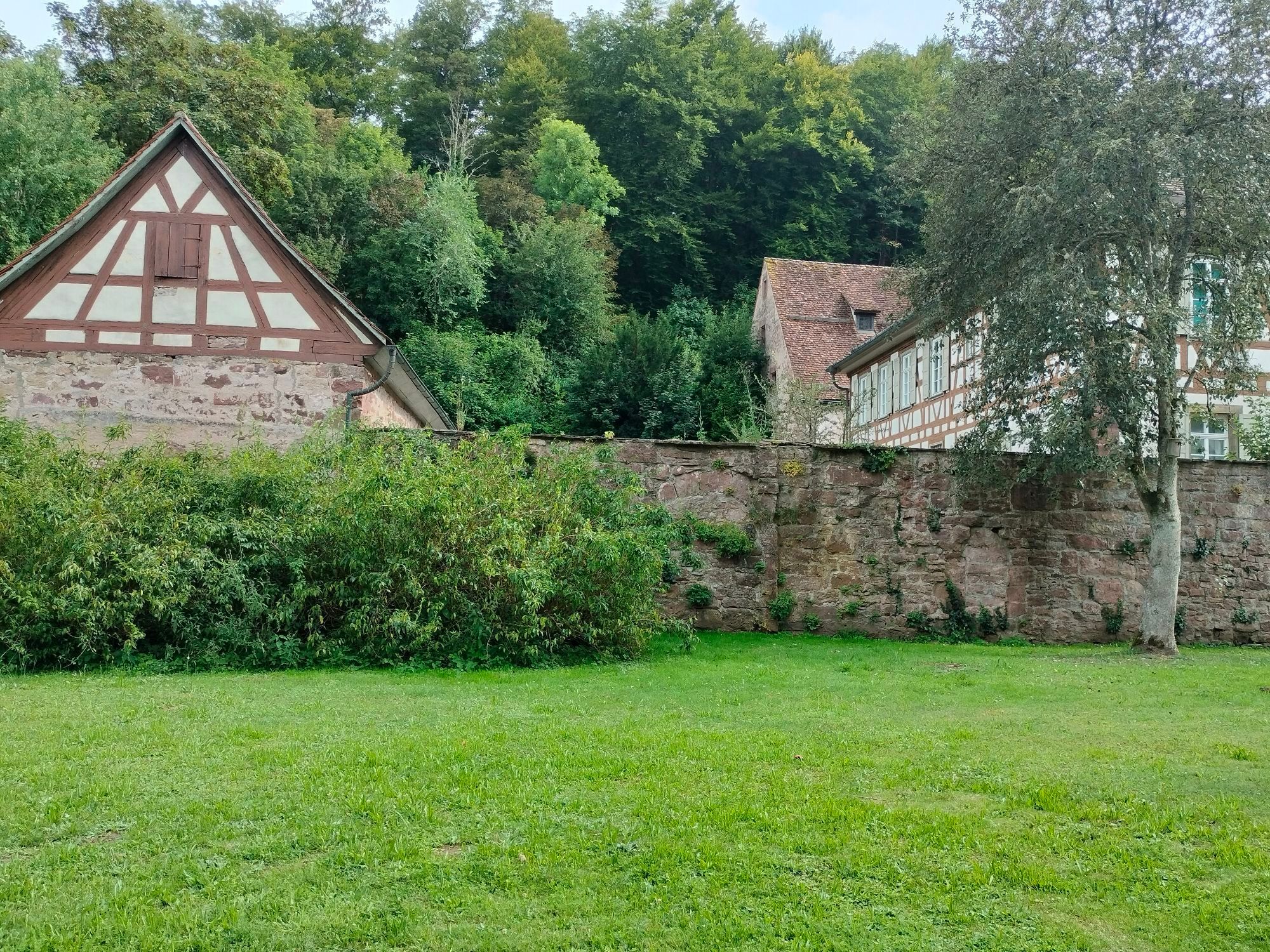
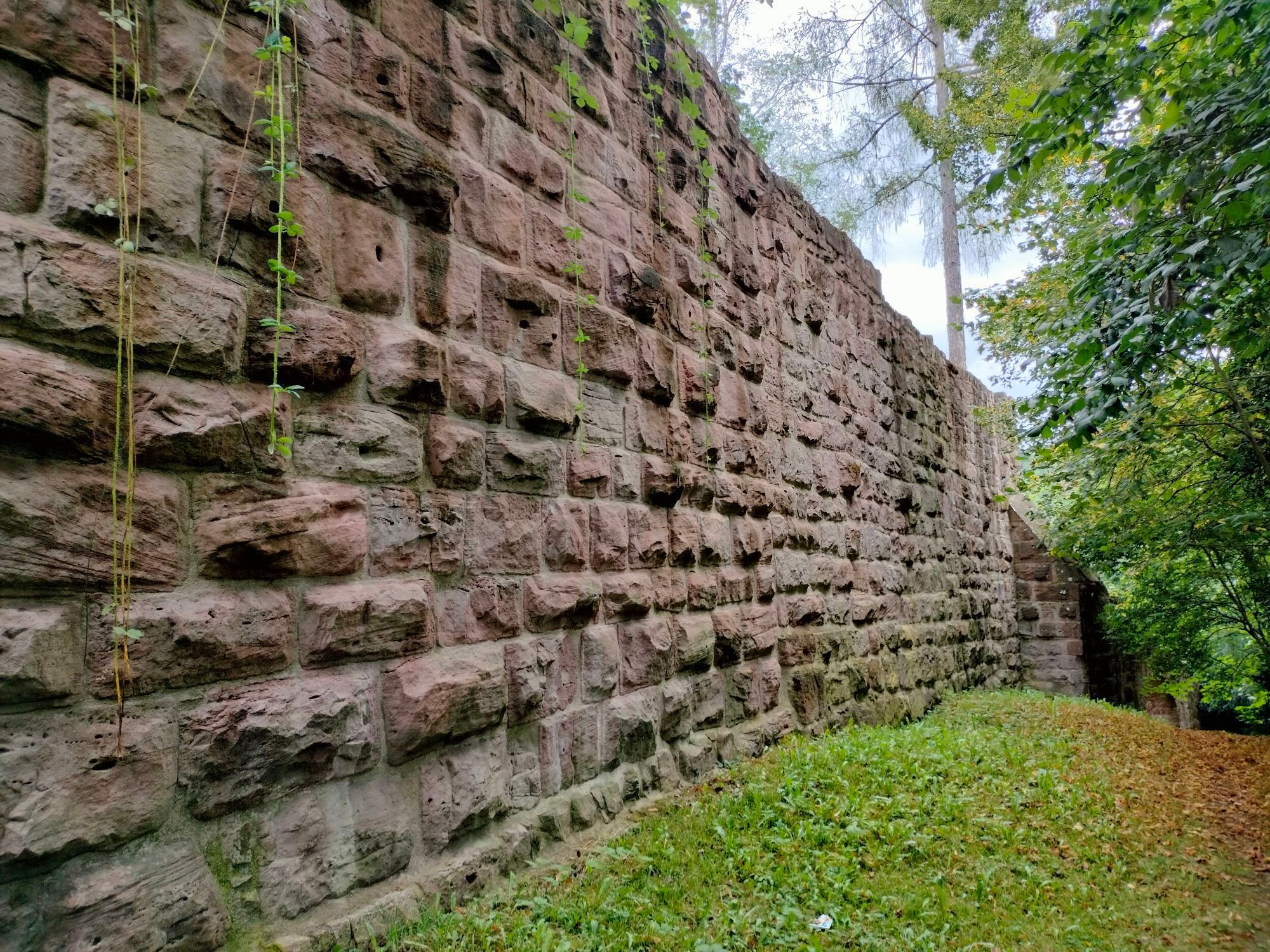
Remains of the city wall (6)
The old school (7)
Since 1392 the Protestant Martins Church (8)
The Protestant parsonage (9)
Opposite is the Spieß fountain (10)
Nursing and retirement home (11).
Old pharmacy (12)
The witch tower (13)
The only preserved city gate is the detention tower (14).
The old cemetery (15)
The Hirsch bridge (16)
The small bath gate (17)
Former finance office (18)
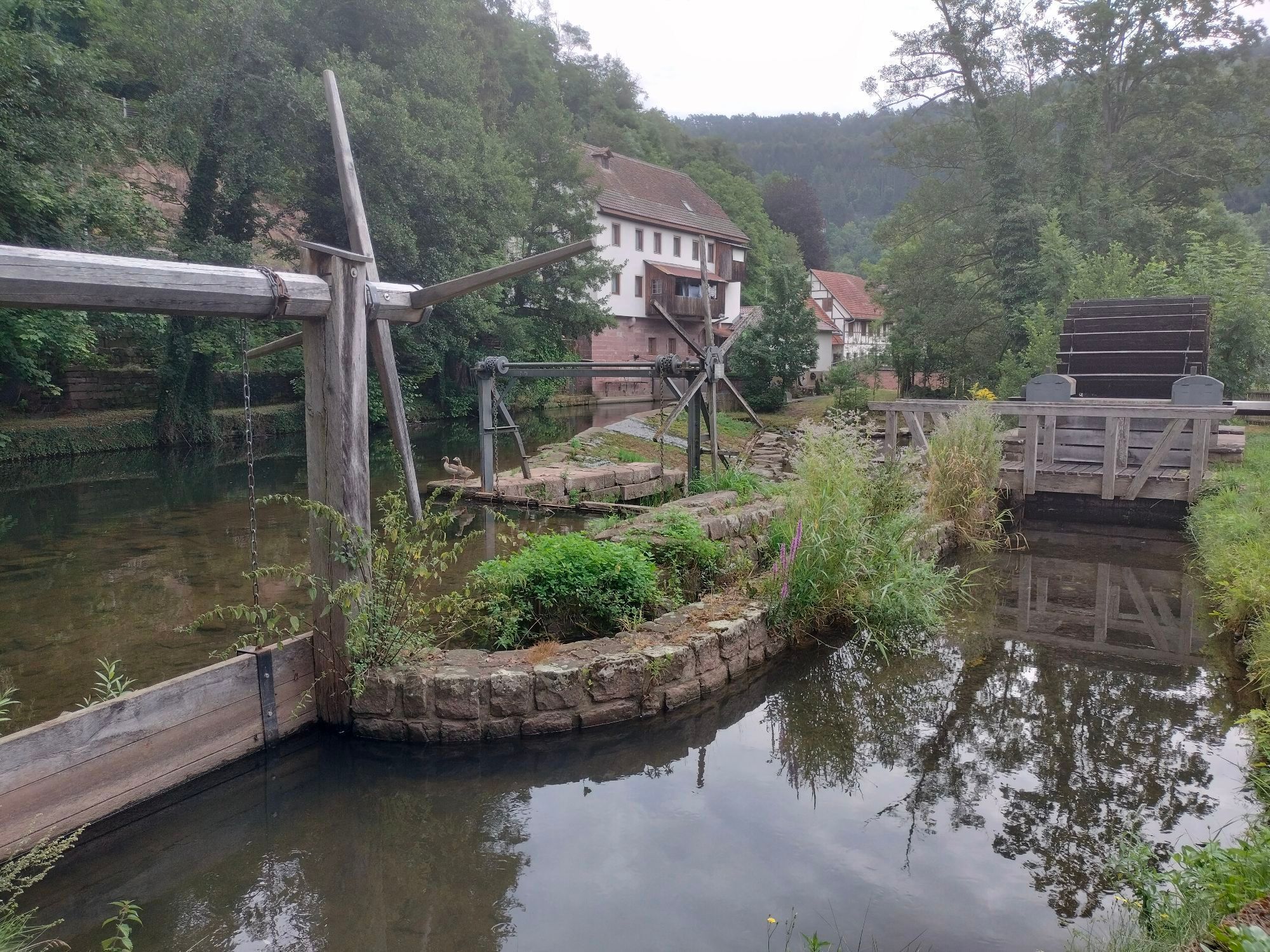
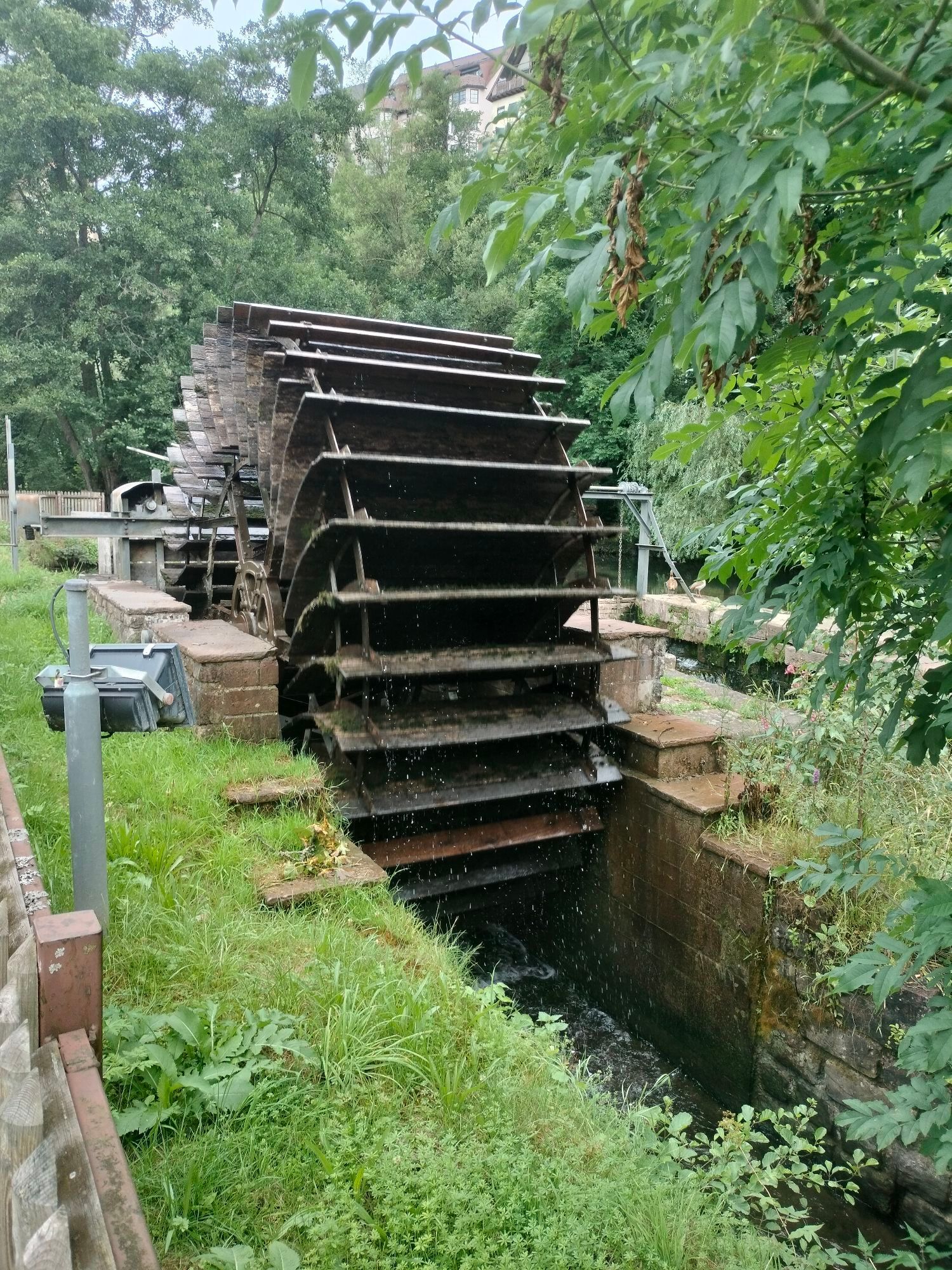
The historic water wheel (19)
A trip worth doing for the whole family, as you learn a lot about the town of Wildberg and its history.
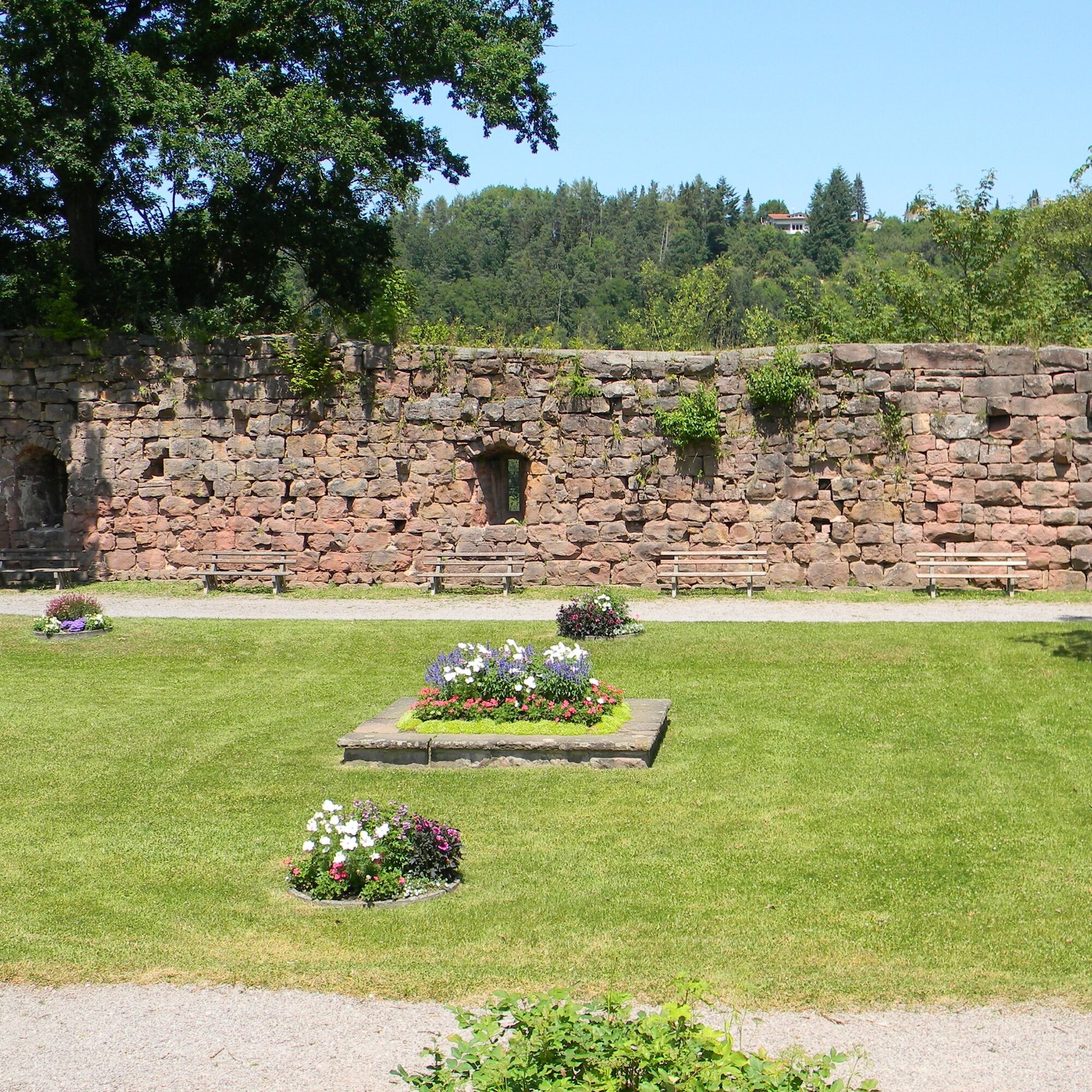
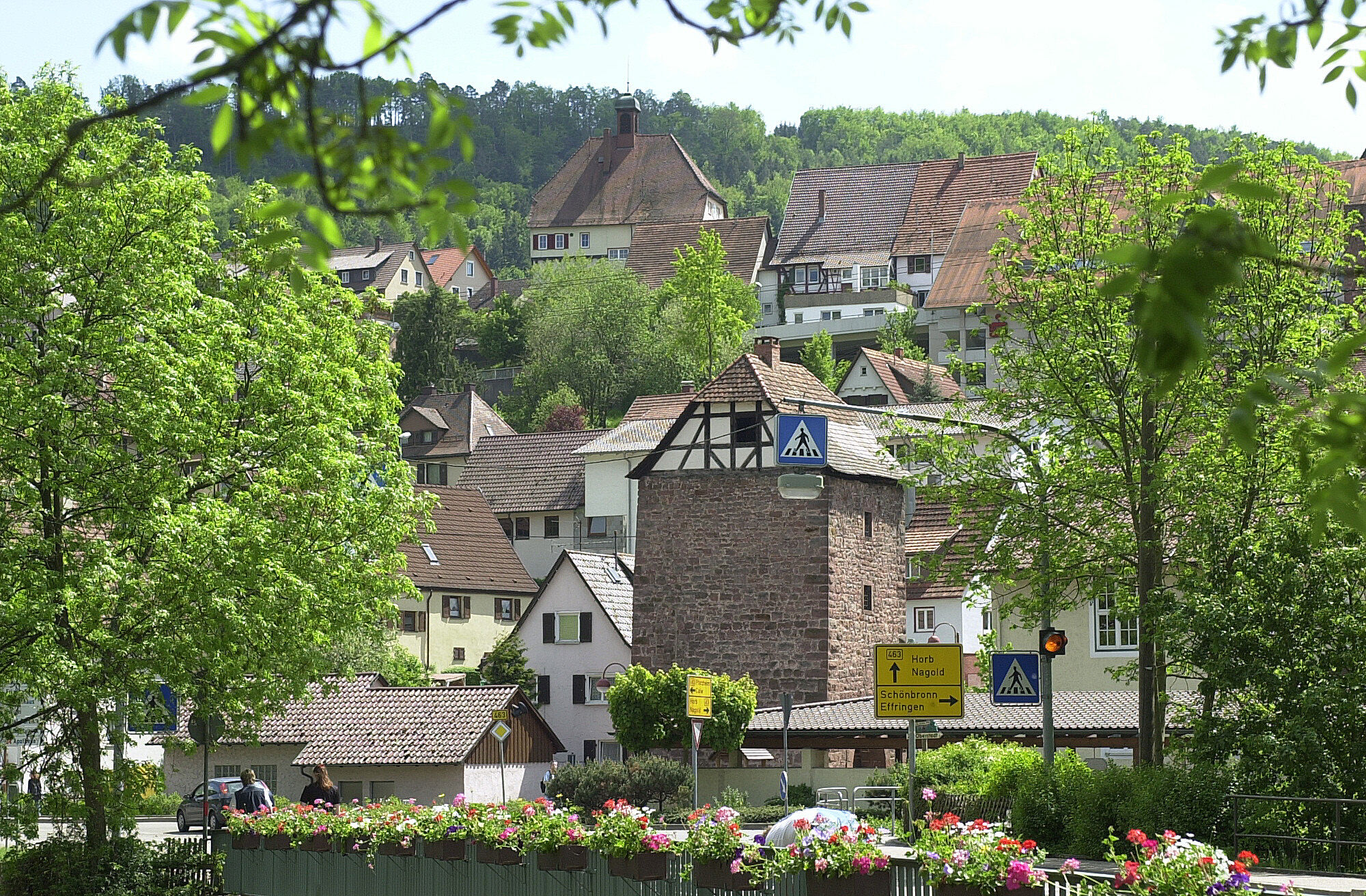

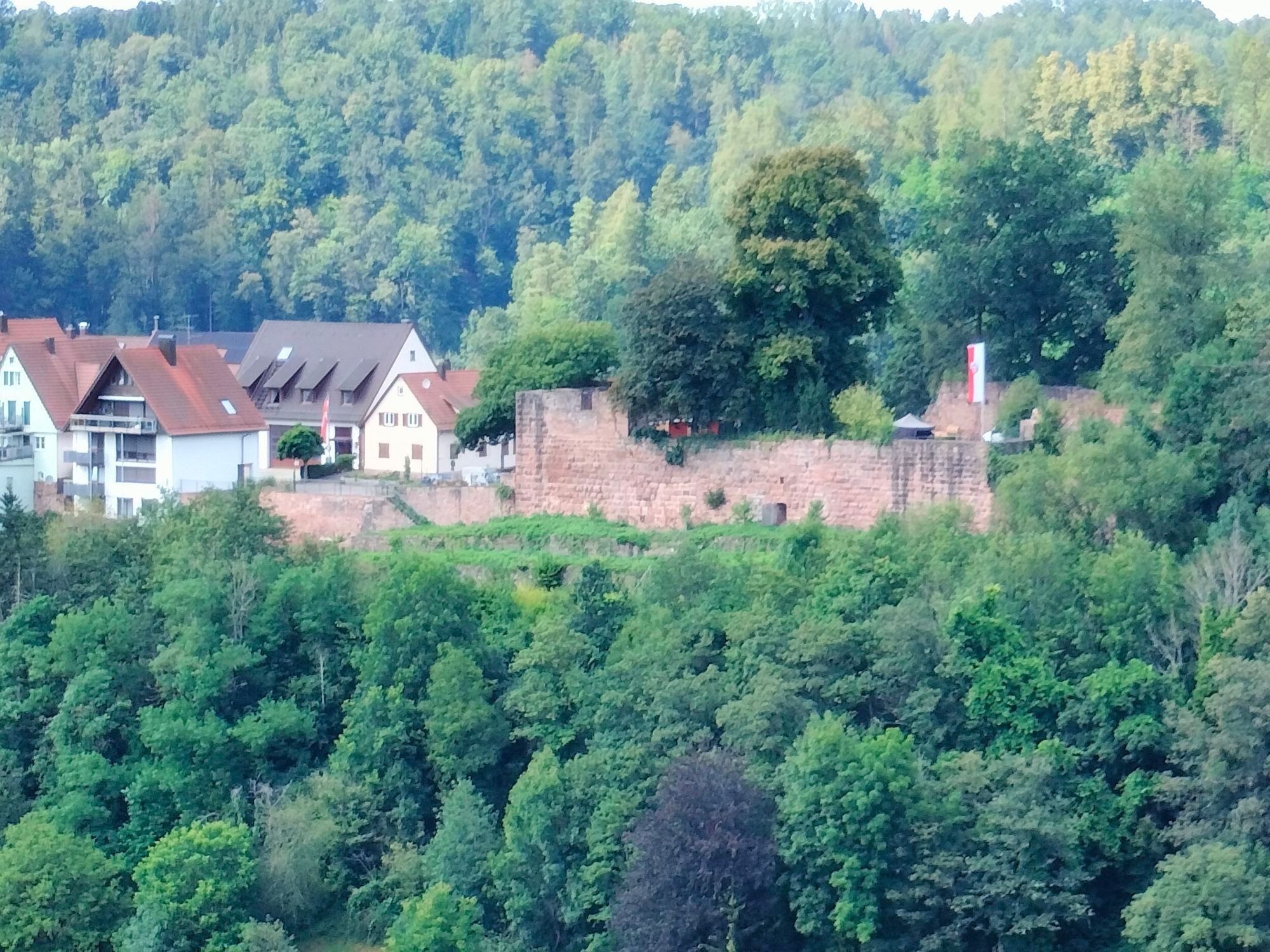
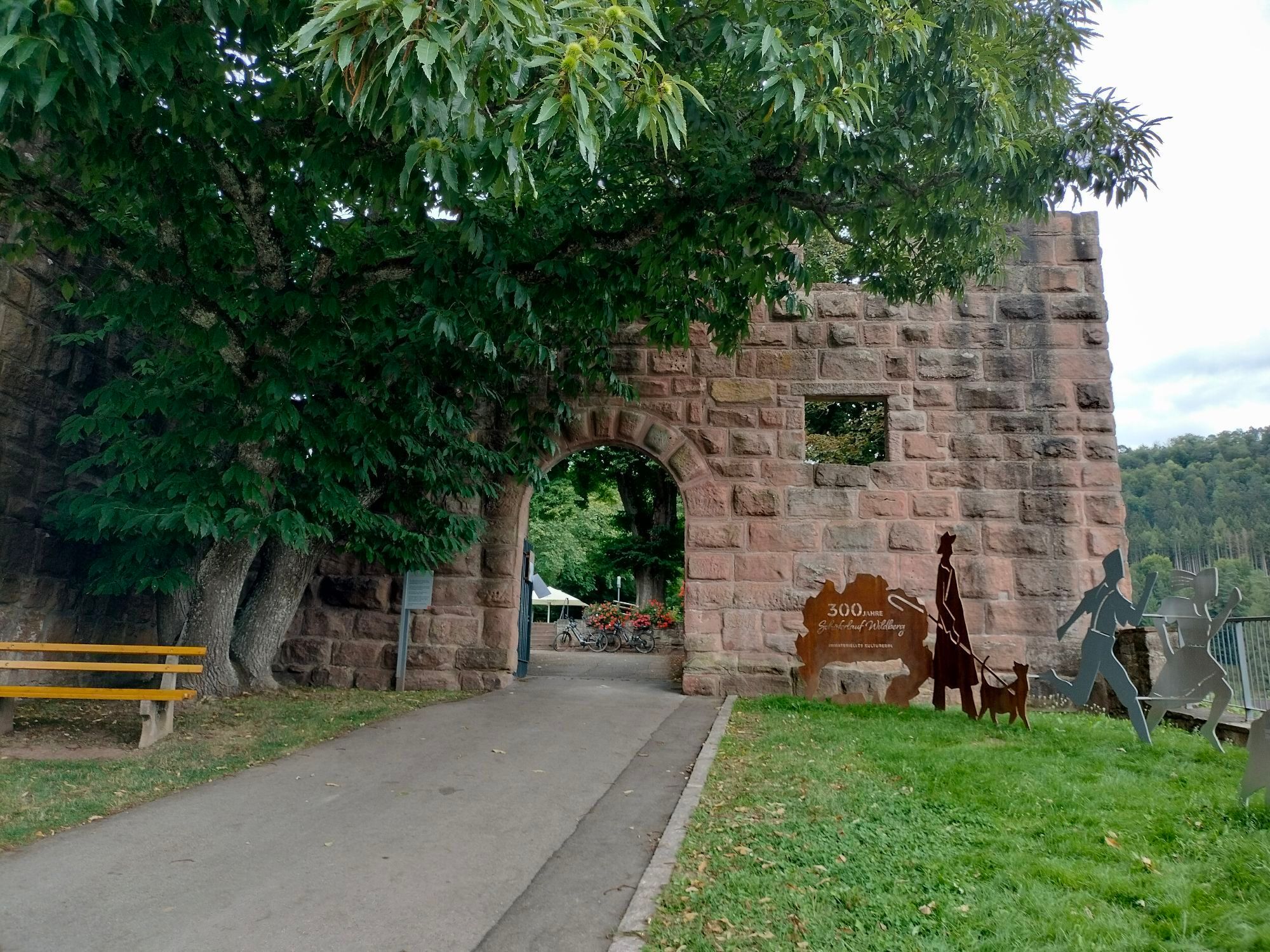
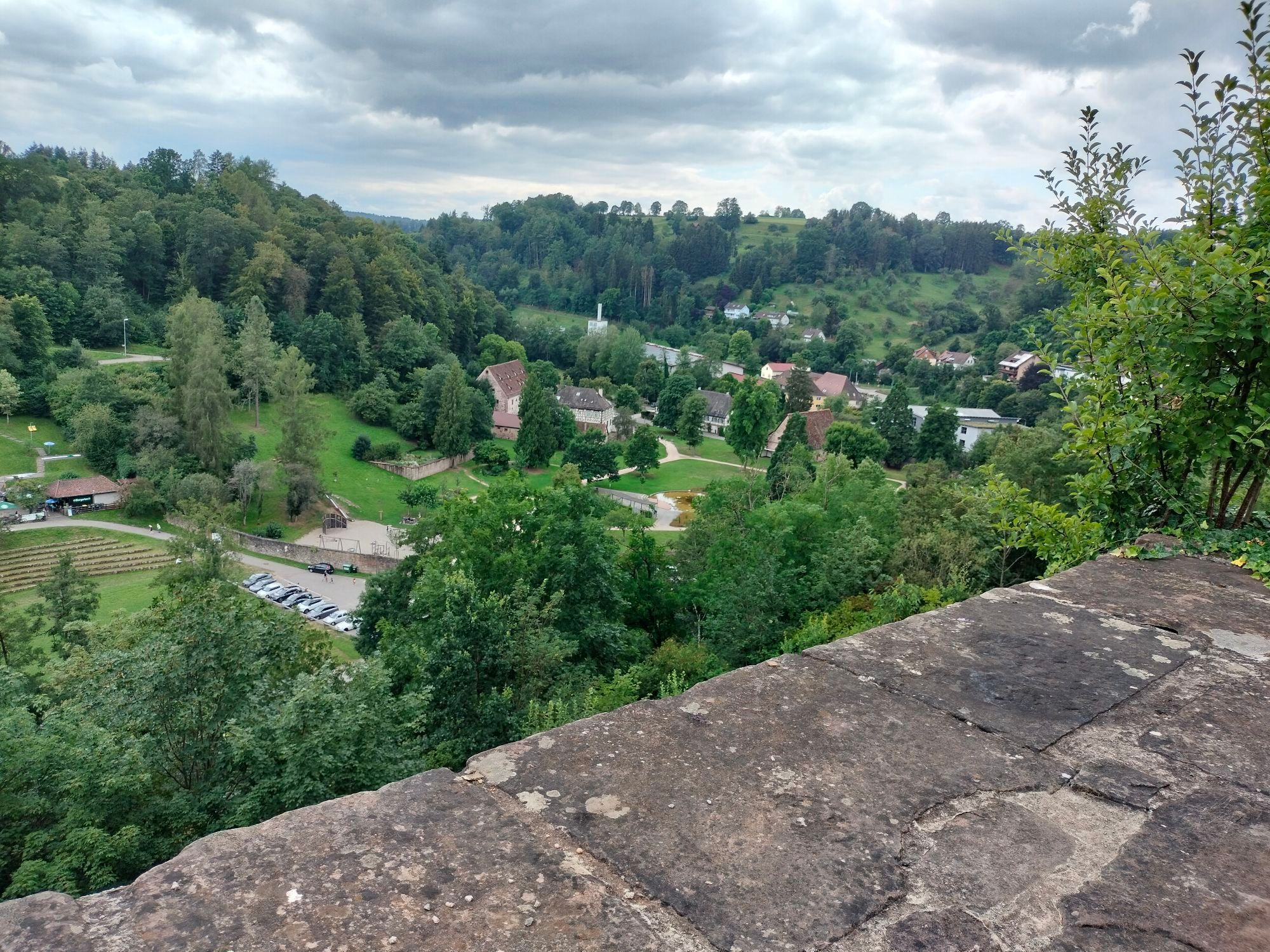
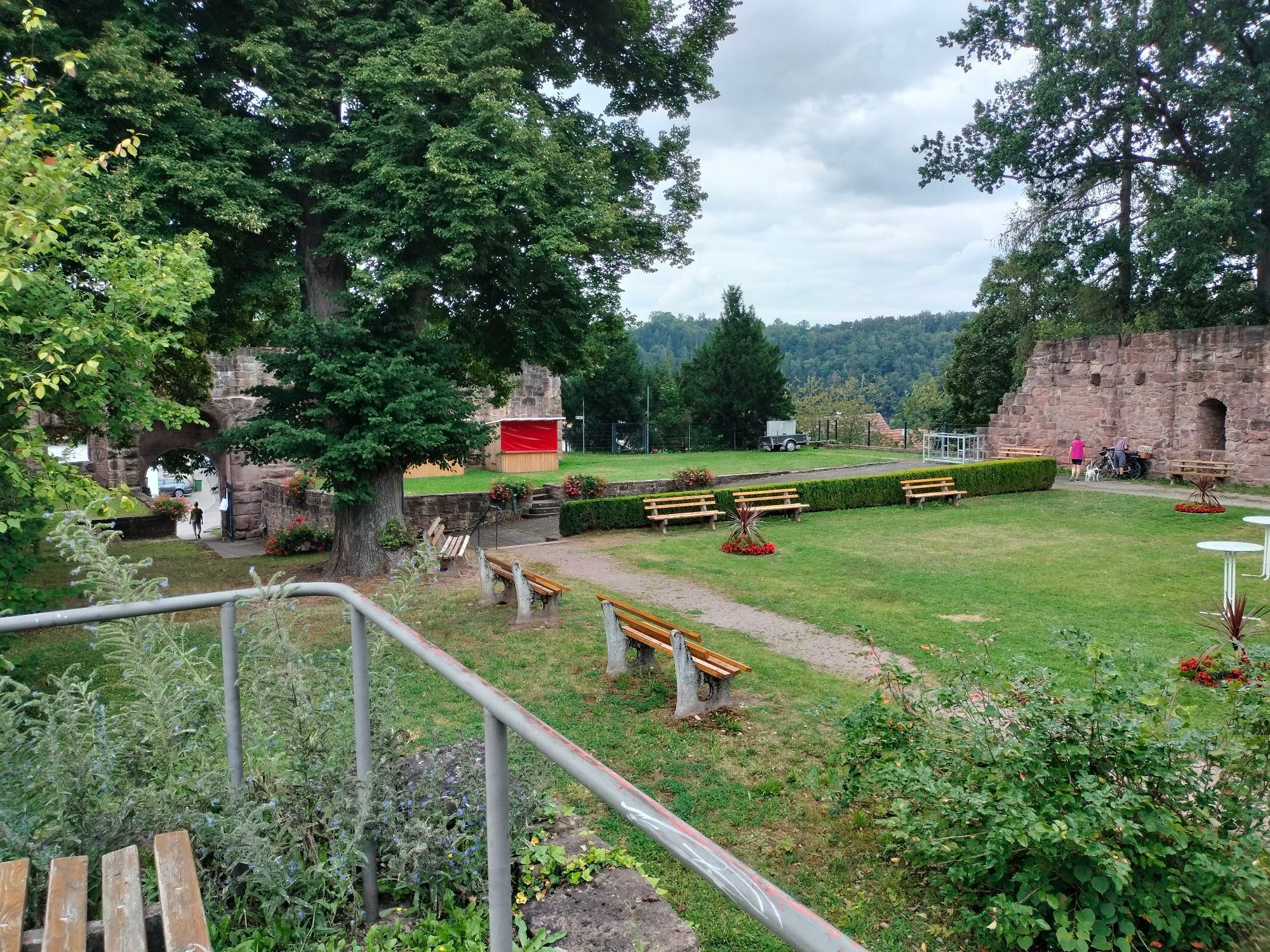
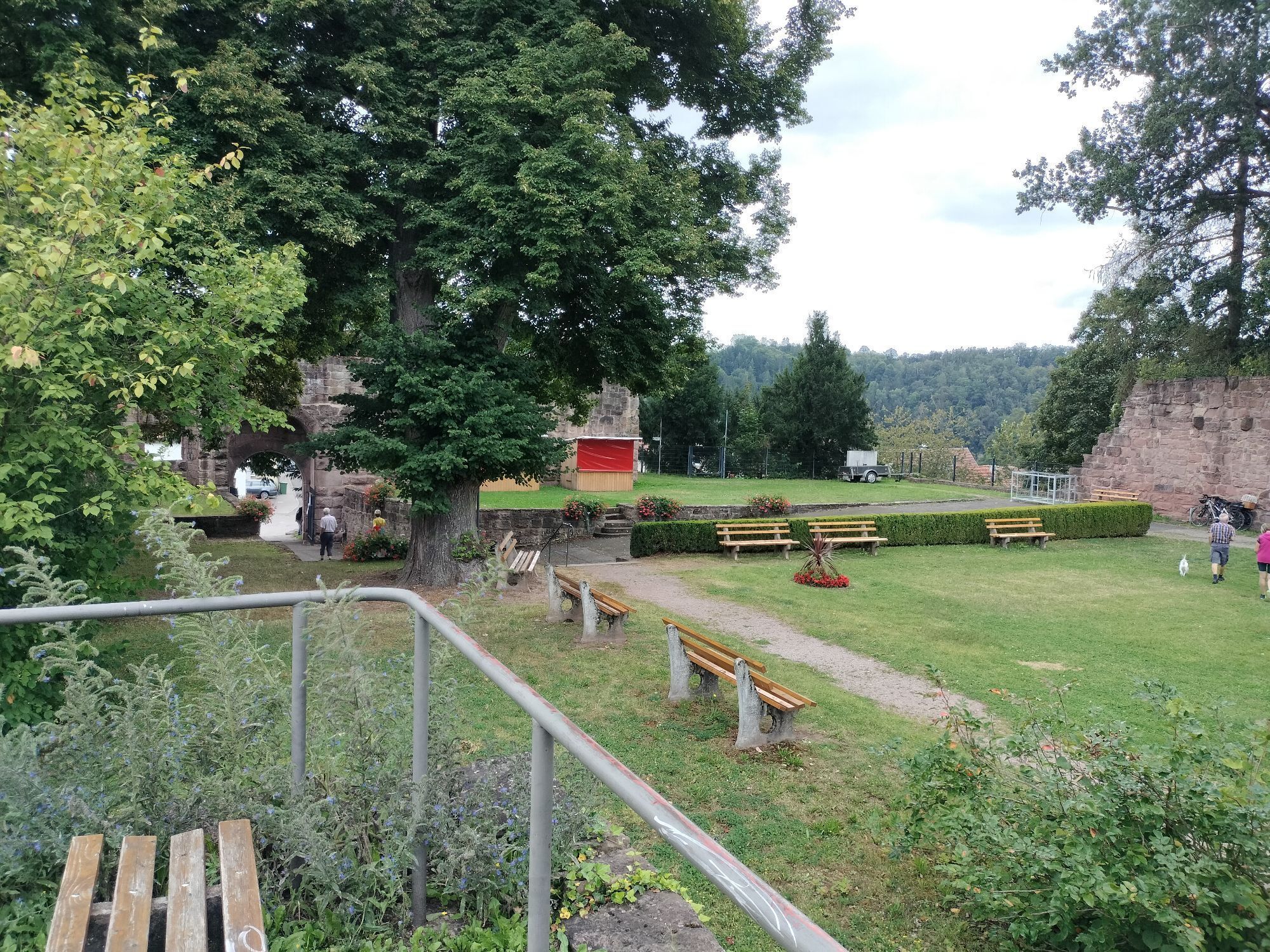
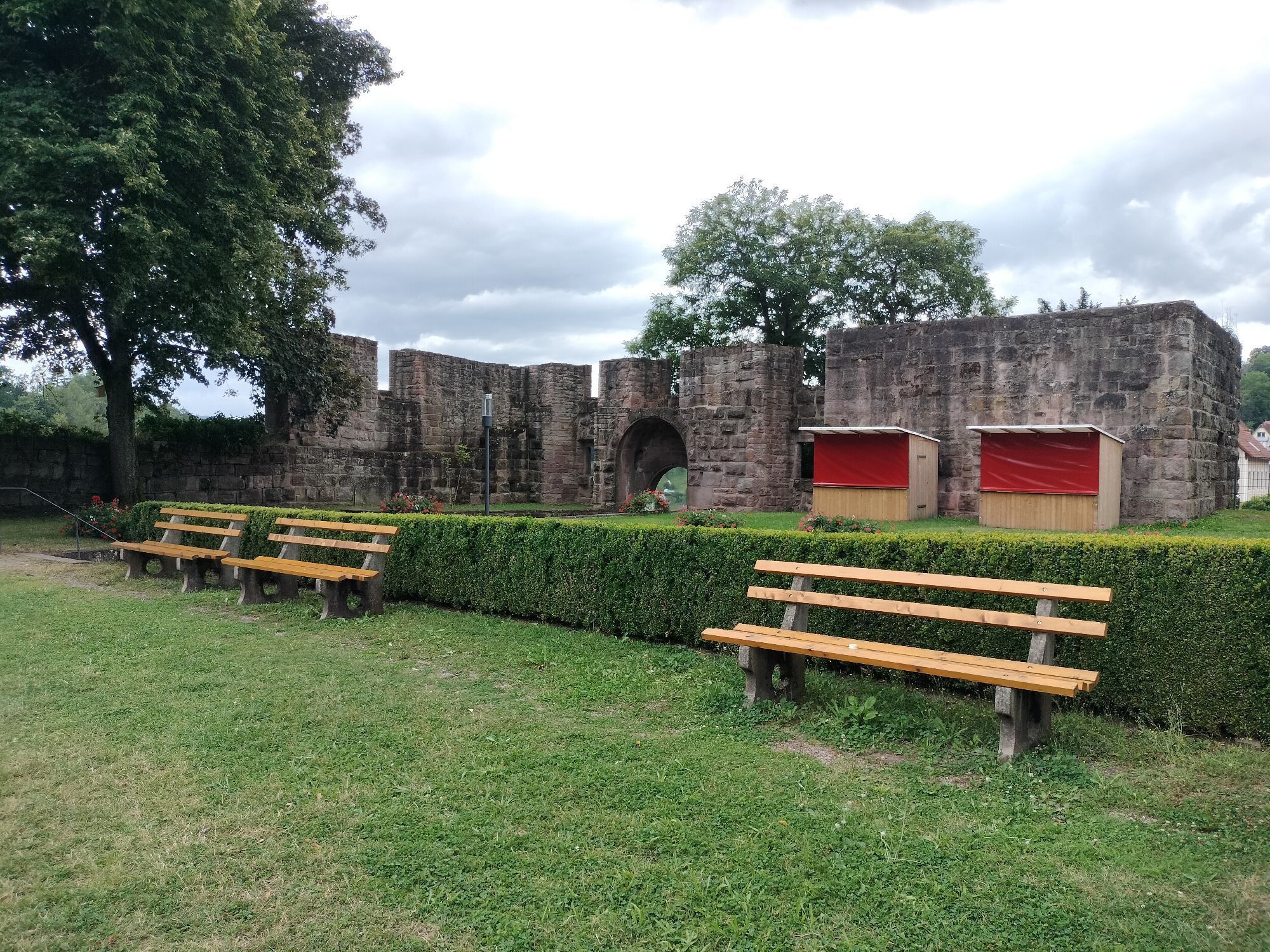
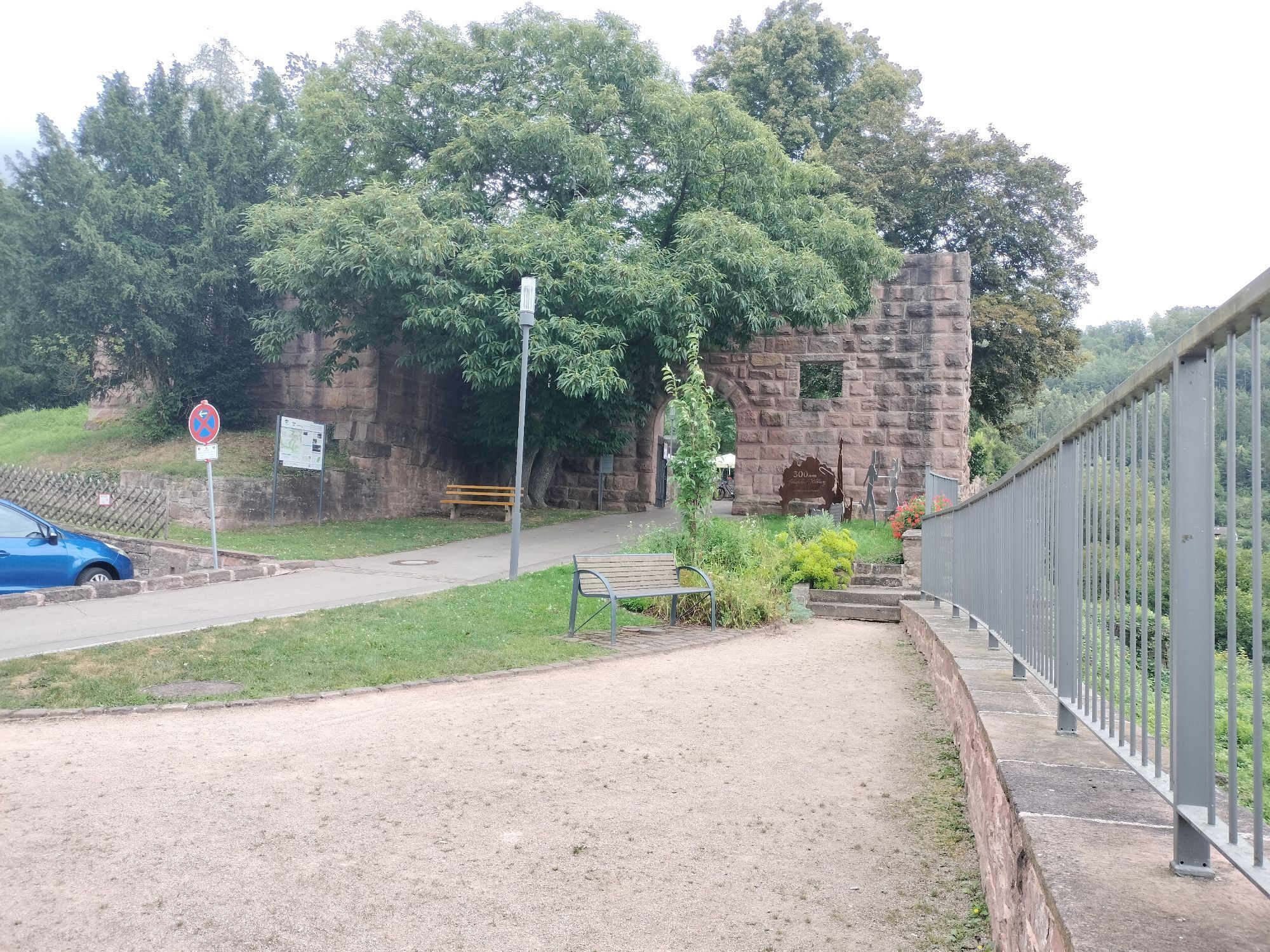
Start at the castle complex (1). The complex was built as a castle around 1200. It burned down in 1618 and was rebuilt as a castle (seat of the Württemberg chief stewards) between 1688 and 1692. The Wildberg castle was largely destroyed during an air raid in 1945. Cultural events are regularly held within the castle walls, for example every two years the Wildberg classic open (July 19 + 20, 2013 - "Dream Night Melody").
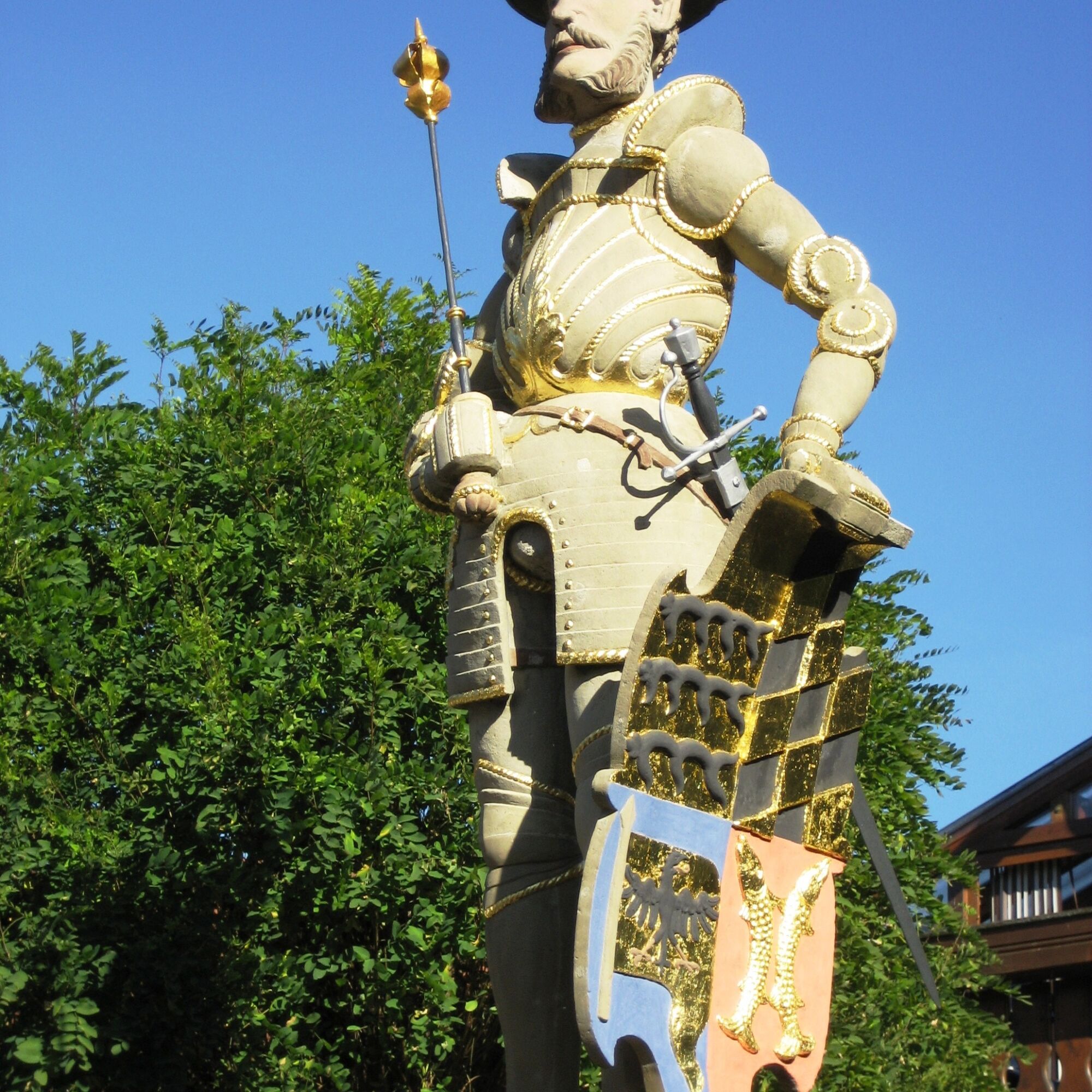
The market fountain (2) was built around 1553 by Blasius Berwart. The fountain figure is carved from a block of Keuper sandstone and bears the then Württemberg ducal coat of arms.
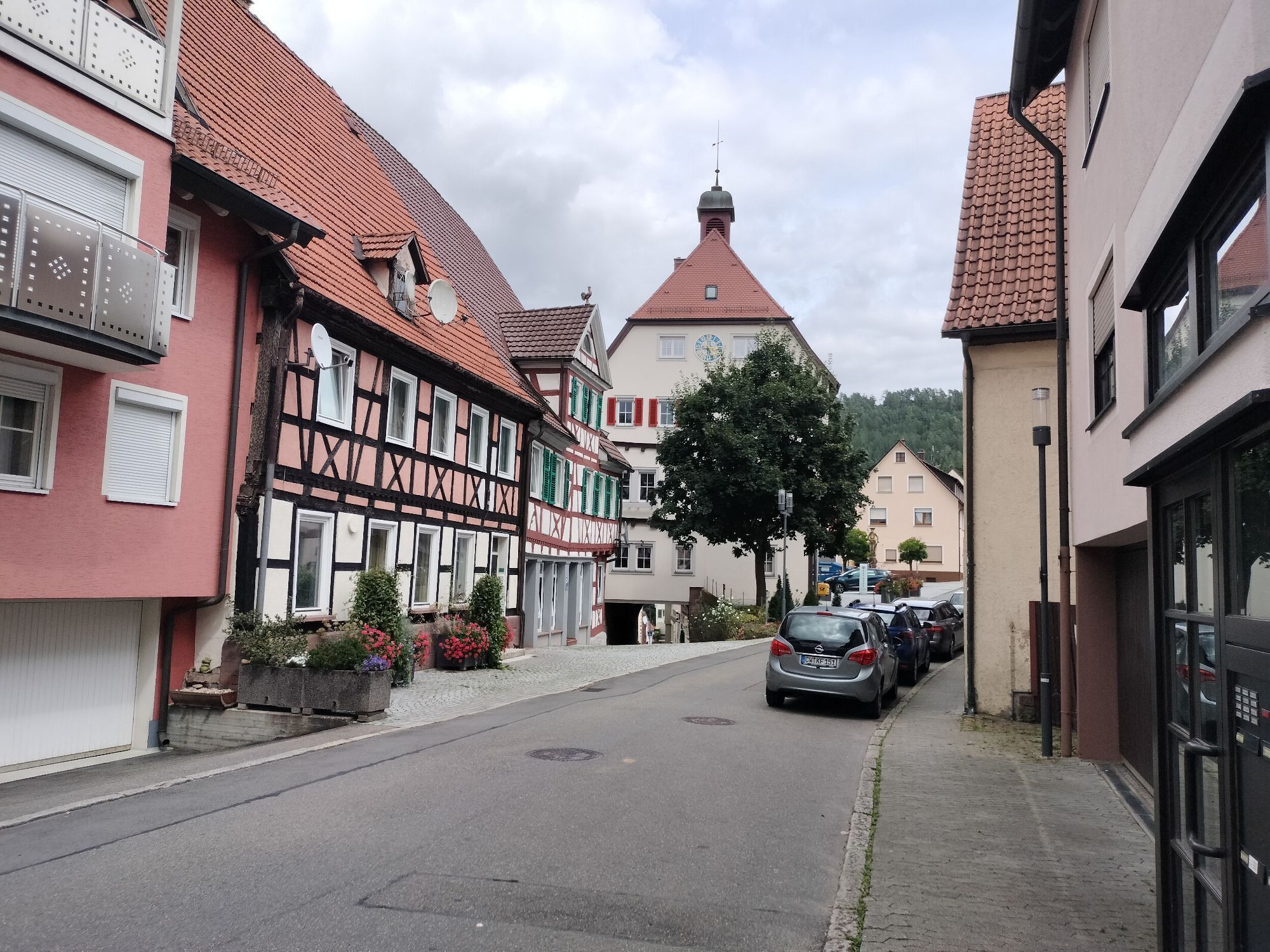
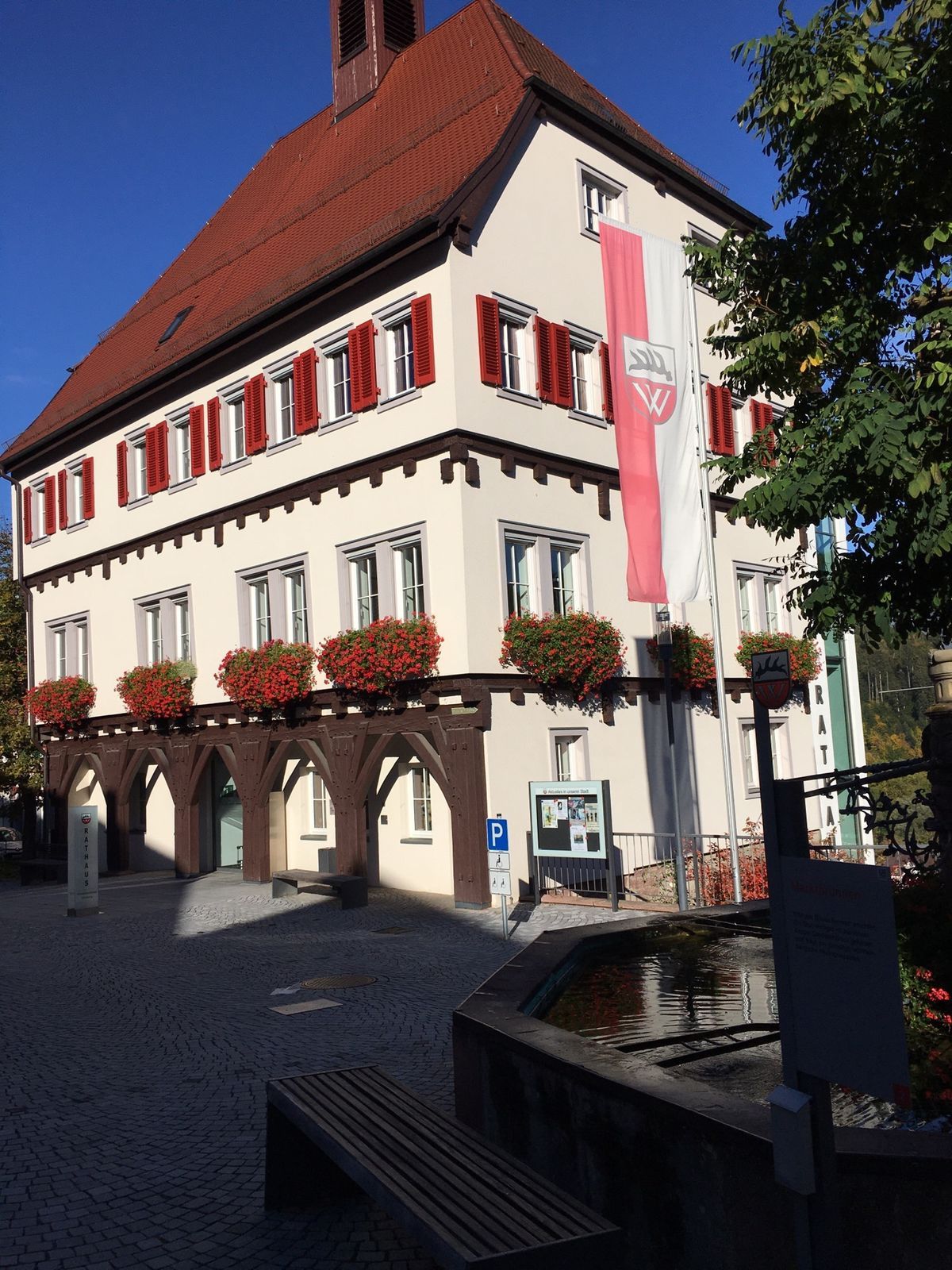
The historic town hall (3) in market street was completed in 1480. Most of the half-timbering is covered. The first mention of the town is found in a document from 1297. The building was fundamentally renovated and expanded in 2010.
The old sheep barn (4) houses the municipal building yard. The construction year of the former sheep-breeding administration building is unknown.
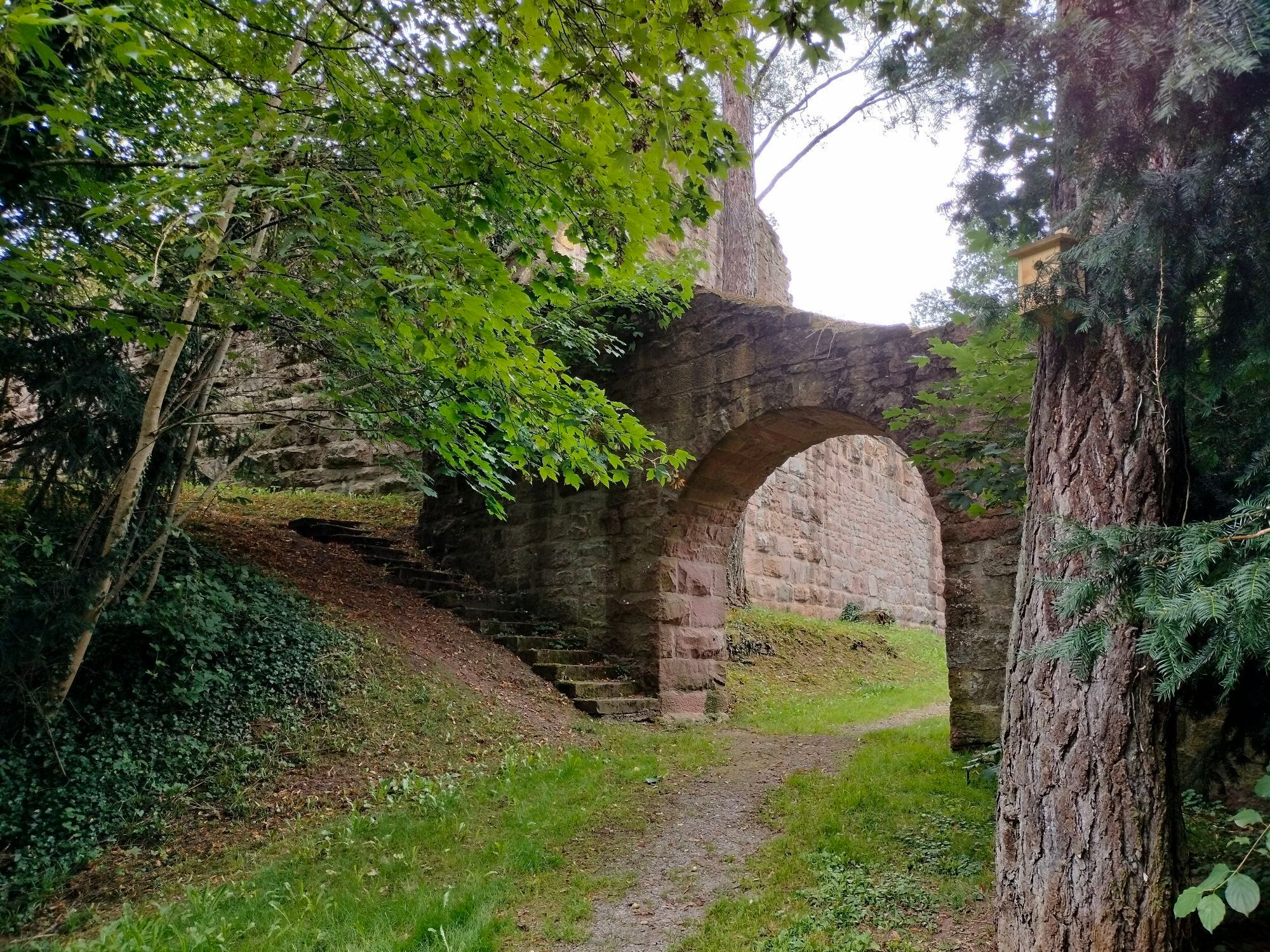
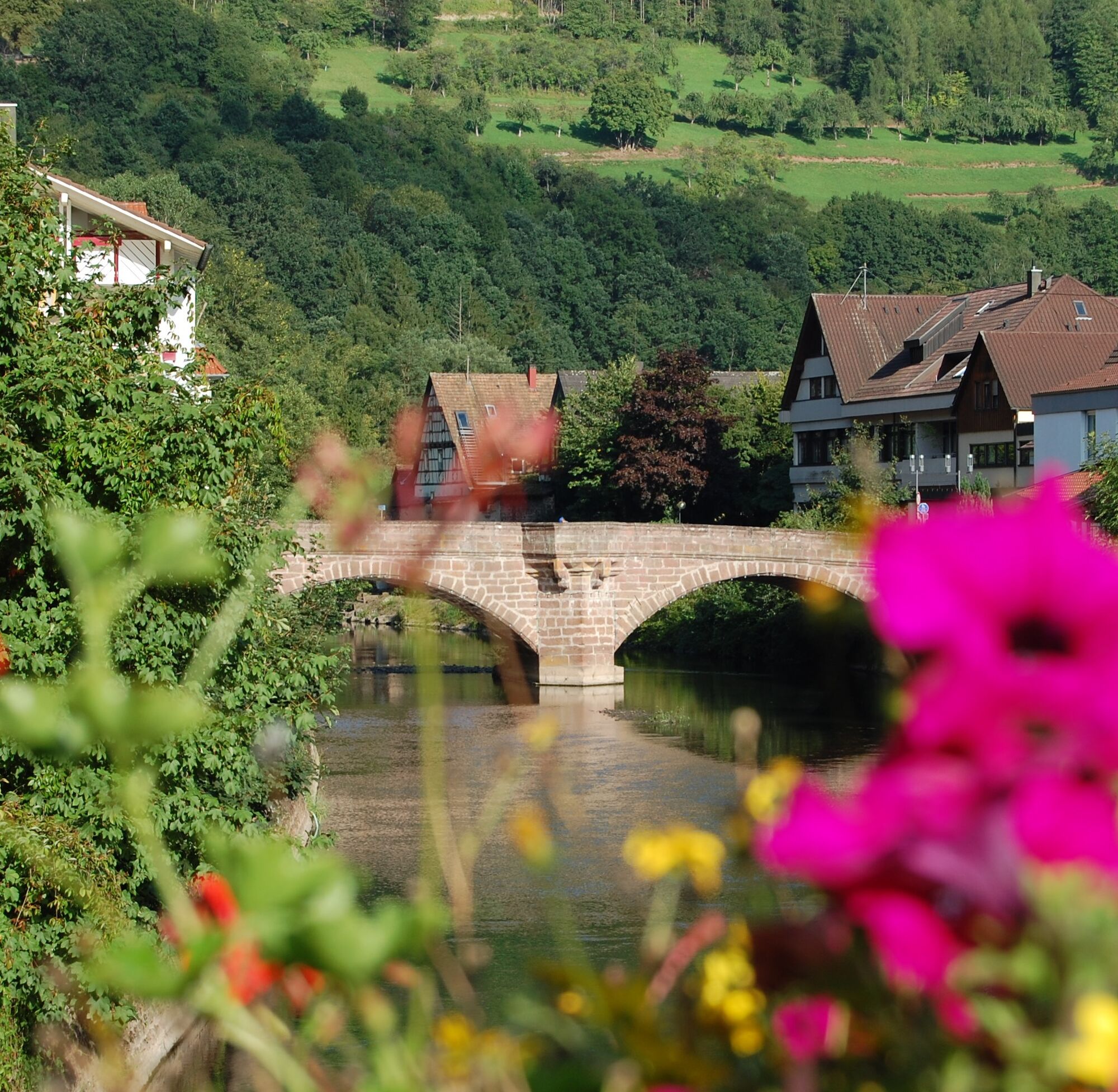
The Welzgrabgen Bridge (5) is a small vaulted bridge made of rubble stone built in 1660. It was the main connecting route to Rotfelden.
Remains of the city wall (6) can be viewed from market street.
The old school (7) is a listed three-story half-timbered building from 1568. Teaching took place in this building until 1785.
Since 1392 the Protestant Martins Church (8) has been independent. Previously, it belonged to the church in Sulz am Eck under the patronage of the Reuthin monastery. In 1464 it was destroyed in a city fire and rebuilt by 1467 as a three-aisled basilica.
The Protestant parsonage (9) at Spieß gate is a half-timbered building with late Gothic window and door frames on the ground floor.
Opposite is the Spieß fountain (10) from 1486. It is an early evidence of the water supply within Wildberg.
Nursing and retirement home (11). Formerly the town and office registry Wildberg. In 1838 Karl Georg Haldenwang founded the first institution for mentally disabled children in the kingdom of Württemberg, which was moved to Mariaberg in 1851. Since 1865 it has been a retirement home, founded by Queen Olga as the "House of Mercy."
Old pharmacy (12). From 1830 to 1979, the building served as a pharmacy. The first pharmacist was Eduard Kappis. Albert Kappis, a painter and academy professor, was born here in 1836.
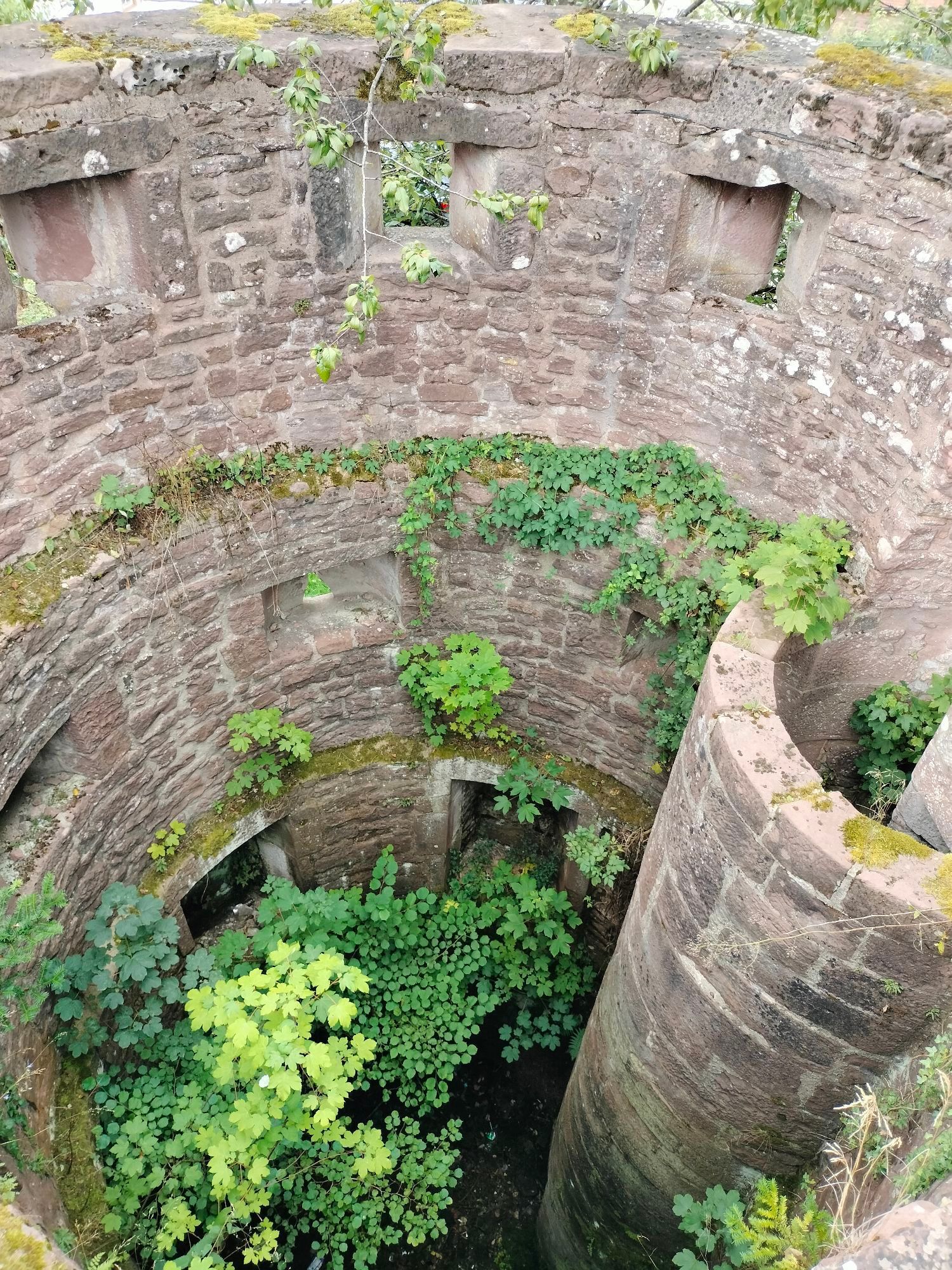
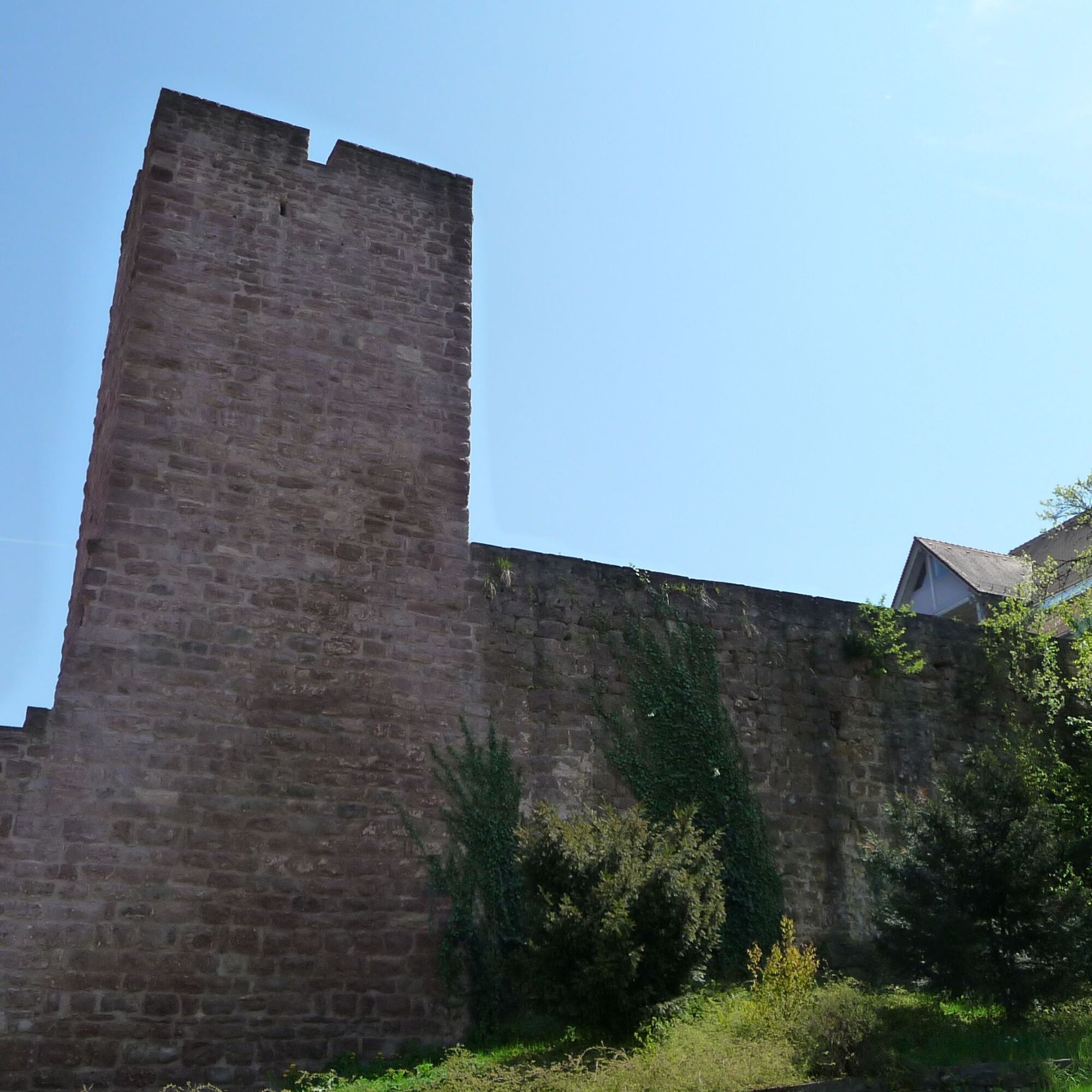
The witch tower (13) is part of the city fortifications and was a prison for women convicted as "witches." The last execution was on the Au in 1621.
The only preserved city gate is the detention tower (14). Used as a local prison until after World War II.
The old cemetery (15) was established in 1586.
The Hirsch bridge (16) was built in 1616 and 1617 as a gate bridge. Extensive restoration due to flood damage was carried out in 1740 and 1982.
The small bath gate (17) is part of the old city wall.
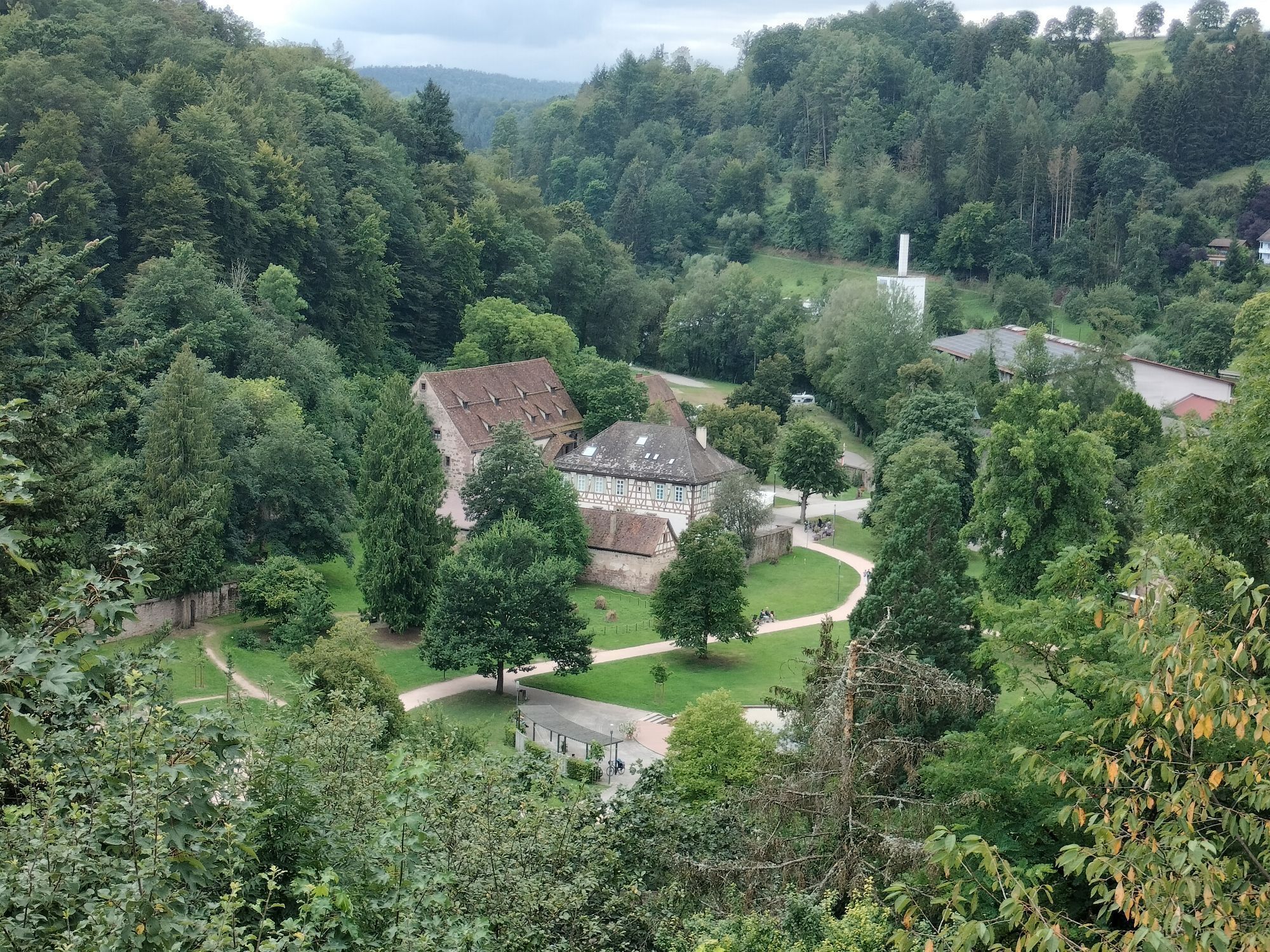
The Maria Reuthin monastery complex has been a Dominican nunnery since 1252. The monastery was plundered in 1525. From 1570 the complex was an evangelical monastery master’s estate. In 1824, church and main building were destroyed. Today, the museum of local history is located in the former granary. The music school is housed in the former finance office (18).
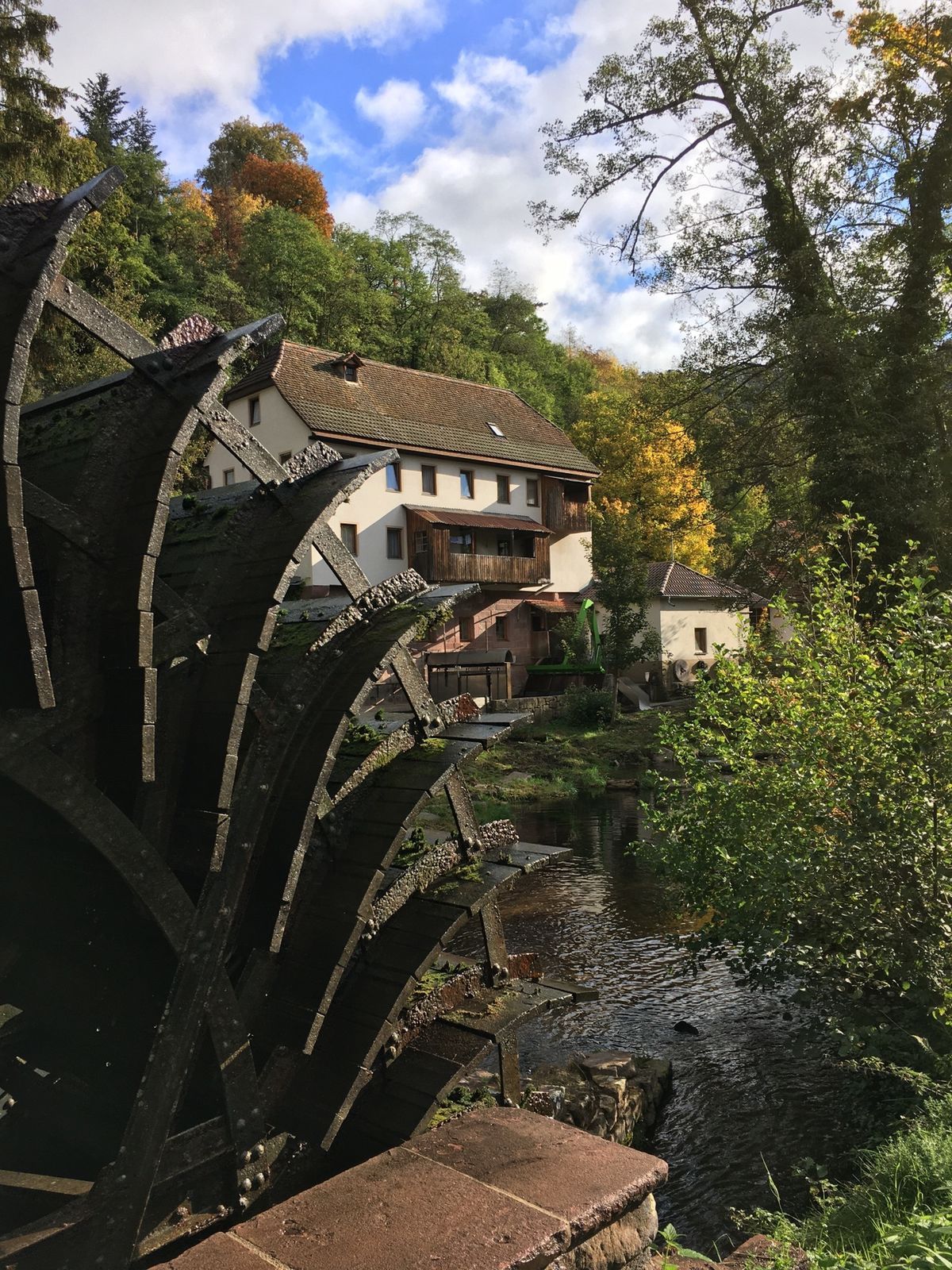
The historic water wheel (19) was installed in 1898 to operate the middle mill.
Tak
Good footwear and appropriate clothing are recommended.
Federal road B 463 (Valley Road) in Wildberg
Turn into state road L 349 in the town center
From Gartenstraße (L349) turn into market street - then continue straight to castle street/castle ruins
The cultural train runs between Pforzheim, Bad Liebenzell, Calw, Wildberg, Nagold, and Horb
It is about a 500 m walk from the station to the start
Parking spaces are available directly at the castle ruins
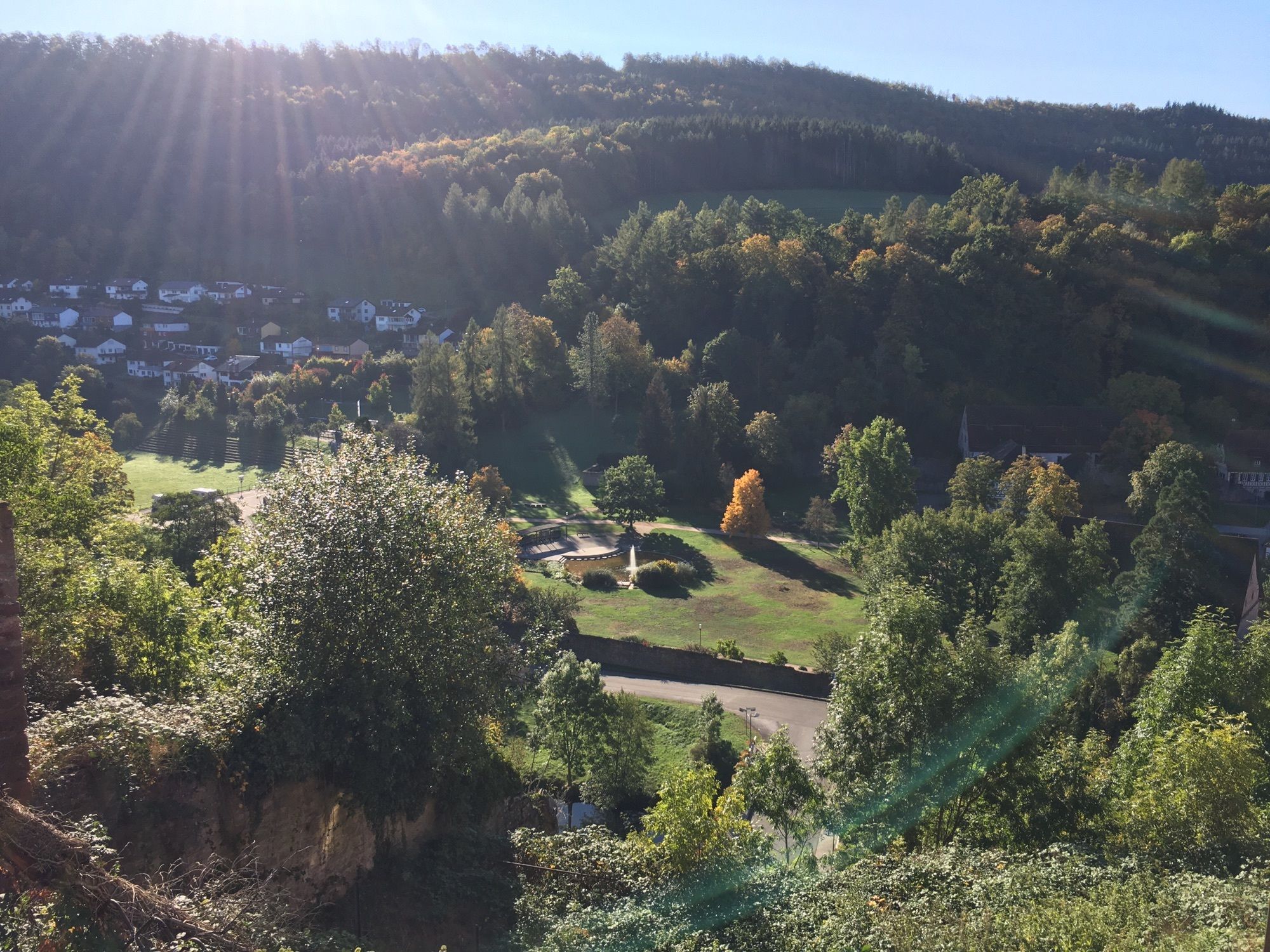
A highlight of the historical city walk is the castle complex where you can admire a beautiful park and also learn more about the castle and the monastery.
Popularne wycieczki w okolicy
-
4,9
Der Teinacher (Premiumweg & Genießerpfad)
średniWędrówka 12,0 km -
4,0
Wolfsschlucht and Fox Gorge
średniWędrówka 9,74 km -
4,7
Through the wild romantic Schweinbachtal to the Bruderhöhle cave
średniWędrówka 13,8 km -
5,0
Water, Woods and Meadowtrail / Zavelstein > Calw (Premium trail & Genussweg)
ciężkiWędrówka 14,4 km -
5,0
AugenBlick route Bad Teinach-Zavelstein Zettelberg
ciężkiWędrówka 15,5 km -
5,0
GeoTour Wildberg through the picturesque Lützenschlucht
ciężkiWędrówka 2,80 km -
5,0
Altensteig Nature Adventure Trail
średniWędrówka 11,6 km -
3,0
Rund um den Schönbuchturm
światłoWędrówka 6,22 km -
4,0
Circular route Hirsau - Oberreichenbach - Schweinbachtal - Hirsau
średniWędrówka 10,2 km -
4,5
Waldeck ruins and the largest water wheel in Europe
średniWędrówka 15,4 km
Wędrówki i tropienie

Nie przegap ofert i inspiracji na następne wakacje
Twój adres e-mail została dodana do listy mailingowej.