



Parkinmäki nature trail, Lappeenranta
The city of Lappeenranta and Lappeenranta University of Technology LUT have jointly implemented the Biotrail nature path at Parkinmäki in Lappeenranta. The purpose of the trail is to illustrate how nature...
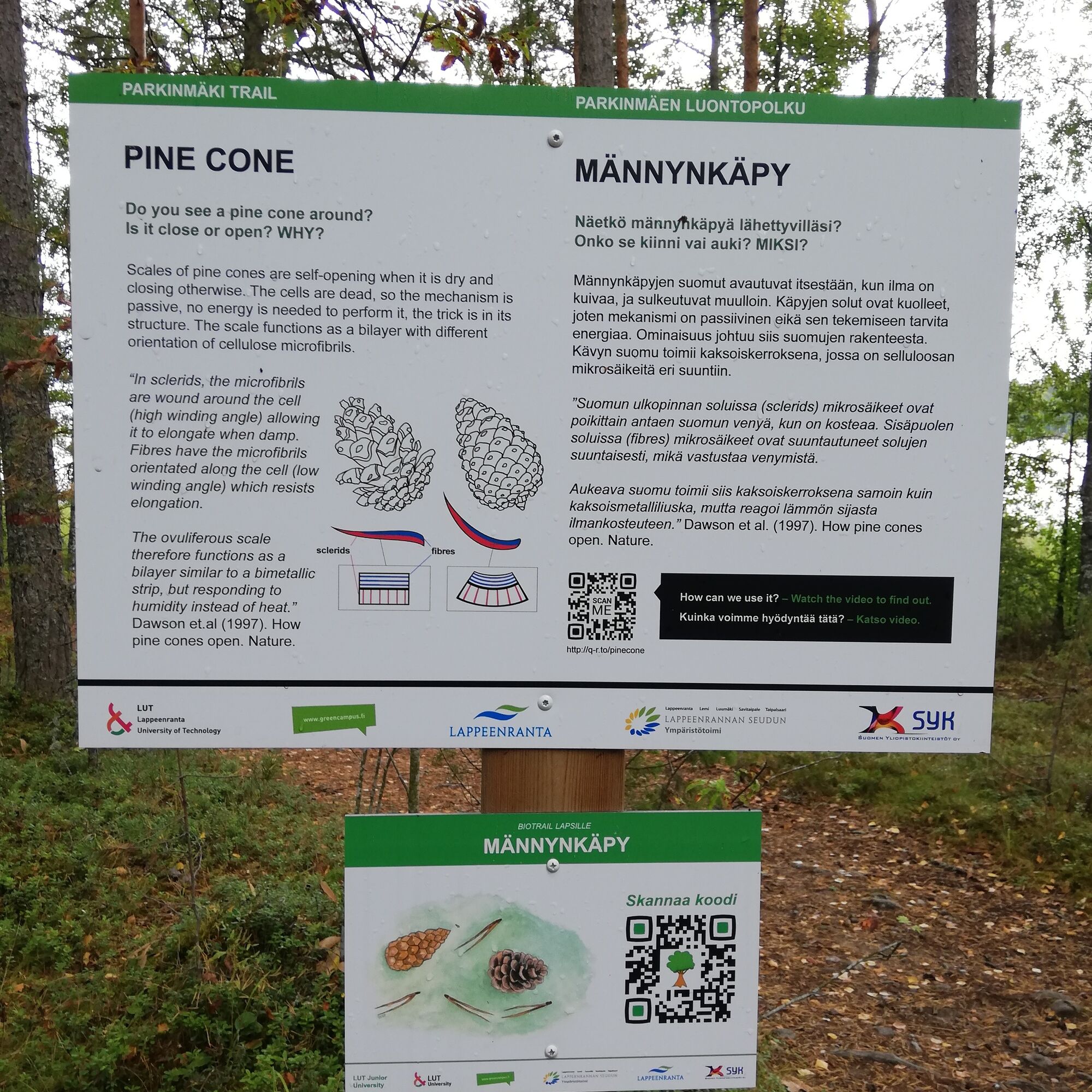
The city of Lappeenranta and Lappeenranta University of Technology LUT have jointly implemented the Biotrail nature path at Parkinmäki in Lappeenranta. The purpose of the trail is to illustrate how nature has technically solved things and what we humans can learn from it. The trail can be completed in about 40 minutes and is about two kilometers long. The trail circles Parkinmäki behind LUT.
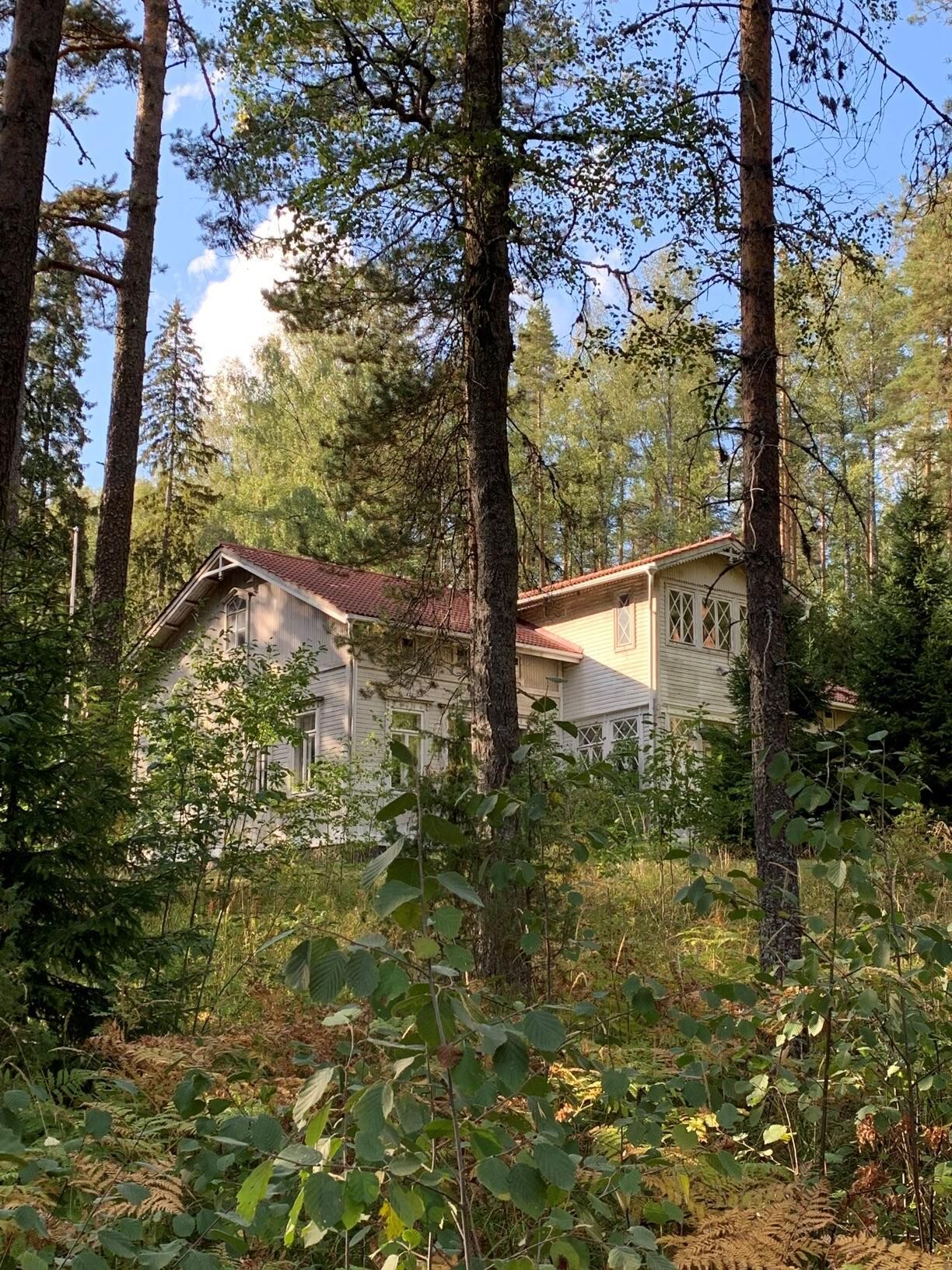
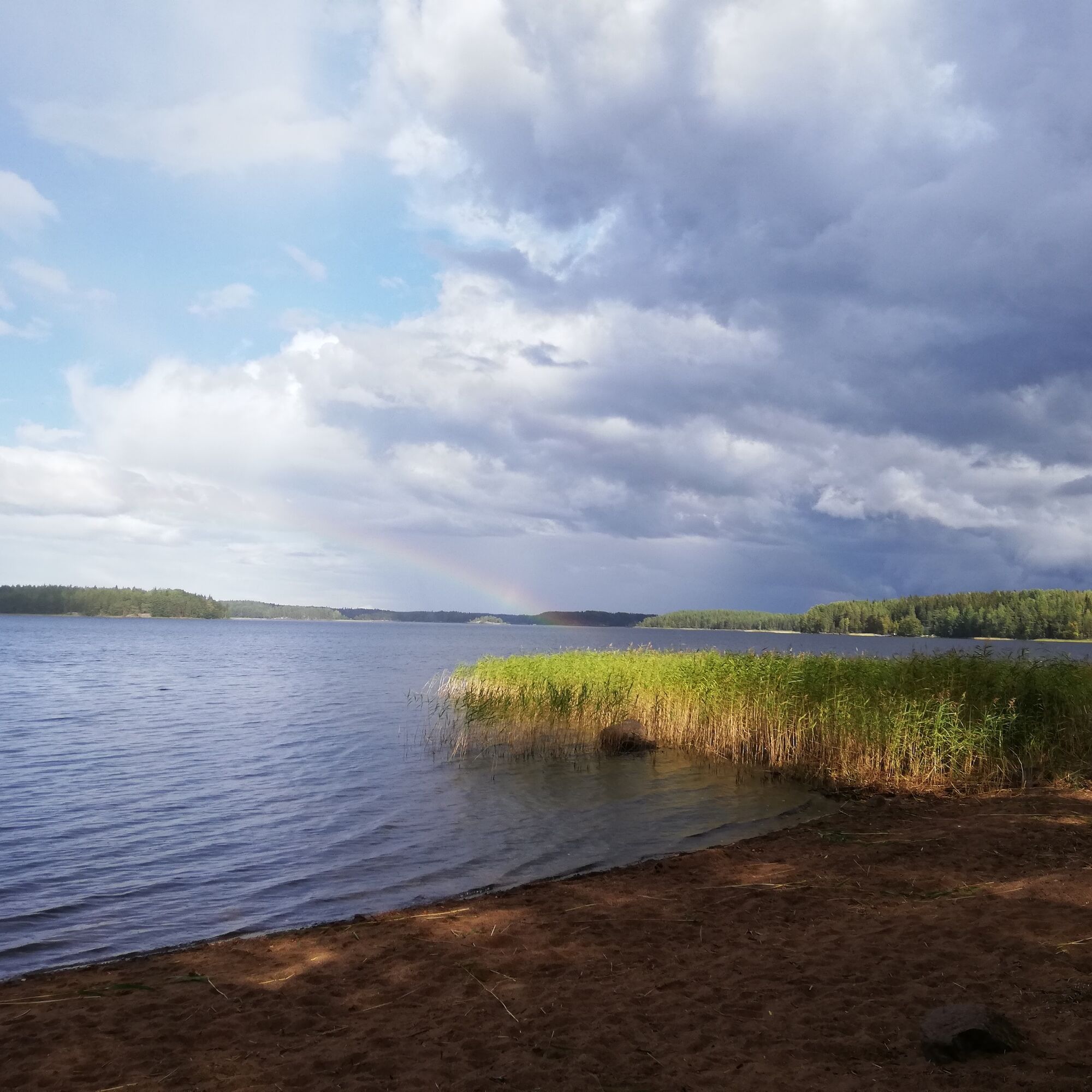
The Parkinmäki nature trail features various types of habitats. Parkinmäki is a Saimaa shoreline ridge on the western shore of Pien-Saimaa. Spruce slopes and thinned pine forests, an ancient shoreline shaped by the ice age, and cultural environments with fields and gravel pits each tell their own story of changes and interactions caused by humans and nature. Early in spring, the brightly lit slopes of Parkinmäki bloom with the regional flower of South Karelia, the ice age relic wood anemone.
The maintenance and upkeep of the trail are the responsibility of the city of Lappeenranta.

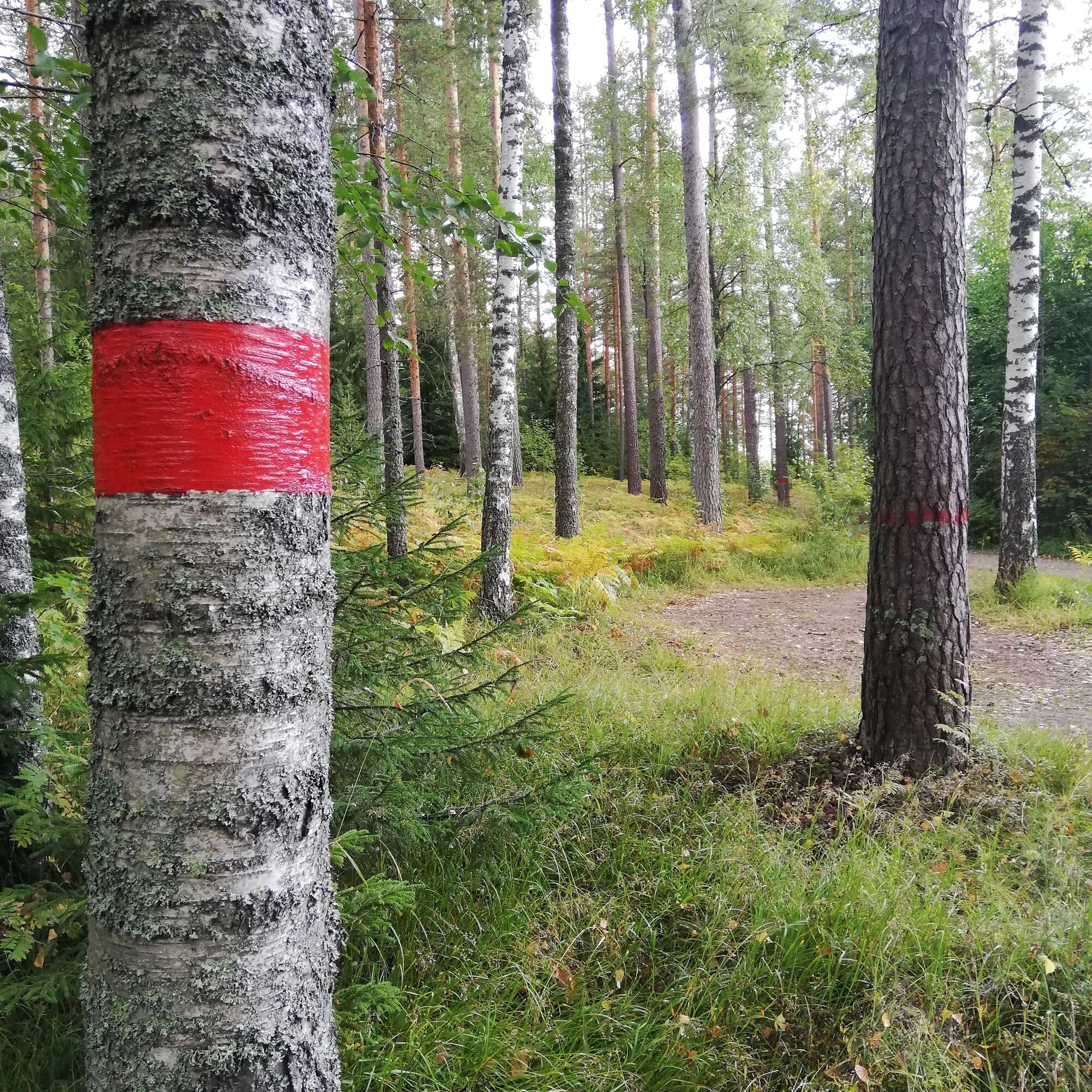
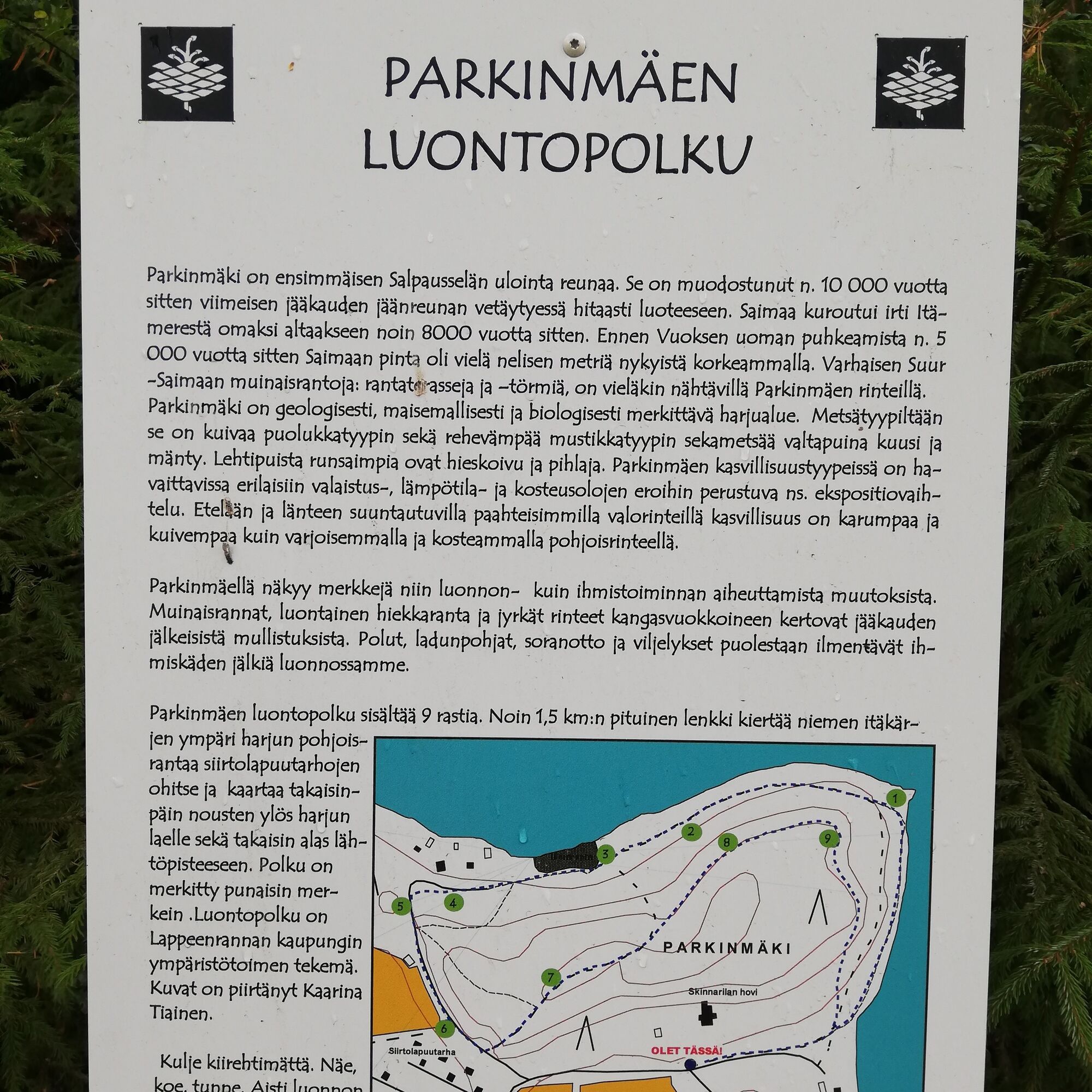
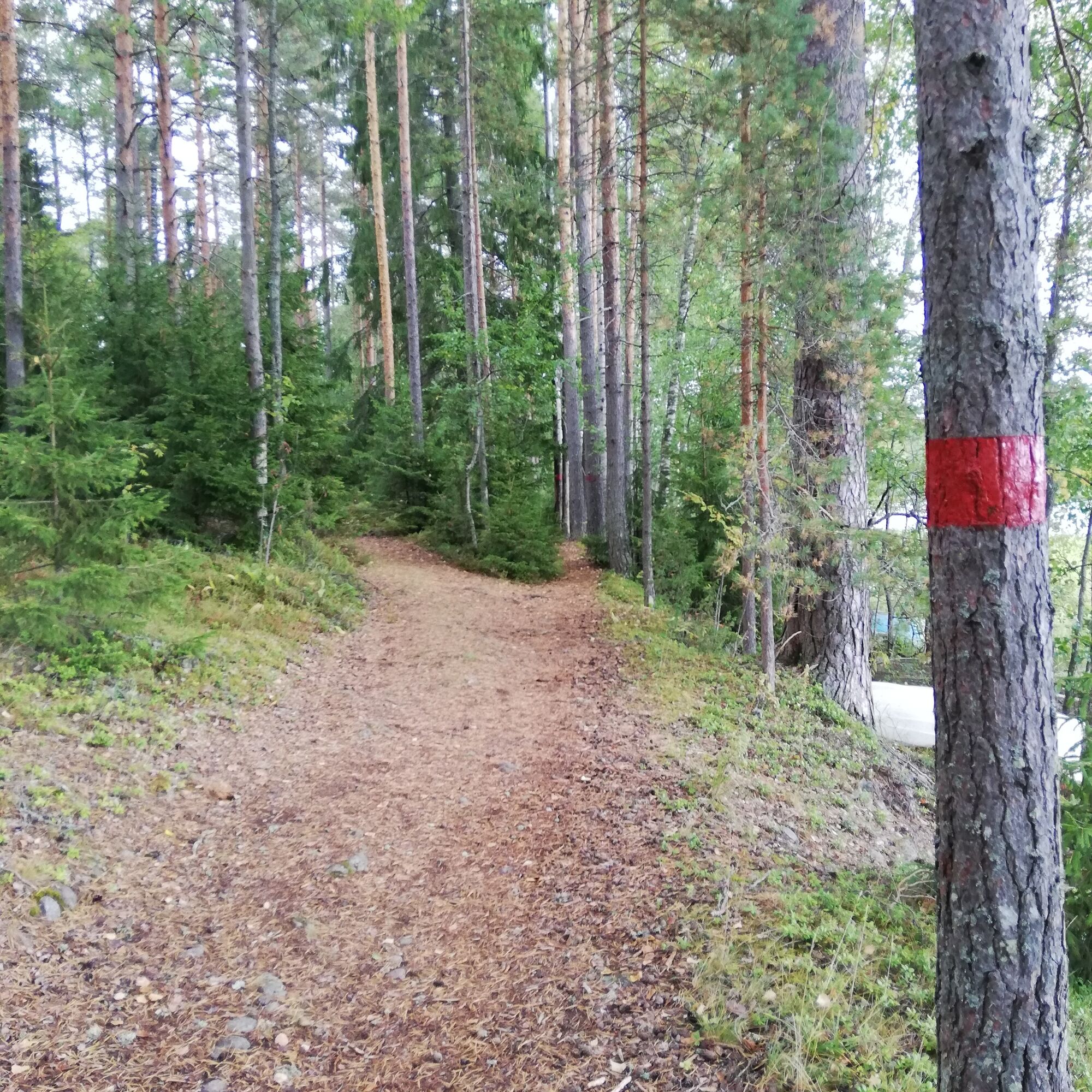
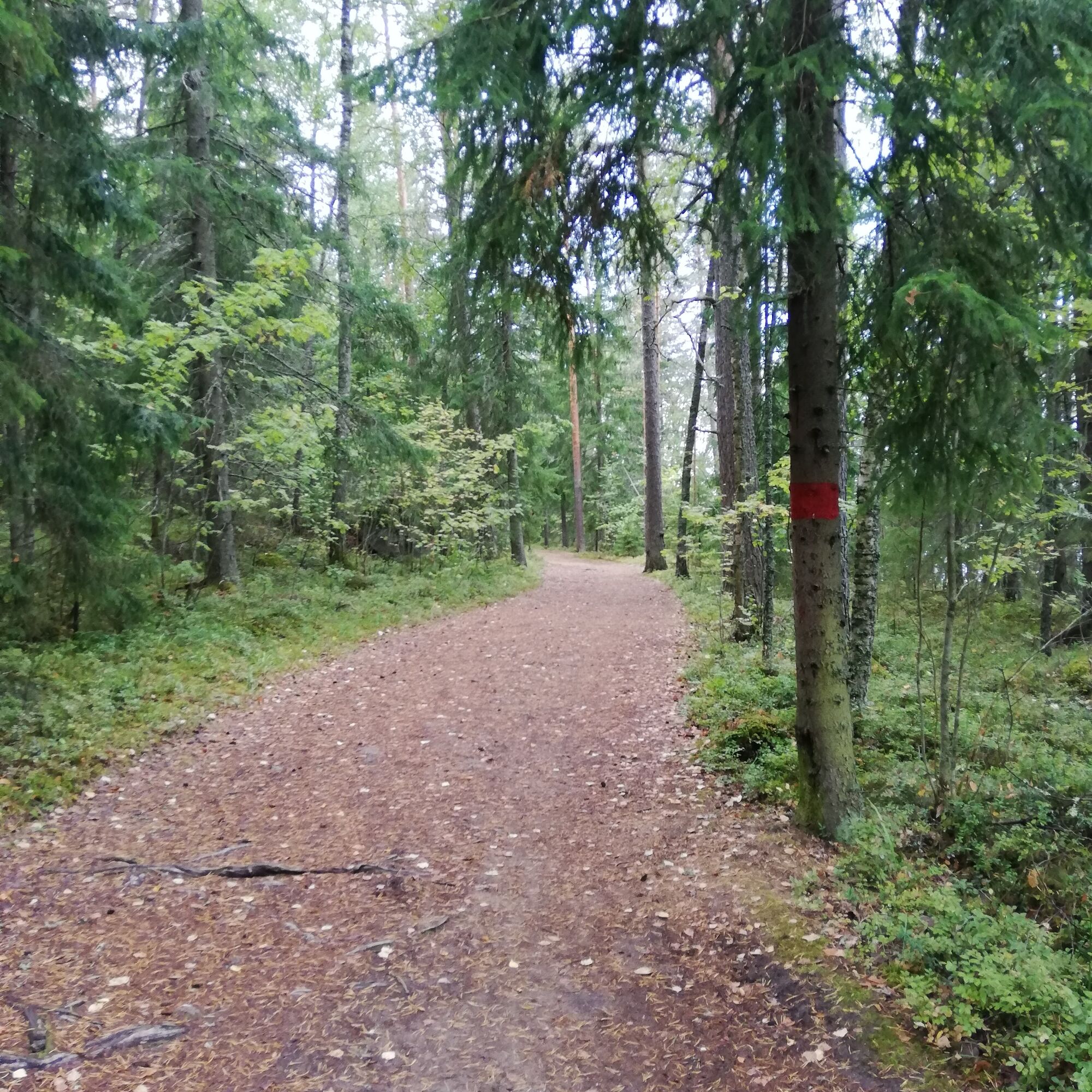
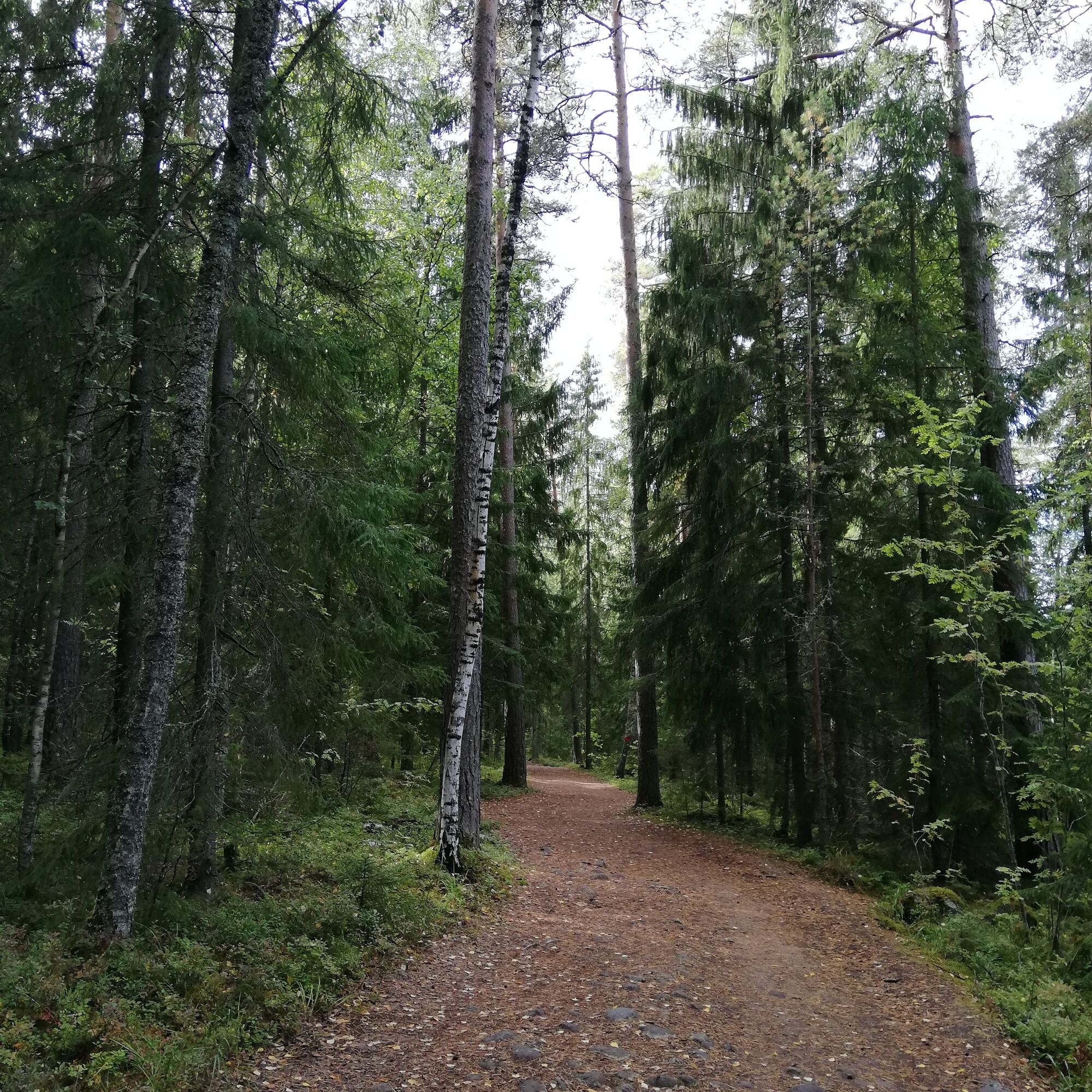
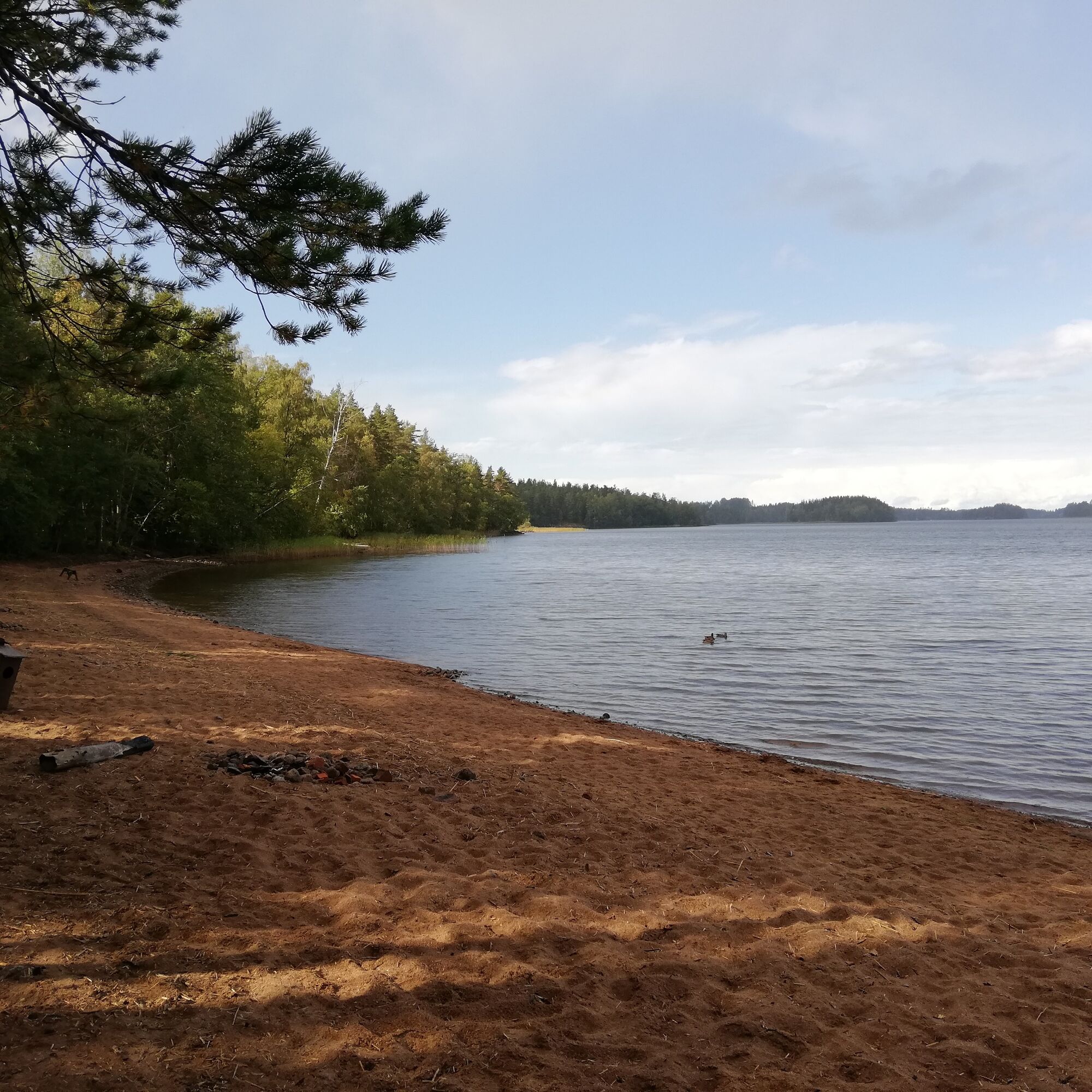
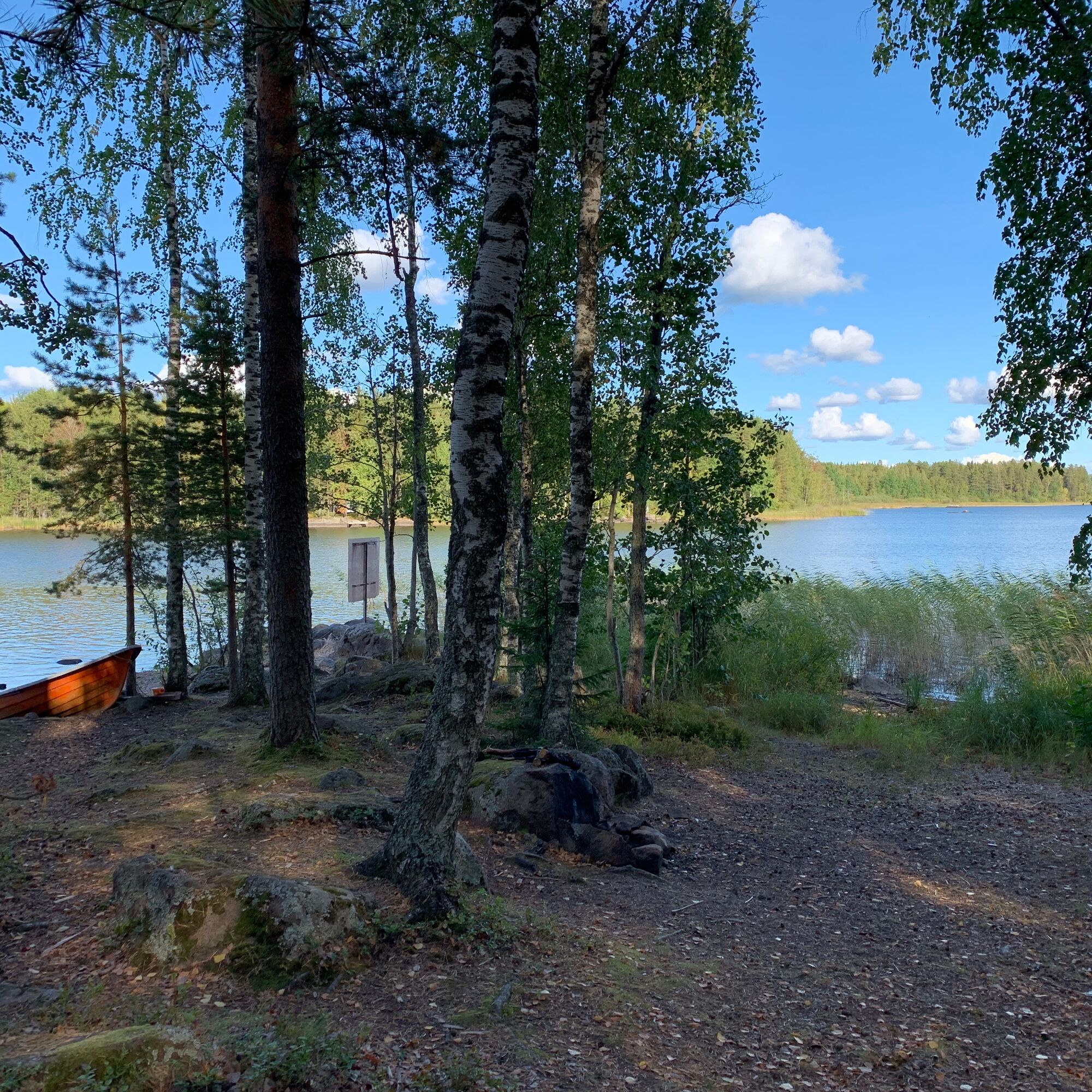

The Parkinmäki nature trail is circled counterclockwise following red paint marks. At first, you walk on a wide forest path and for the last stretch back to the starting point you return along a gravel road.
Tak
It is safest to move in groups on land and water if you are not familiar with the terrain or water area. Before the trip, it is good to obtain the necessary maps and guides and especially when going on the water, check the weather forecasts. Dress appropriately for the hike and wear sturdy footwear. It is recommended to also bring first aid equipment, rain gear, spare clothes, and enough drinks, especially in summer. Remember to wear a life jacket on the water.
On wet weather and in winter, boardwalks, rocks, and docks can be slippery.
Trails and paths are not maintained during snowy periods.
In an emergency, call 112. Tell your location, what has happened, and listen to the instructions.
From downtown Lappeenranta westwards towards the Technical University area. Past the university buildings, the trail starts from Skinnarila manor.
Route starting point: (61.06908,28.08955)
You can get close to the start of the nature trail by Lappeenranta city’s local buses.
The nearby terrain of Skinnarila manor.
READ THE PARKINMÄKI NATURE TRAIL AREA AS A STORY!
THE SUNILA VILLAGE AND THE WHITE SHIP OF SKINNARILA MANOR
The current large residential area of Skinnarila and the surroundings of Lappeenranta University of Technology were formerly called the village of Suninen. Skinnarila manor was well known to everyone. It included the summer residence of Alma, the wife of Toivo Kuula, where the whole family always gathered for the summer. Alma Kuula was a familiar figure to the villagers, as she was often seen traveling to the city by apostle's carriage, since there were no buses for short trips at that time. Although the family surely had cars, they could not be used as petrol was not available for civilian use during the war.
There is a legend related to the last moments of Alma Kuula, according to which her previously deceased husband Toivo Kuula had promised to fetch Alma with a white ship. Alma died in 1941 on the way to her concert in Lappeenranta. The day before the concert, while looking out the window, Alma saw a white ship anchored at the tip of Kotaniemi. Then it moved to the area between the skerry and the sauna shore.
Alma and Toivo Kuula's daughter Sinikka Kuula-Marttinen recounted the event in the magazine Eeva 4/1967: "A few hours before my mother's departure, we were again sitting on the porch of our beloved Skinnarila. The evening was beautiful and calm, but our last war (1941) had started, and the thunder of guns reached our ears from the distant front. Silently and depressed, we watched the shimmering Saimaa through the trees. My mother looked tired and fragile. She broke the silence: 'What ship is coming from there? Has it come to fetch me?' She was supposed to have a concert the next day in Lappeenranta, with me as the accompanist. I wondered in my mind why they would fetch her for the concert already now. I looked at the lake more closely. No vessel broke its surface. But my mother did see it after all: 'The stern vessel of death,' which Eino Leino describes in his poem Sinikka's Song and which my father composed. That vessel had come to take her to her beloved husband."
Behind Kuula's villa was a high hill called Kuula's ridge. There was a path bordered with small stones and a bench. From there was a beautiful view of Saimaa. It is possible that sitting on the bench, the composer contemplated new compositions. The yard previously had several buildings that have now been demolished. The sauna, the Kuula villa, and the caretaker's apartment still remain. At the time, Suninen village had only a few farms and summer cottages. A former resident recalls how the area that is now the university had good berry and mushroom grounds. There were blueberries, raspberries, lingonberries, and cranberries in the swamp. Collecting them was, so to speak, "tar drinking" for children, but they had to do it because the mother ordered so and a predetermined amount had to be gathered. In summer, children's sports competitions were held at Skinnarila manor, to which village children were invited. On calm weather, beautiful piano music carried from the manor.
The war time remained in the minds of the villagers. At that time, General Lagus's troops were on the lands of Skinnarila manor, and an auto company was stationed near their summer cottage. The fortification workers built tank obstacles from large stones over a meter high, starting from the Saimaa shore and continuing well over fields and forests. Bunkers and trenches were also actively built. Near the current university, there was a canteen where the war boys could buy what was available during the shortage at that time. A person who spent his childhood in the village recalls that his father was musically talented and often played guitar on summer evenings. One beautiful summer evening, a rowing boat was moving on the bay. In the boat, one soldier rowed and the other played guitar and sang. The father invited the soldiers from the lake to the cottage. The boat’s singer was Tapio Rautavaara, and the evening continued at the cottage with singing and music. After this event, they met several other times to sit and make music together.
Sources:
Kähkönen & Korjonen-Kuusipuro (eds.). 2012. Stories from South Karelia - Tales from South Karelia - ÐÑÑоÑии из Южной ÐаÑелии. South Karelia Institute, Lappeenranta University of Technology. Digital print. (pp. 37-38), which used as source:
Kohvakka, Mikko. (2007) Skinnarila manor (sent story). Lappeenranta University of Technology: Lappeenranta.
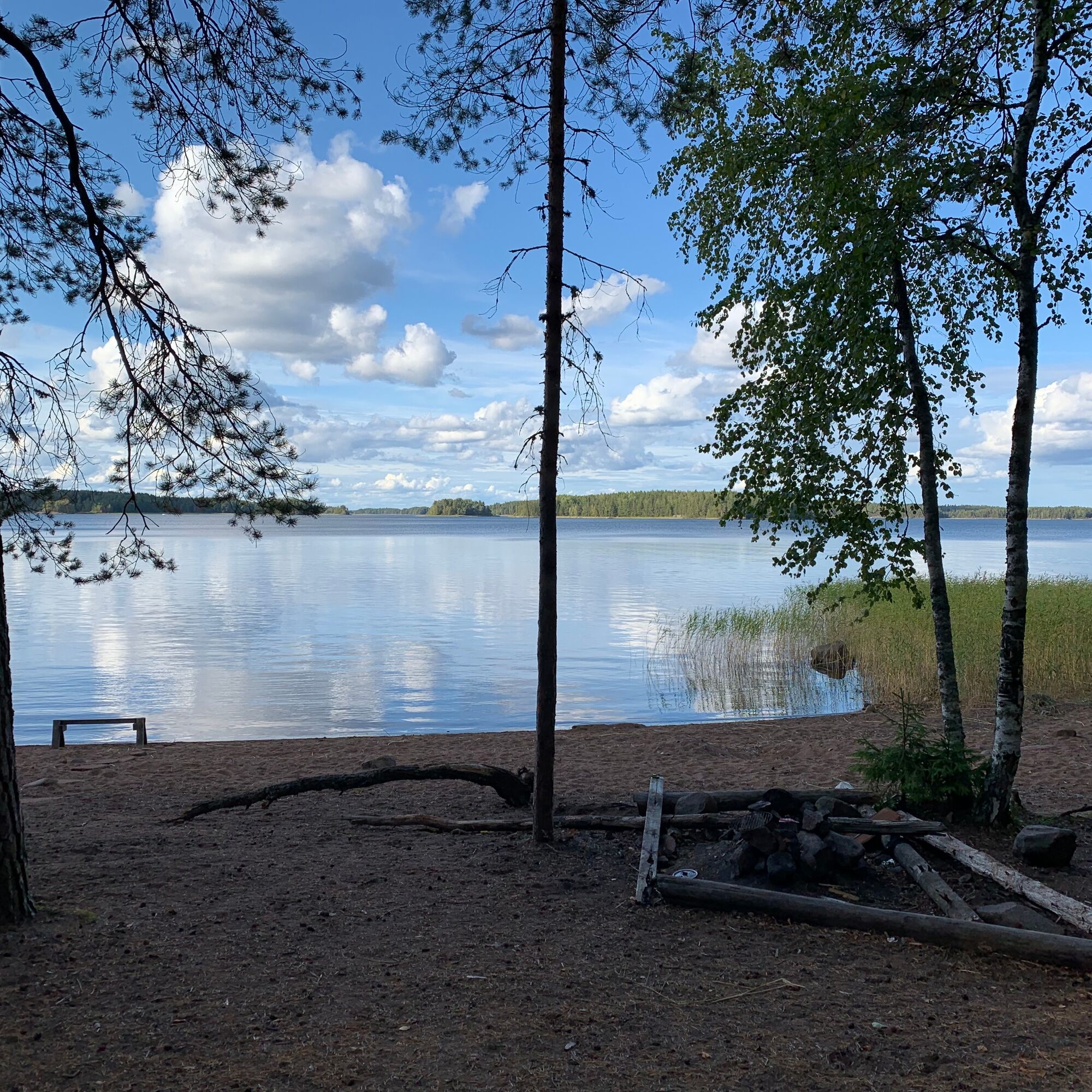
A nice small nature trail with a bathing beach along the way.
Popularne wycieczki w okolicy
-
4,5
Taipalsaari scenic cycling route
średniJazda na rowerze 42,7 km -
Mikonsaari nature trail, Lappeenranta
średniTrasa tematyczna 2,03 km -
Pappilanniemi nature trail, Lappeenranta
średniTrasa tematyczna 1,78 km -
Saimaa Canal lock route by bike, Lappeenranta
światłoJazda na rowerze 25,4 km -
Lappeenranta city cycling route
światłoJazda na rowerze 10,7 km -
Lappeenranta Lakeside route (Rantaraitti), geological trail
światłoTrasa tematyczna 6,09 km -
Ruohosaari circuit, Lappeenranta
średniKajak / Canoe 22,8 km -
Lappeenranta-Imatra border cycling route
ciężkiJazda na rowerze 102,7 km -
Hirvisaari route, Lappeenranta
średniKajak / Canoe 24,0 km -
Nature and cultural trail of the Fortress
światłoTrasa tematyczna 1,84 km
Wędrówki i tropienie

Nie przegap ofert i inspiracji na następne wakacje
Twój adres e-mail została dodana do listy mailingowej.