





Granatenkogel
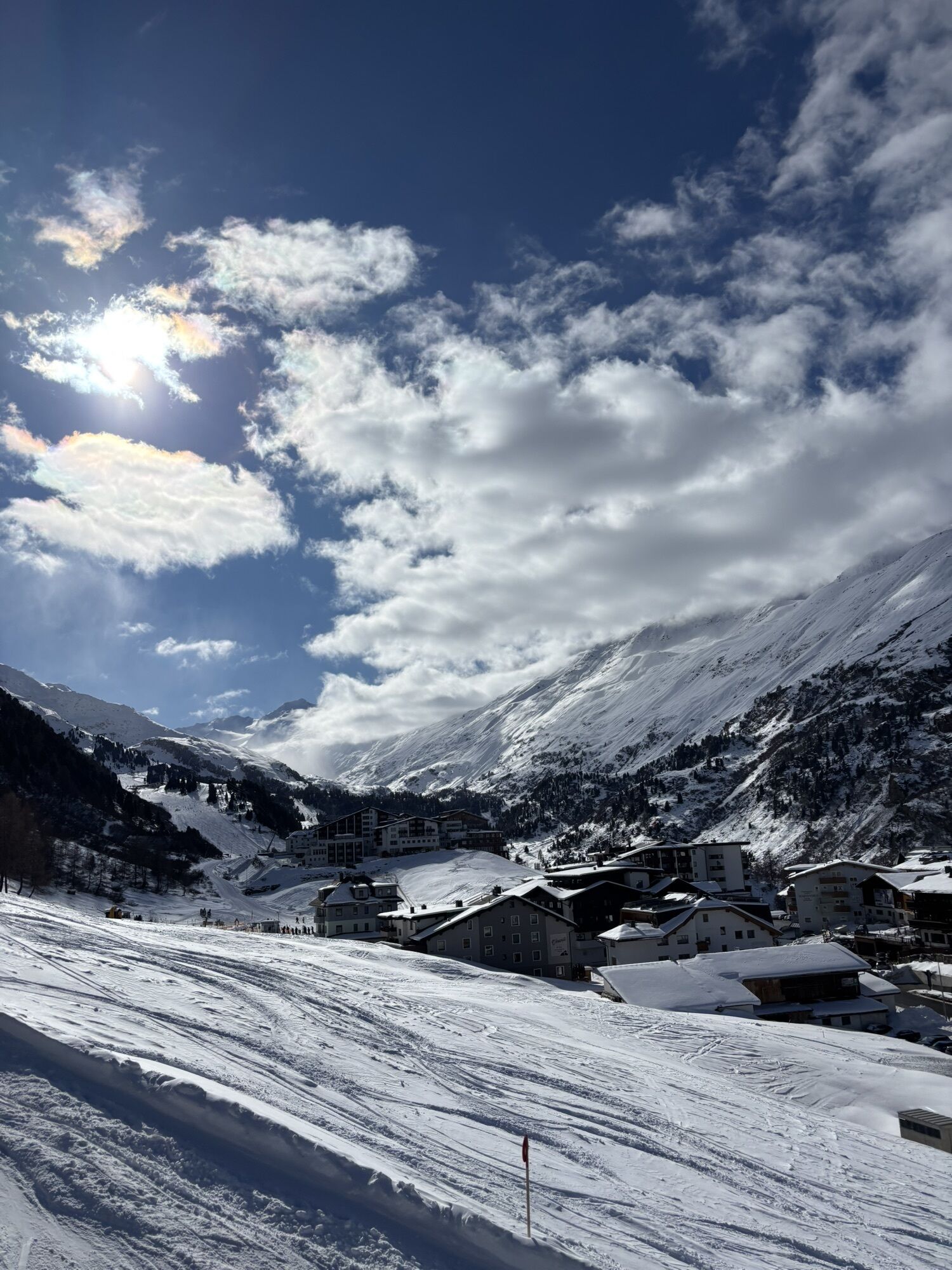

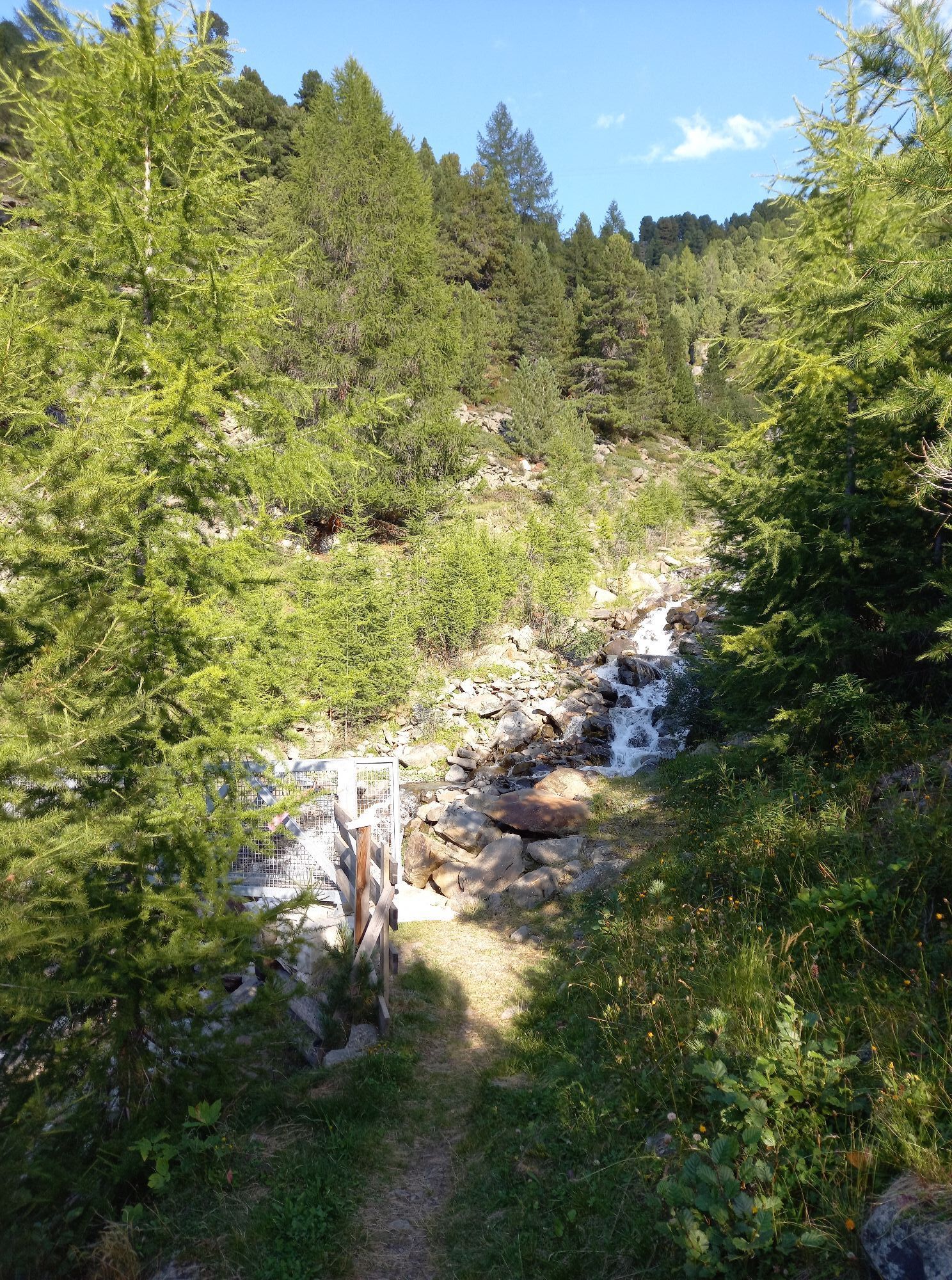
The Granatenkogel 3304m represents one of the most demanding ski tours in the ski touring region around Obergurgl. The slope gradient reaches up to 40°. The descent via the Ferwallferner and subsequently...
The Granatenkogel 3304m represents one of the most demanding ski tours in the ski touring region around Obergurgl. The slope gradient reaches up to 40°. The descent via the Ferwallferner and subsequently through the Ferwall valley remains an endless pleasure of curves.

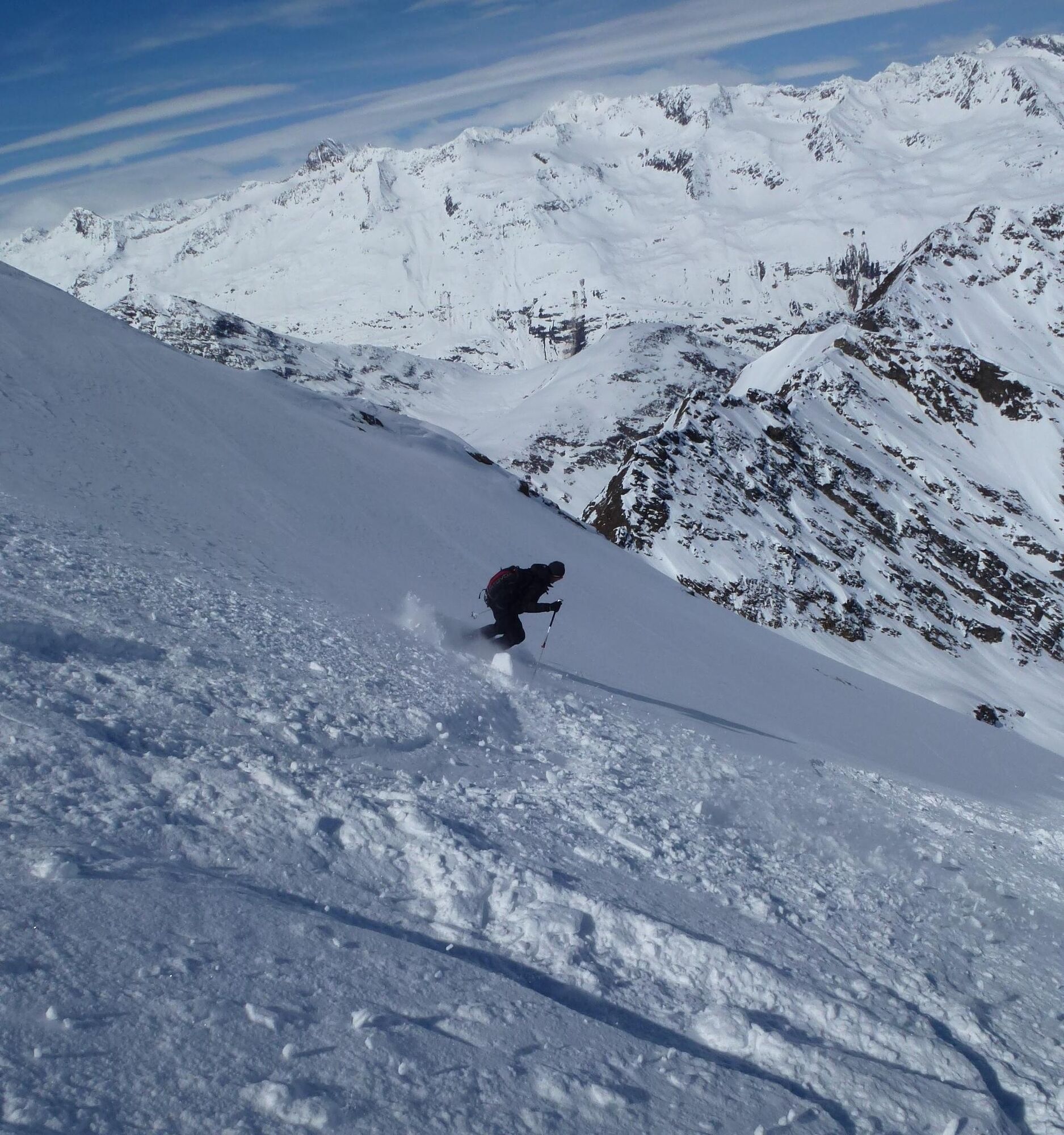
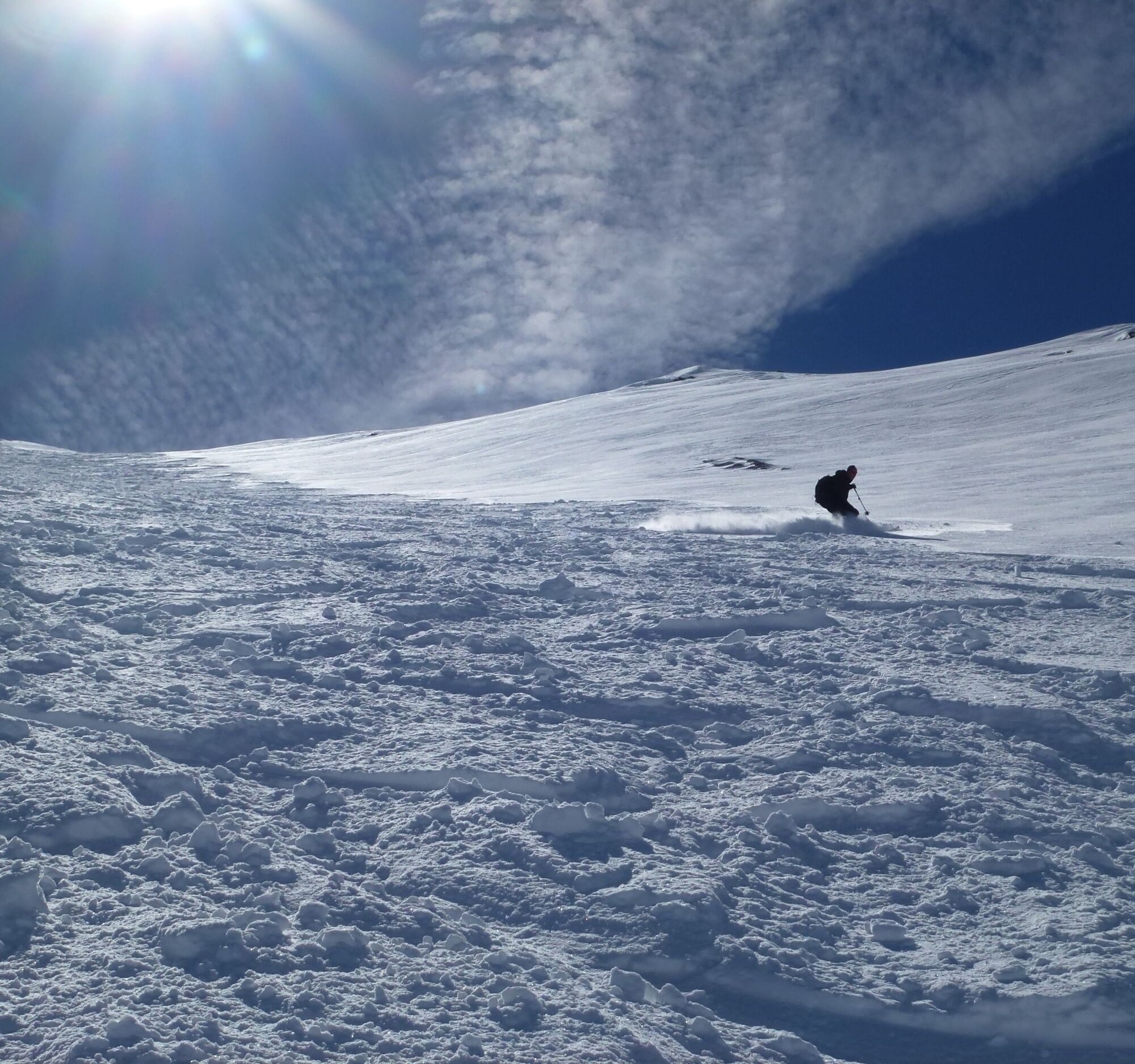
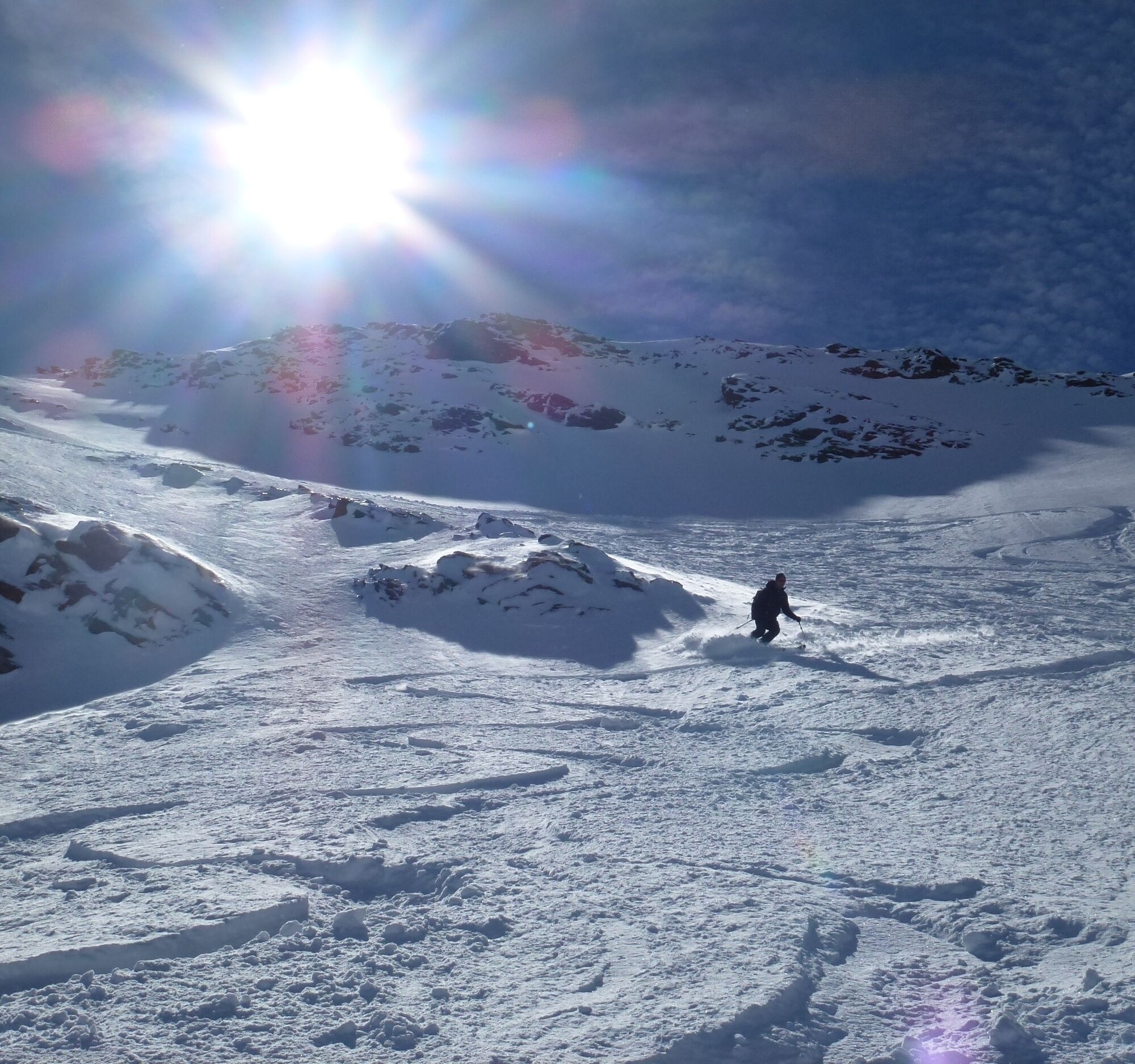
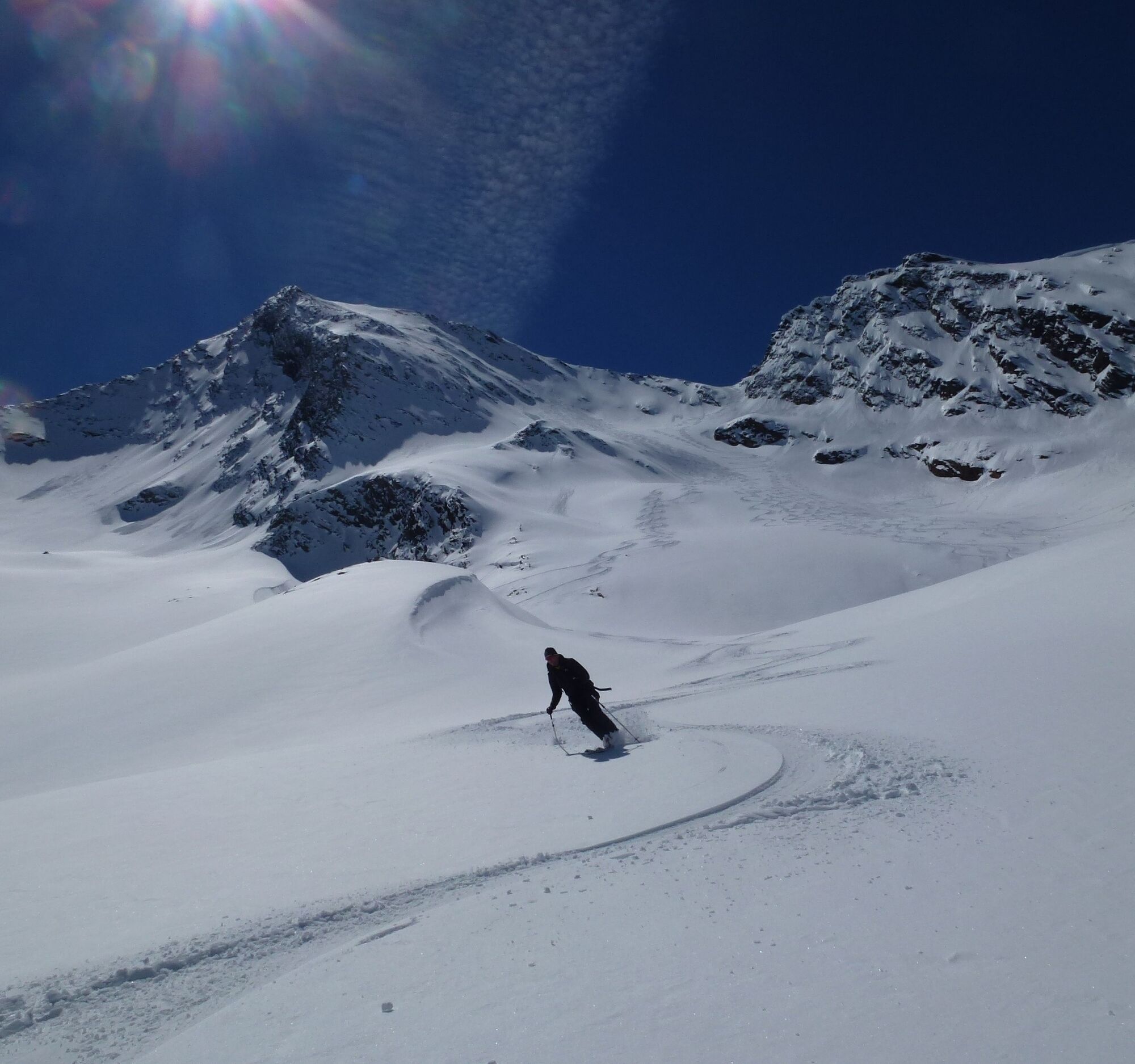
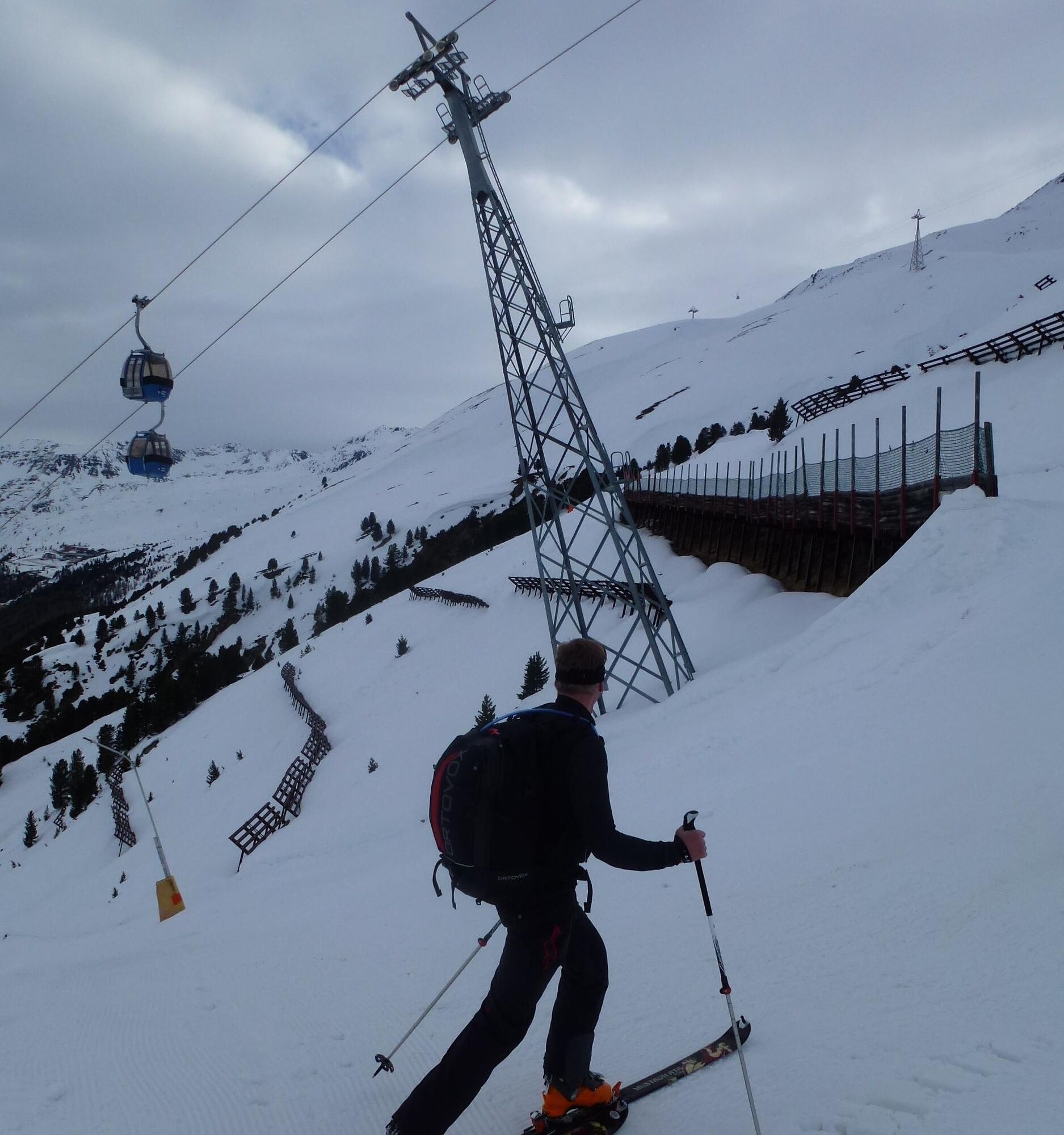
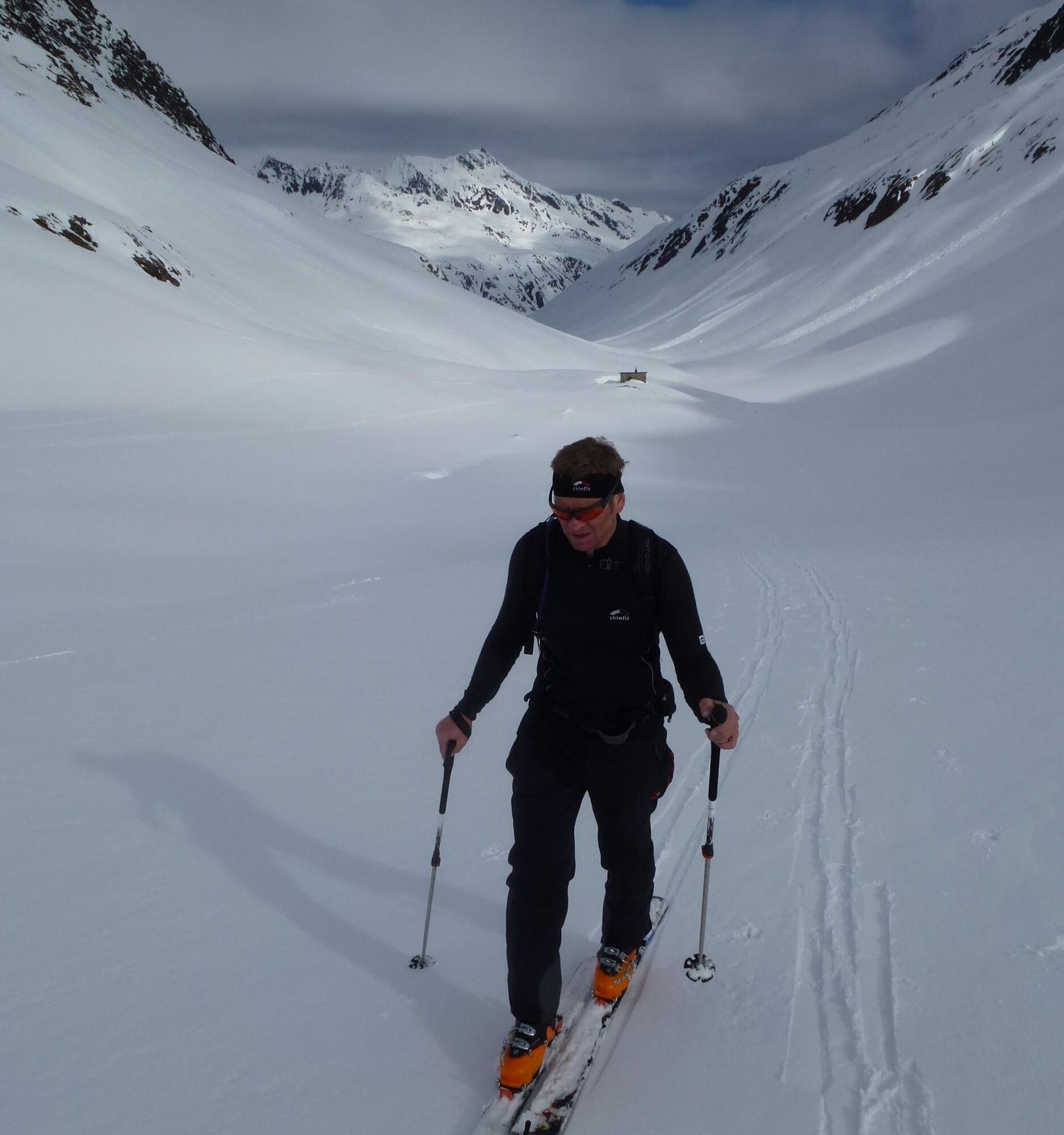
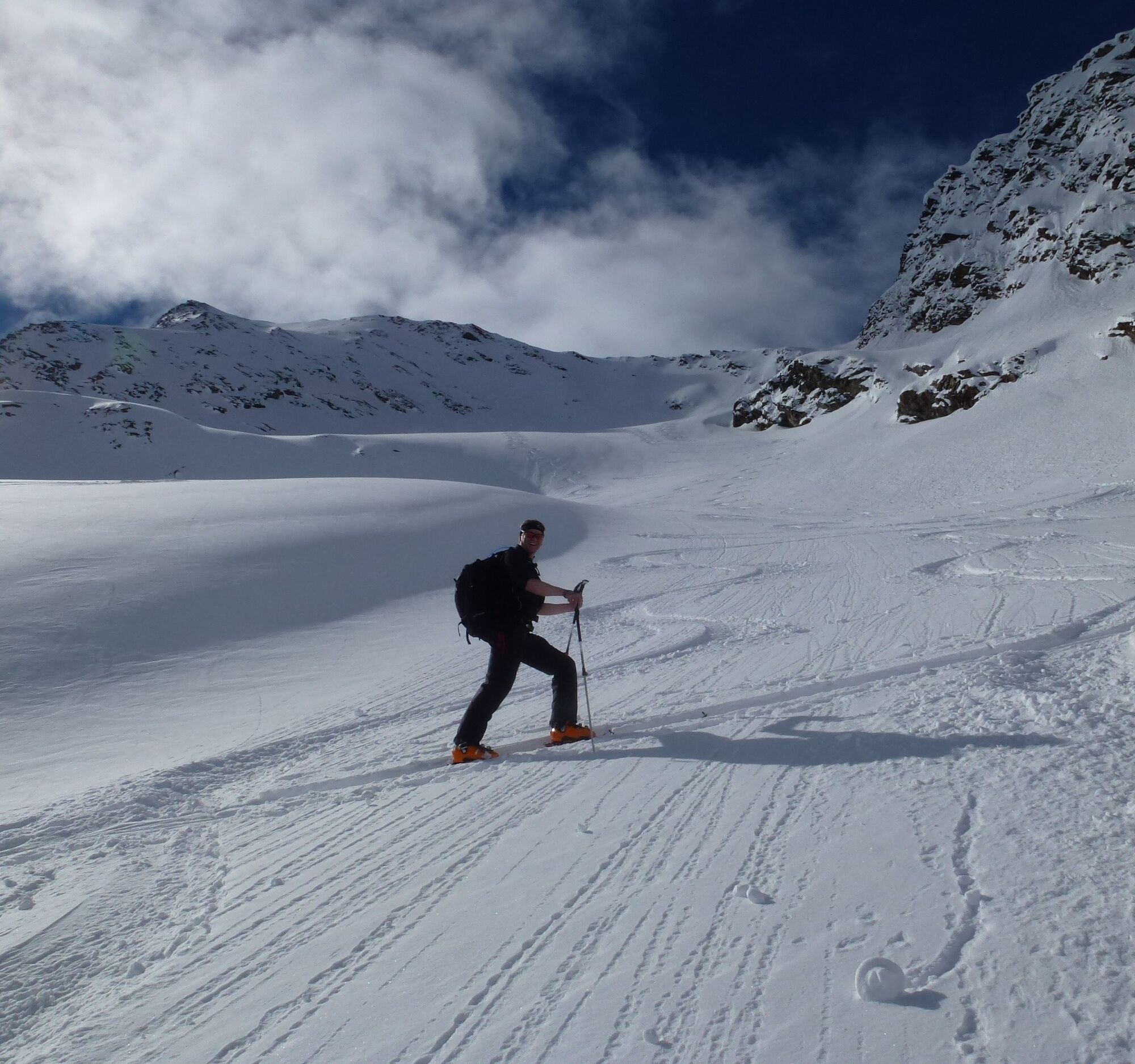
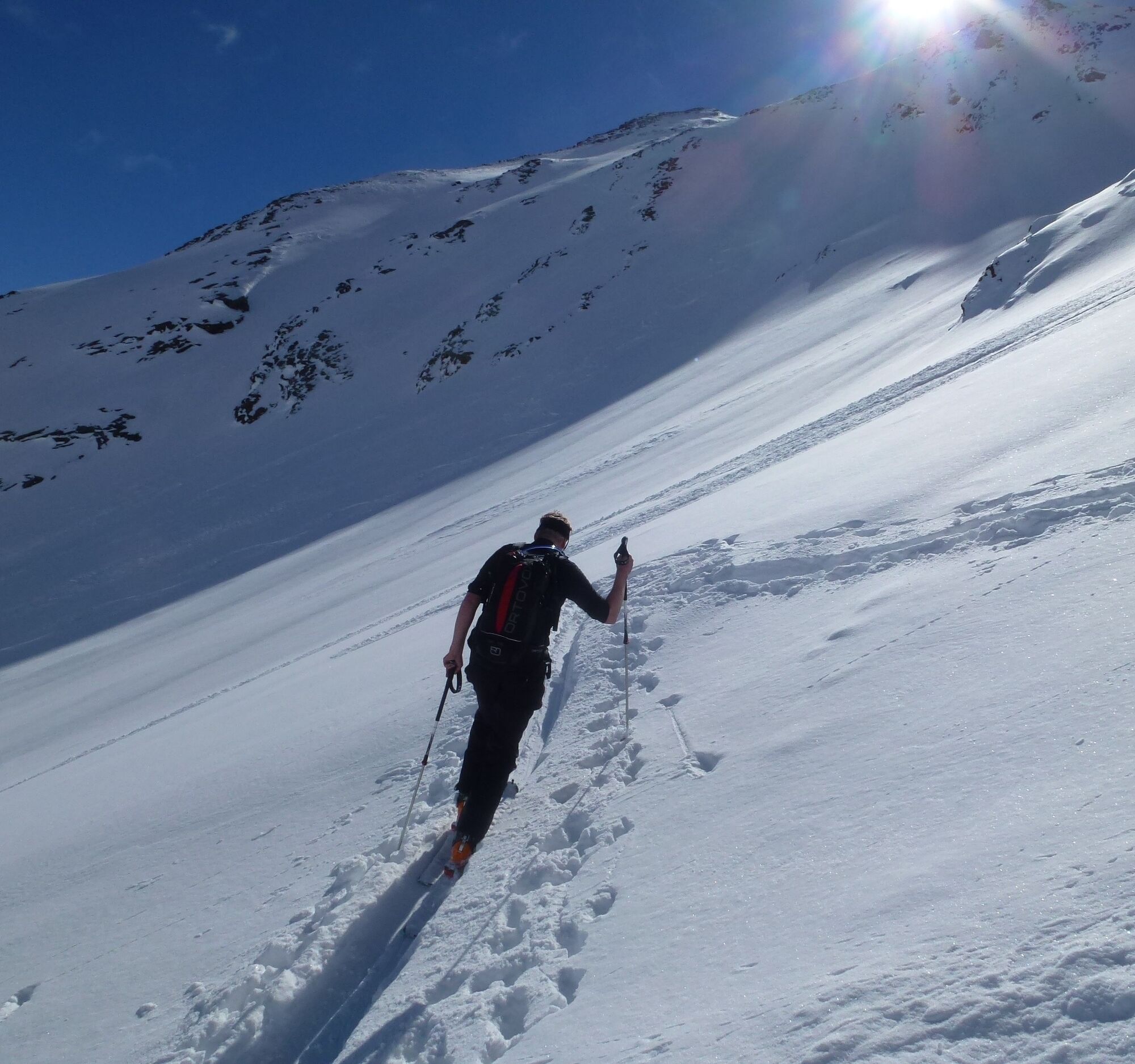
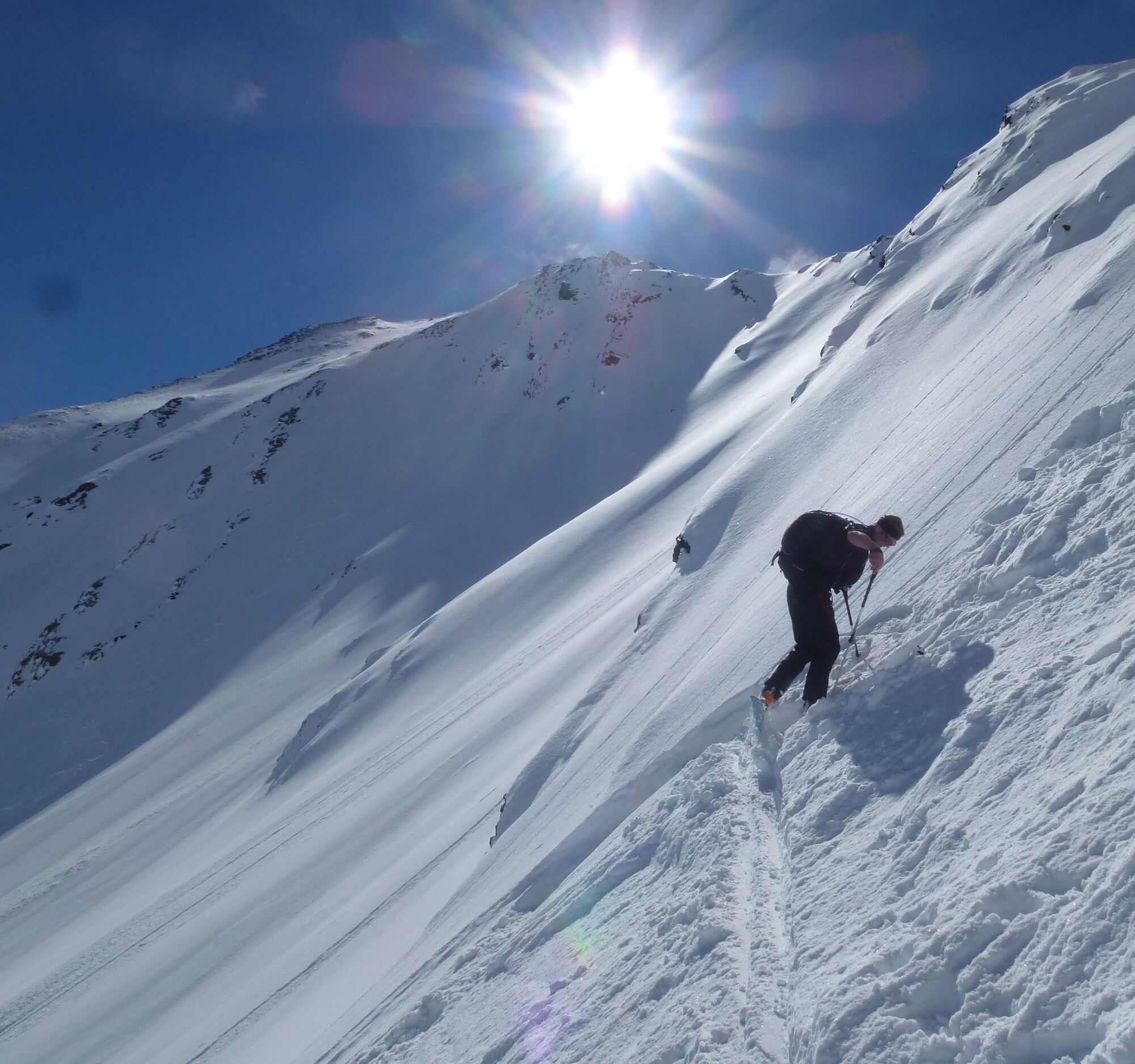
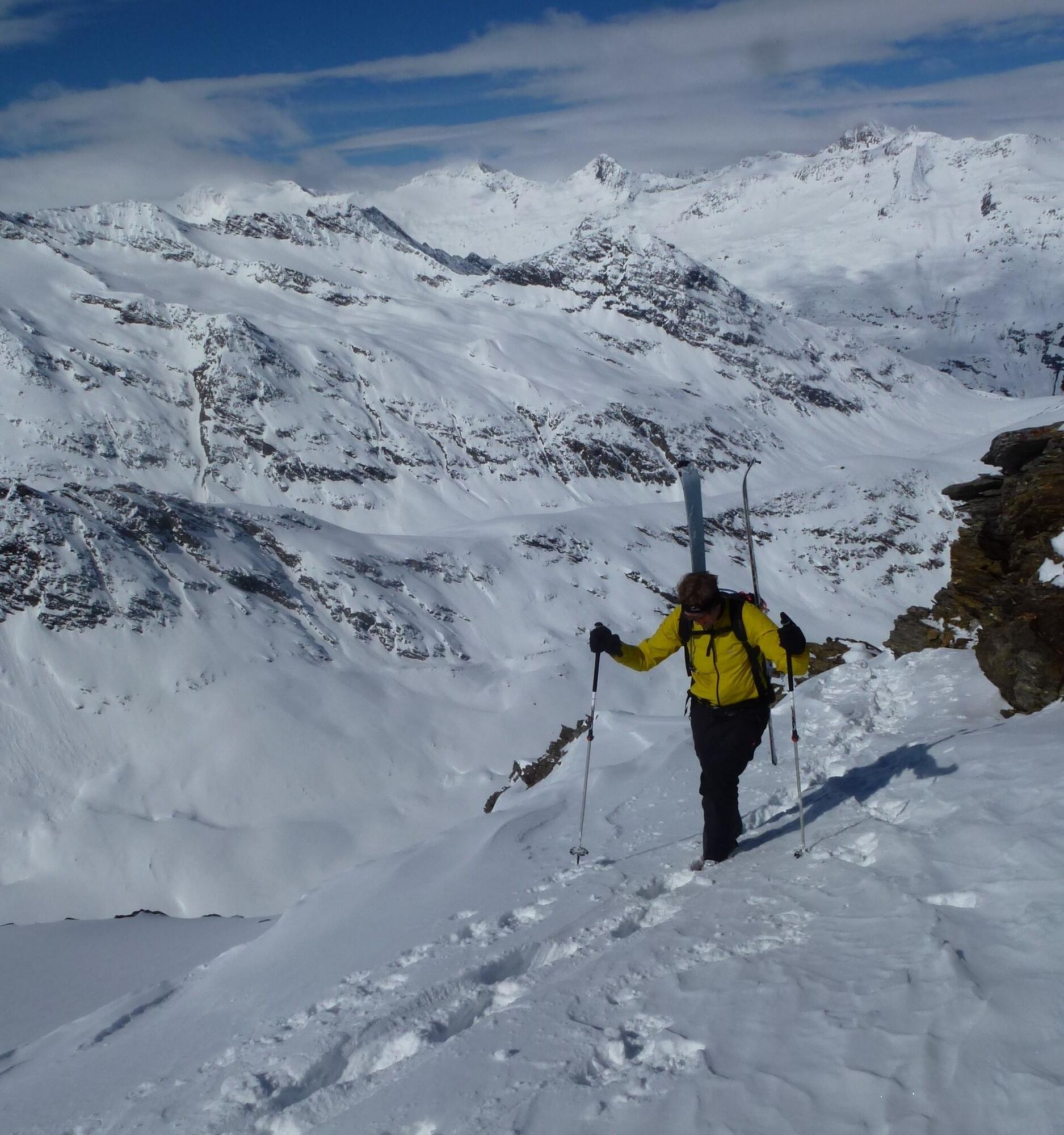
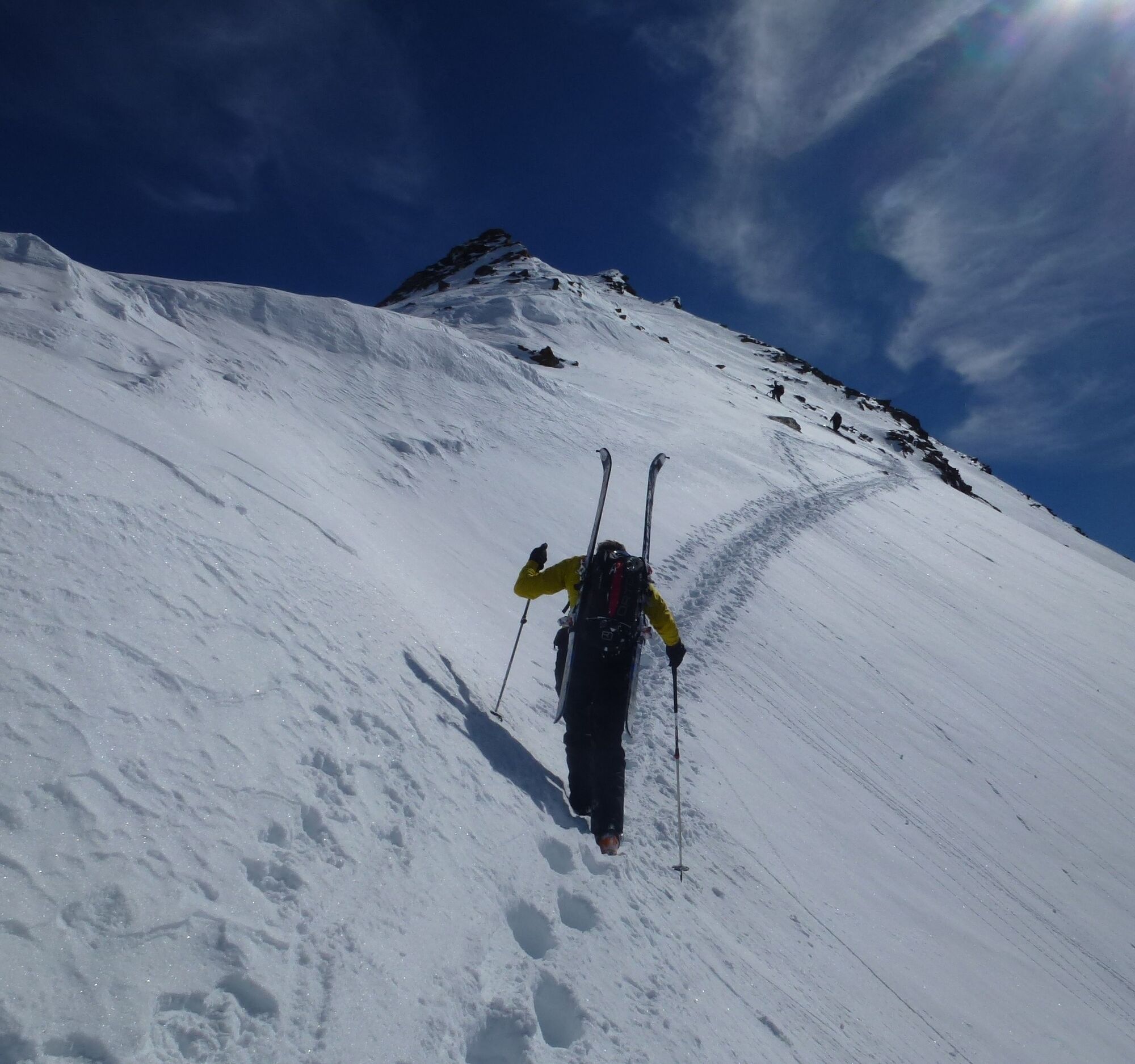
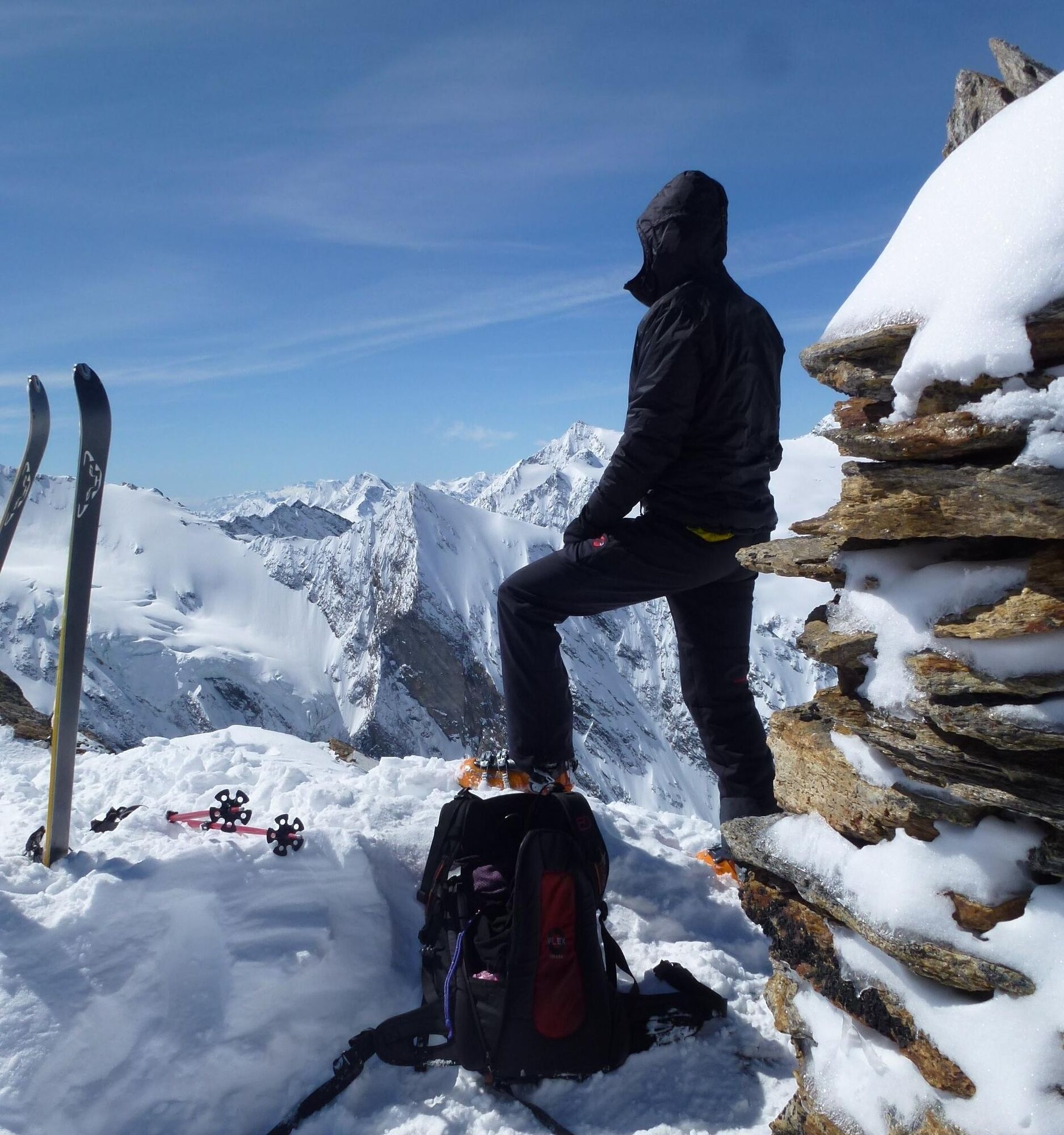

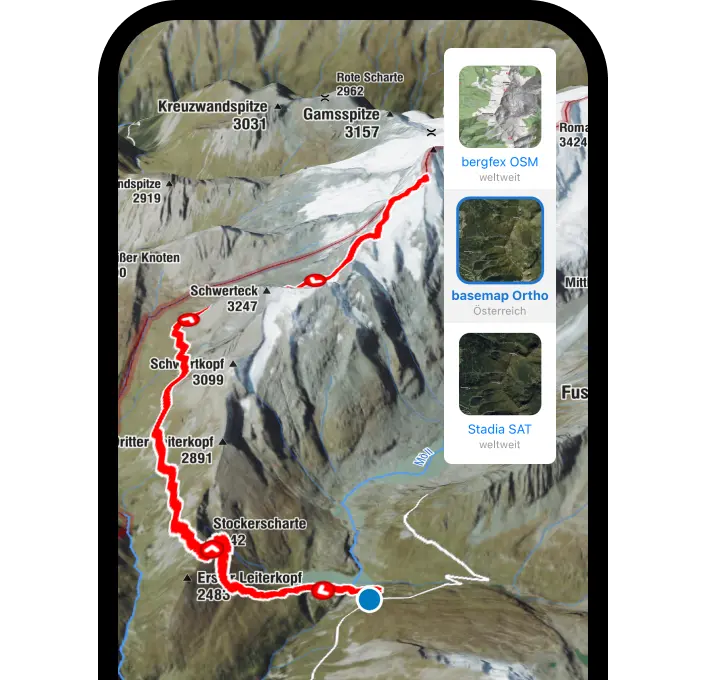
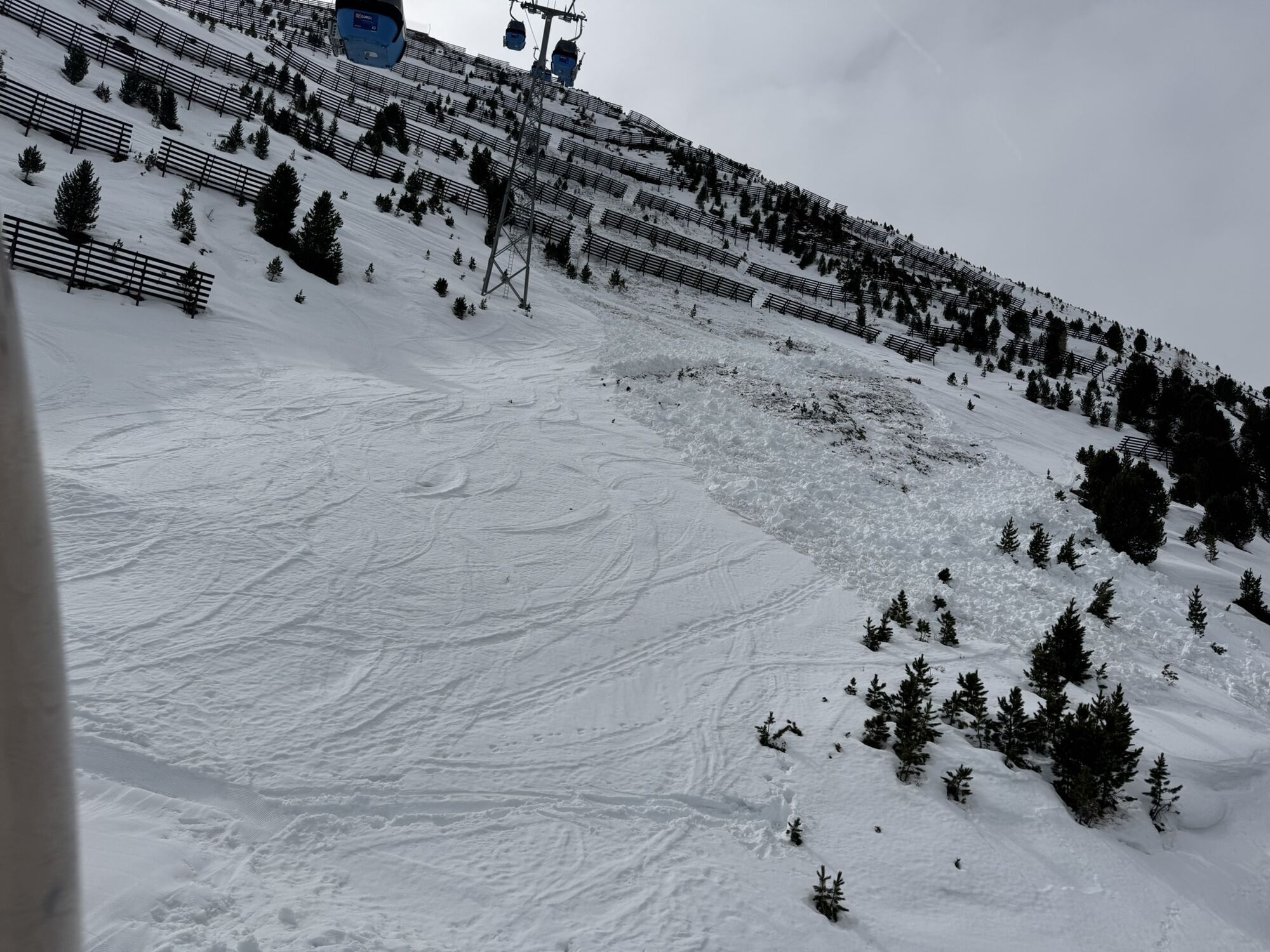
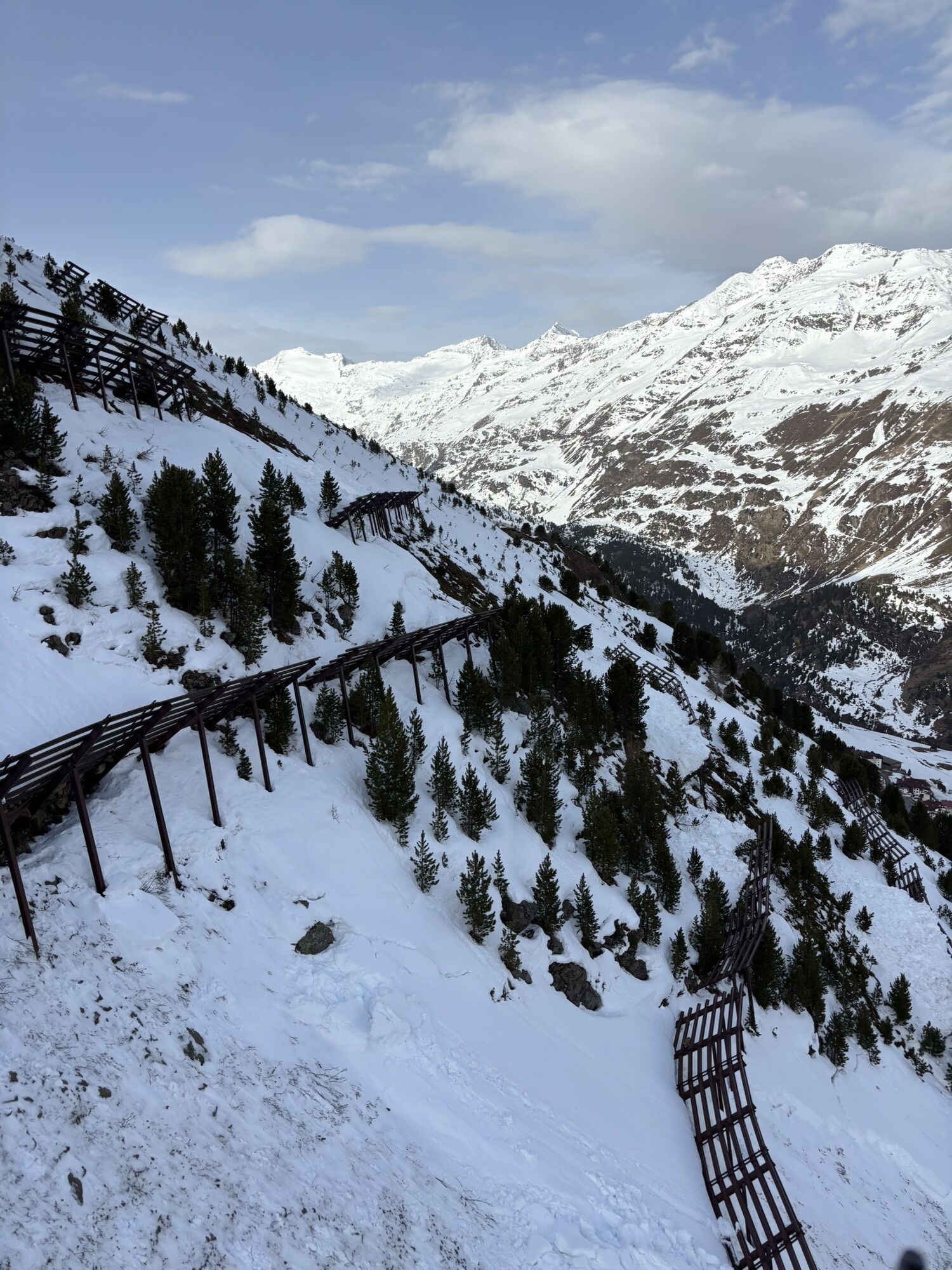
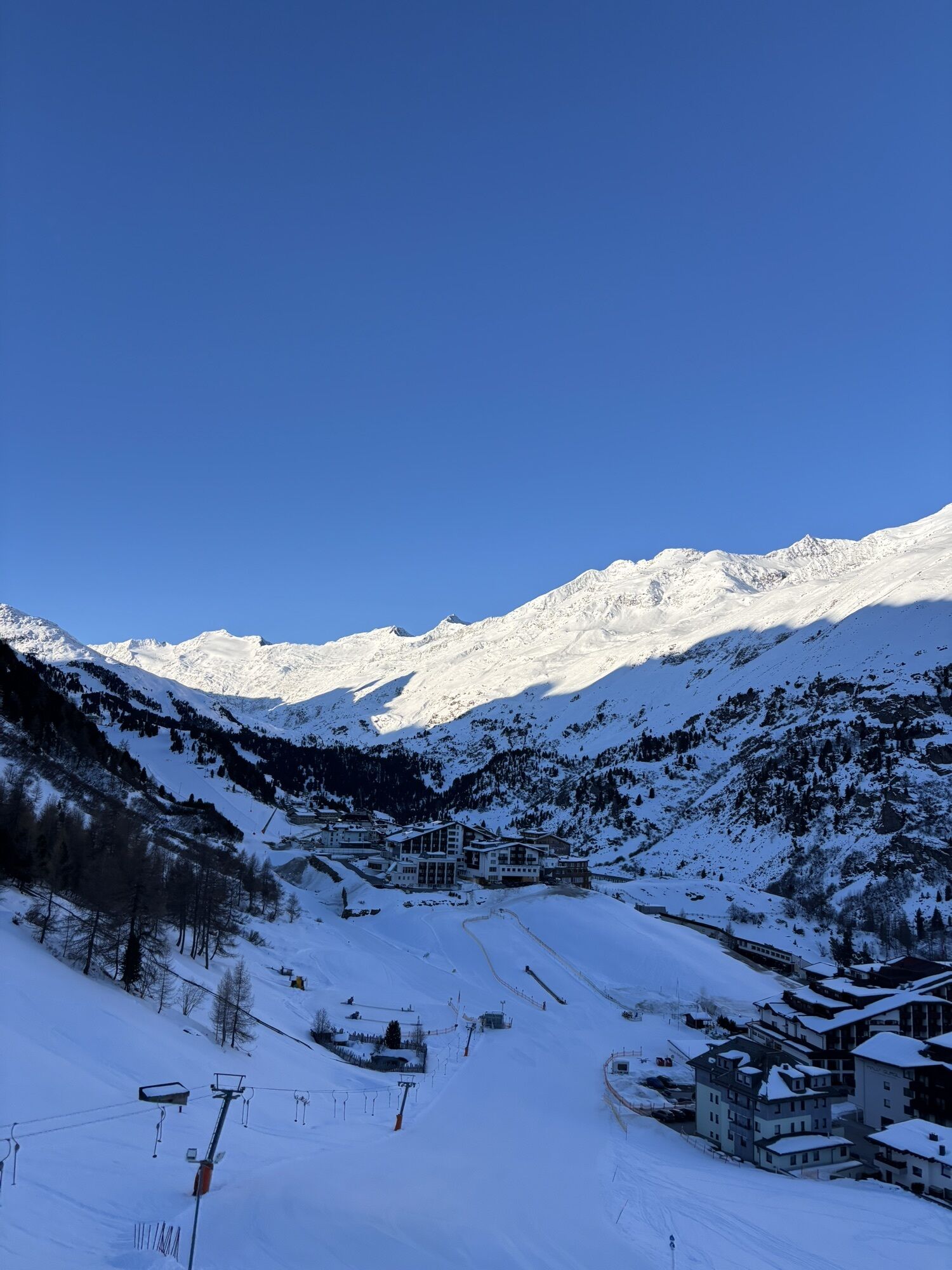
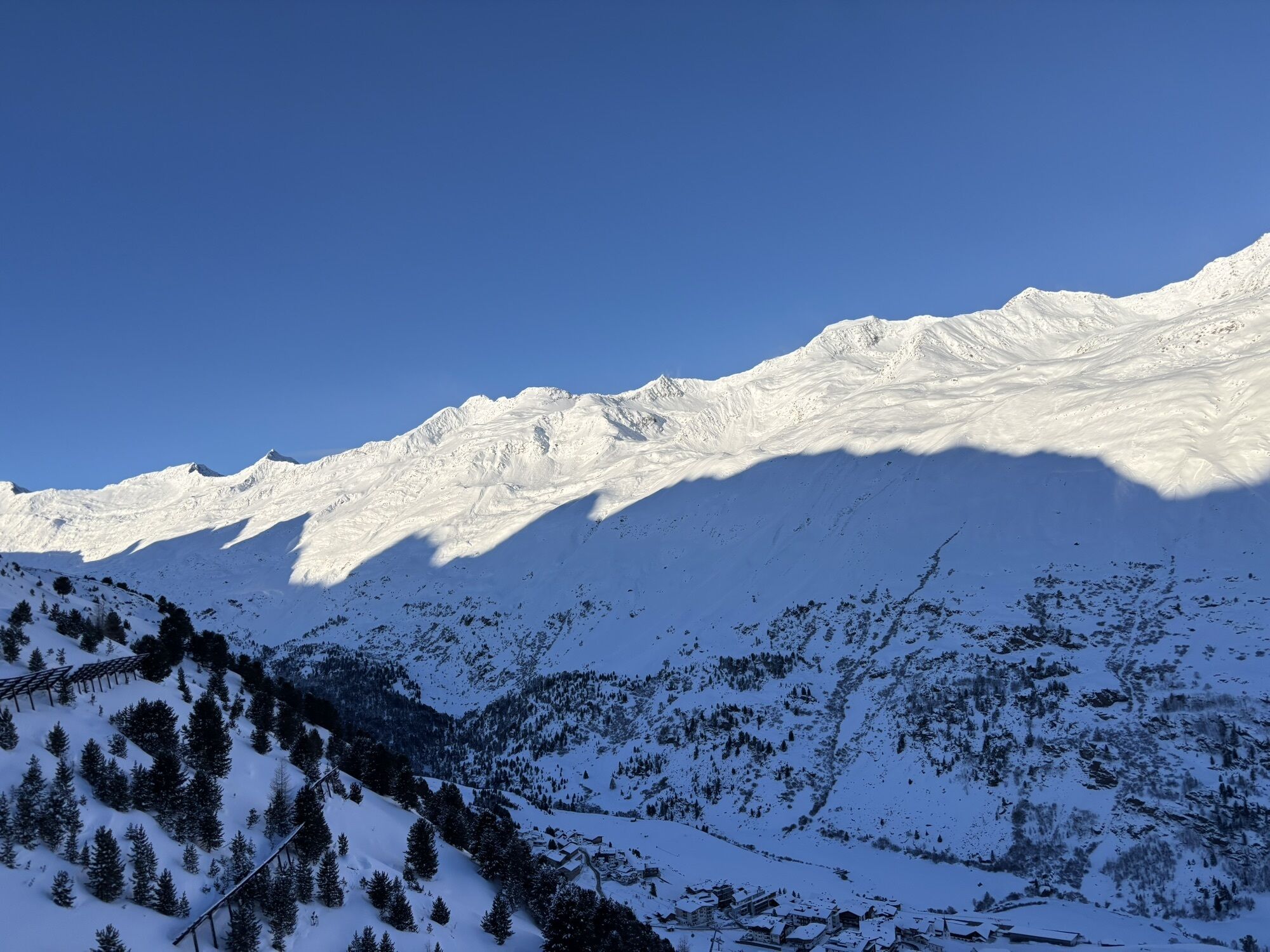
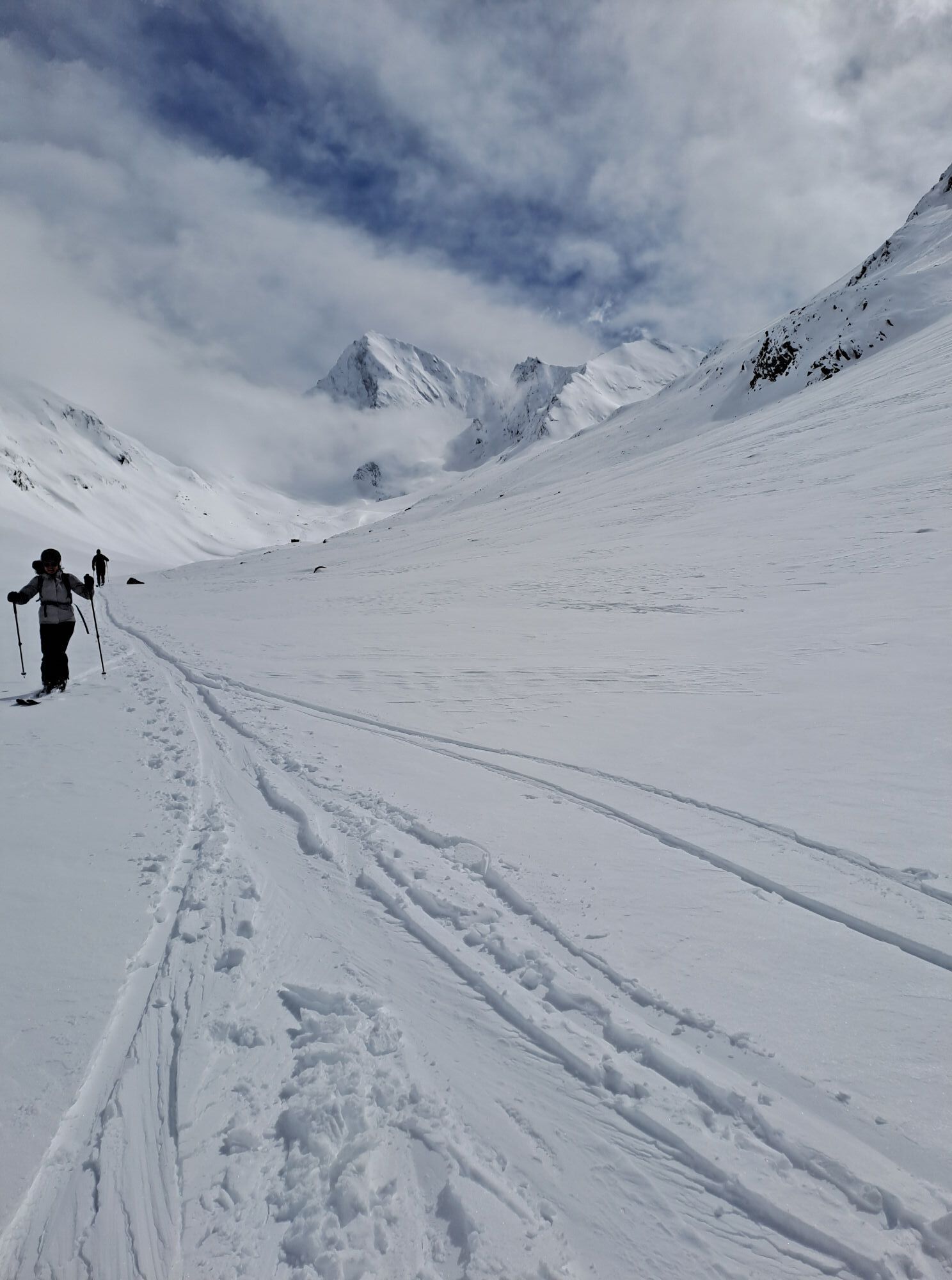
From the valley station of the Festkogelbahn, you can easily reach the Ferwall valley via the ski slopes. In the Ferwall valley, you try to stay as much as possible in the area of the valley floor and ascend towards the south with initially hardly any noticeable elevation gain. Soon, the mighty summit massif of Granatenkogel 3304m rises before us. Ascent and descent routes can already be well studied and continuously convey the impression that one should only be here with absolutely safe avalanche conditions. Over the Ferwallferner, you ascend with increasing steepness in many switchbacks to the upper glacier basin, where you head towards the saddle at the beginning of the NW ridge. The slope gradient increases here to over 40°. In good snow conditions, you can ascend in switchbacks. Under unfavorable conditions, an ice axe or crampons may be useful during postholing. However, on this northeast-exposed flank without sunshine, the snow does not quickly transform into a hard melt-freeze crust. The situation changes in the area of the NW ridge. There, with sufficient snow cover, ascent with skis attached, but also descent, is possible. However, you must be aware that the NW ridge drops over 500 meters into the Gaisberg valley with inclines of up to more than 40°. Consequently, you must be technically secure on skis during the ascent, or the snow conditions must be favorable. These west-facing snow slopes can, unlike the north-facing slopes in the Ferwallferner area, transform into hard melt-freeze crusts in spring and represent a corresponding hazard potential. Many tourers therefore set up their ski depot at the saddle and continue the summit ascent consciously on foot. The ascent with skis is worthwhile especially if a descent over the direct summit slope on the north flank seems possible. This is the actual highlight of this tour. However, perfect snow and avalanche conditions must be present on the north flank. Also, the risk of falling must be considered in the lower, rocky, up to 45° steep part of the slope. Fatal accidents underline this hazard potential. If conditions permit, you will experience an impressive steep descent. The further descent via the Ferwallferner and subsequently through the Ferwall valley remains an endless pleasure of curves.
Tak
Recommended ski tour equipment
The "normal ski touring equipment" consists of touring skis with touring bindings, telescopic poles, climbing skins, crampons, digital avalanche transceiver, avalanche shovel, avalanche probe, first aid kit, and a mobile phone. A "complete glacier equipment" consists of a harness, two prusik loops of different lengths or ascenders, two HMS carabiners, an ice axe, crampons, and a rope. A backpack with suitable contents should be carried, including change of clothes, sun protection, cold protection, food, and enough to drink! For overnight stays in huts, do not forget to bring hygiene articles and a hut sleeping bag!
DIFFICULTY RATING
Easy: Easy, short to moderately long tours with ascents that do not exceed 25° or only briefly. Medium: Medium difficulty, moderately long to long tours with ascents that do not exceed 35° or only briefly. Hard: Difficult, long to very long tours with ascents reaching 40° or more, and climbing sections up to grade II (UIAA).Avalanche Danger Scale
1 (LOW)
An avalanche release is only possible with great additional load on very few, extreme steep slopes. Spontaneous avalanches (so-called slides) are not expected. Generally safe conditions.
2 (MODERATE)
An avalanche release is probable with great additional load especially on the indicated steep slopes. Larger avalanches are not expected. The snow cover is generally well consolidated, except on some steep slopes. Careful route choice at the specified steep slopes and slope aspects.
3 (CONSIDERABLE)
An avalanche release is likely already with slight additional load especially on the indicated steep slopes. Occasionally some medium, rarely also large avalanches are possible spontaneously. The snow cover on many steep slopes is only moderately to weakly consolidated. Experience in avalanche assessment is necessary. Avoid the indicated steep slopes and slope aspects as much as possible.
4 (HIGH)
An avalanche release is possible already with slight additional load especially on the indicated steep slopes. Occasionally many medium, multiple large avalanches occur. On many steep slopes, the snow cover is only weakly consolidated. When choosing routes, restrict to moderately steep terrain and observe avalanche run-out zones. Extensive experience in avalanche assessment is necessary.
5 (VERY HIGH)
Numerous large avalanches are expected spontaneously, even on moderately steep terrain. At this warning level, safe operation in ski areas is no longer possible. The snow cover is generally weakly consolidated and unstable. Avoid tours.
See also at lawine.tirol.gv.at
Obergurgl-Hochgurgl is located in western Austria in the state of TIROL, in a southern side valley of the Inn valley - the ÖTZTAL. For your arrival by car, plan the optimal route from your hometown using the route planner online right away: https://www.google.at/maps
Travel comfortably and safely by train to the Ötztal train station. The final stop or exit point is ÖTZTAL train station. Afterwards, you can conveniently and quickly travel by public transport or local taxi companies through the entire valley to your desired destination! The current bus timetable is available at: http://fahrplan.vvt.at
Parking options available in Obergurgl-Hochgurgl:
Parking lot in the village centre of Obergurgl (turn right in front of the church, behind the multipurpose building housing the information office) parking meter with coin insertion Parking lot at the village entrance – Festkoglbahn valley station – no overnight parking Parking lot Hochgurglbahn valley station, free of charge – no overnight parking Parking lot Top Mountain Crosspoint, free of charge Parking lot Hochgurgl, free of charge (very small parking lot)Ascent Aid: Yes (ride with the Festkoglbahn)
Max. slope gradient: over 40 °
Glacier: Yes
Tour type: High alpine glacier tour
Skiing technique: difficult
Climbing technique: none
Map material: AV map Ötztaler Alpen - Gurgl 1:25 000
Best season: Mar, Apr, May
Ski Tour Rules
Observe the applicable regulations for all activities in nature and when choosing tours (e.g., wildlife protection areas, hunting restricted areas, reforestation areas, information boards, etc.) Respect quiet zones for wildlife and avoid feeding areas as well as loud noises Cross forest areas in winter only on designated paths and routes, animals react very panicked to unlocalized noise. Recognize the habitats of wildlife, avoid animals if possible. Observe wildlife only from a distance. Dogs must be kept on a leash; it is absolutely irresponsible to let dogs run free in the forest during winter emergency times. Proper time planning: start early enough and return before nightfall. In spring, you should be back at the hut by noon (avalanche danger) Never ski through reforestation and young growth areas.Ötztal Tourism assumes no liability for the listed tours and recommends taking a mountain guide. Glacier crossings are only possible with a rope and in a group.
Before starting a tour, you should inform the valley of your destination and the expected return time. The use of an avalanche transceiver is strongly recommended.
More info about ski tours in the Ötztal: https://www.oetztal.com/skitouren
Kamery internetowe z trasy
Uzyskaj wgląd
Zawsze na żywo z ponad 9 500 kamer internetowych. bergfex Jako użytkownik Pro, możesz teraz zobaczyć odpowiednie kamery internetowe dla wielu wycieczek w aplikacji wycieczki od. Pozwala to na bezpośredni podgląd aktualnych warunków.
Popularne wycieczki w okolicy
-
4,7
Vent - Kreuzspitze
Wędrówka 20,6 km -
4,2
Vorderkaser - Eishof / Texelgruppe
światłoWędrówka 4,83 km -
4,5
Leiter Alm mountain hut – Hochganghaus refuge - Gamplweg trail – Velloi
średniWędrówka 9,77 km -
4,5
Passerschlucht
światłoWędrówka 8,84 km -
4,4
Passerschlucht mit Stieber Wasserfällen, Trentino-Südtirol/Italien
średniWędrówka 9,49 km -
4,4
Hochtour Wildspitze, 3.768m
średniWycieczka wysokogórska 9,75 km -
4,4
Vent - Wilder Mann - Breslauer Hütte - Stableinalm
średniWędrówka 7,25 km -
3,8
Breslauer Hut
średniWędrówka 4,75 km -
4,9
Pfossental - vom Vorderkaser auf die Stettinerhütte
średniWędrówka 23,7 km -
3,1
Tiefenbachglacier - Mountaineering Village Vent
średniWędrówka 10,8 km
Wędrówki i tropienie

Nie przegap ofert i inspiracji na następne wakacje
Twój adres e-mail została dodana do listy mailingowej.