Nie znaleziono żadnych wpisów.
Wyszukiwanie jest obecnie niedostępne.
Prosimy o zawężenie wyszukiwania.
Lokalne wyniki wyszukiwania (<= 25km)
Więcej wyników (> 25km)
%count% Wyniki wyszukiwania
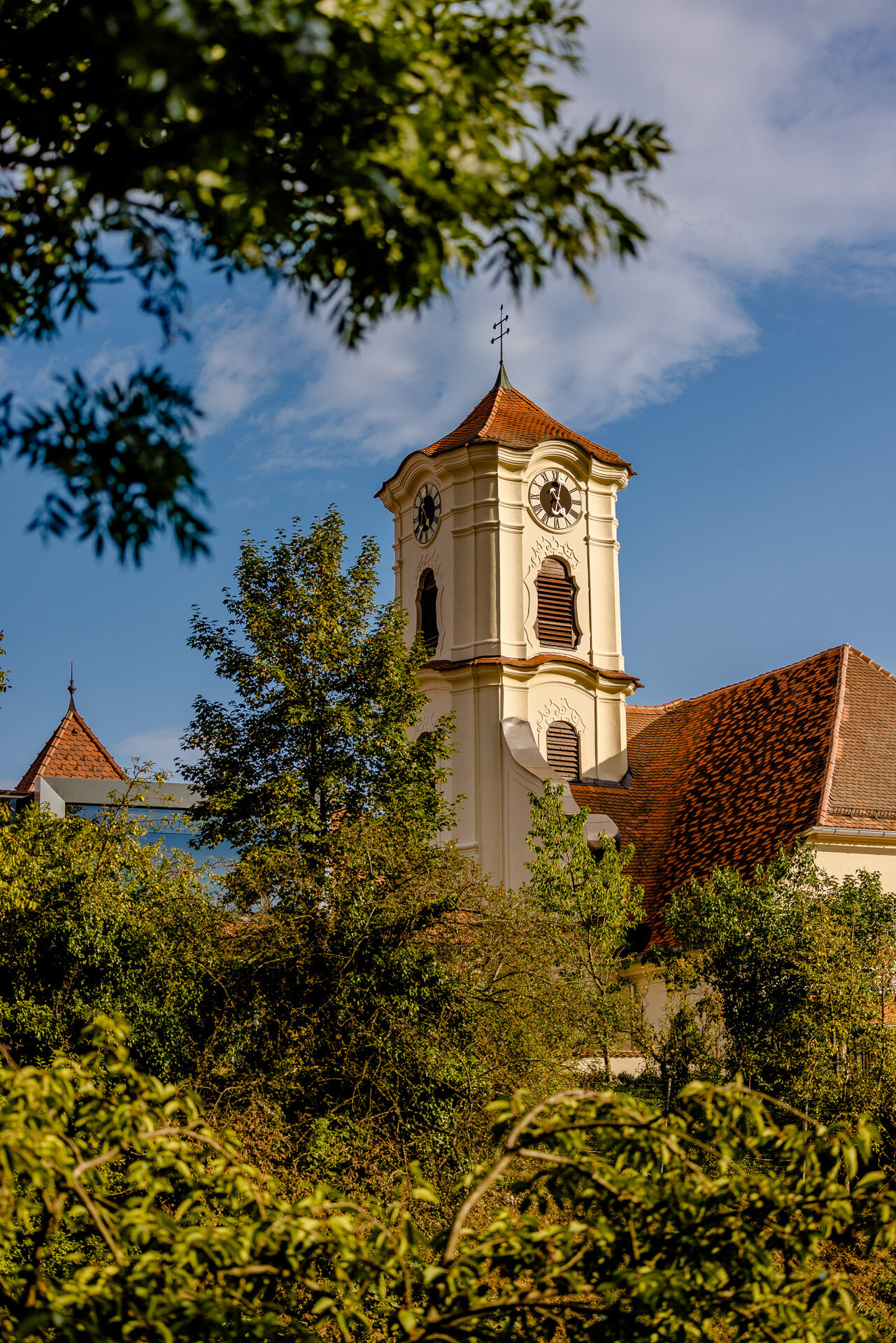
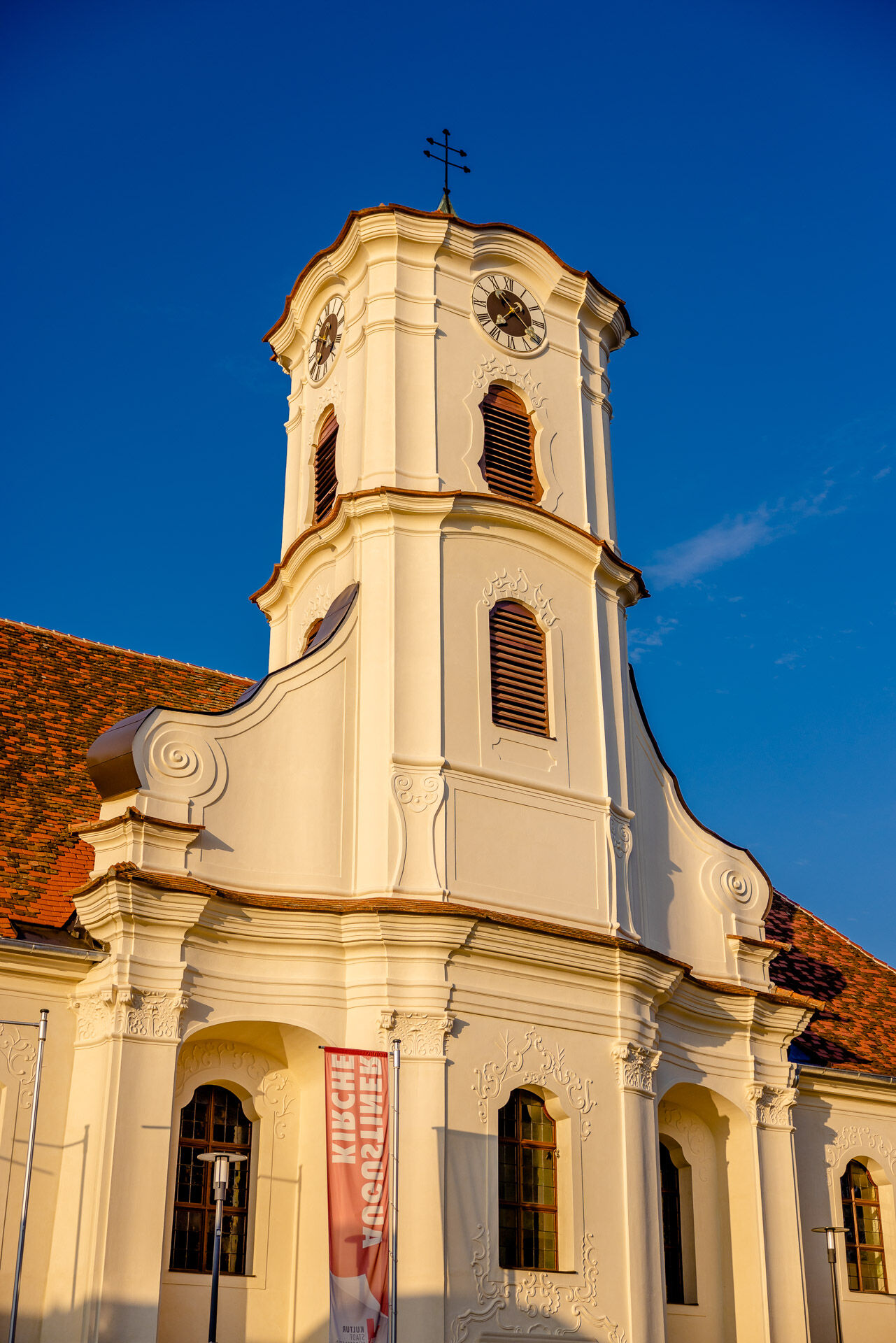
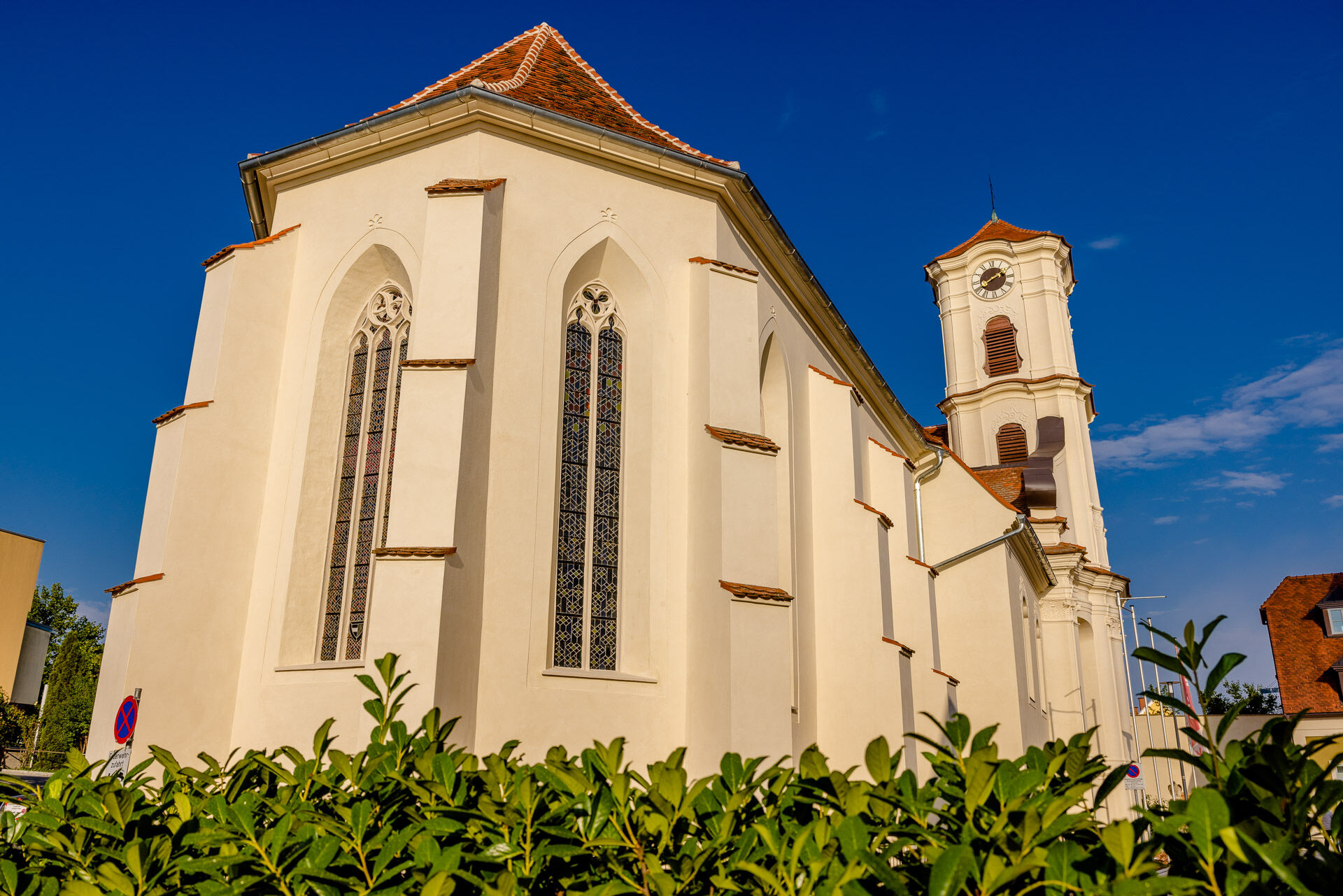
In 1362, the citizens of Fürstenfeld requested the settlement of the Augustinian hermits from Duke Rudolf IV in order to provide a religious counterweight to the aristocratic Kommende. The church and monastery were built between 1365 and 1368.
The monastery, which was demolished in 1956, consisted of an inner courtyard with a cloister surrounded by three wings. Archbishop Ortholph von Aponien consecrated the monastery in 1367. In 1480, troops of the Hungarian King Matthias Corvinus plundered it completely, monastery inmates were taken prisoner and Brother Heinrich von Rattenburg was strangled to death (memorial plaque in the passageway). Fires in 1503 and 1685 caused severe damage, and in 1683 the nearby powder tower exploded.
The church was rebuilt in 1685 under the direction of master builder Hueber. The monastery was dissolved in 1811. The church was damaged again in 1945. In 1978 (800th anniversary of the town) and in the following years, the church was thoroughly renovated and Gothic frescoes were uncovered, with apostles and prophets depicted in the circular medallion of the chancel. Large-format frescoes of kings and prophets are visible at the base of the ribbed vaults. There are further frescoes on the south wall, one of which is probably a depiction of Duke Rudolf IV, while others depict a Turkish building and a Turkish head with a turban. The frescoes were created by Johannes Aquila, which is also commemorated by a plaque at the church entrance.
Another plaque in the passageway commemorates Fr. Johannes Clobucciarich (*1545, +1605). He was active in the monastery from 1575 - 1605, from 1585 as prior. Fr. Clobucciarich was an important cartographer and created the first map of Inner Austria. He died in 1605 while fleeing from the Hungarians.
The church is open from 8 a.m. to 6 p.m.